Worms Reviews: The Booker Prize Longlist
The Worms team read some of the books recently nominated for the Booker Prize 2026
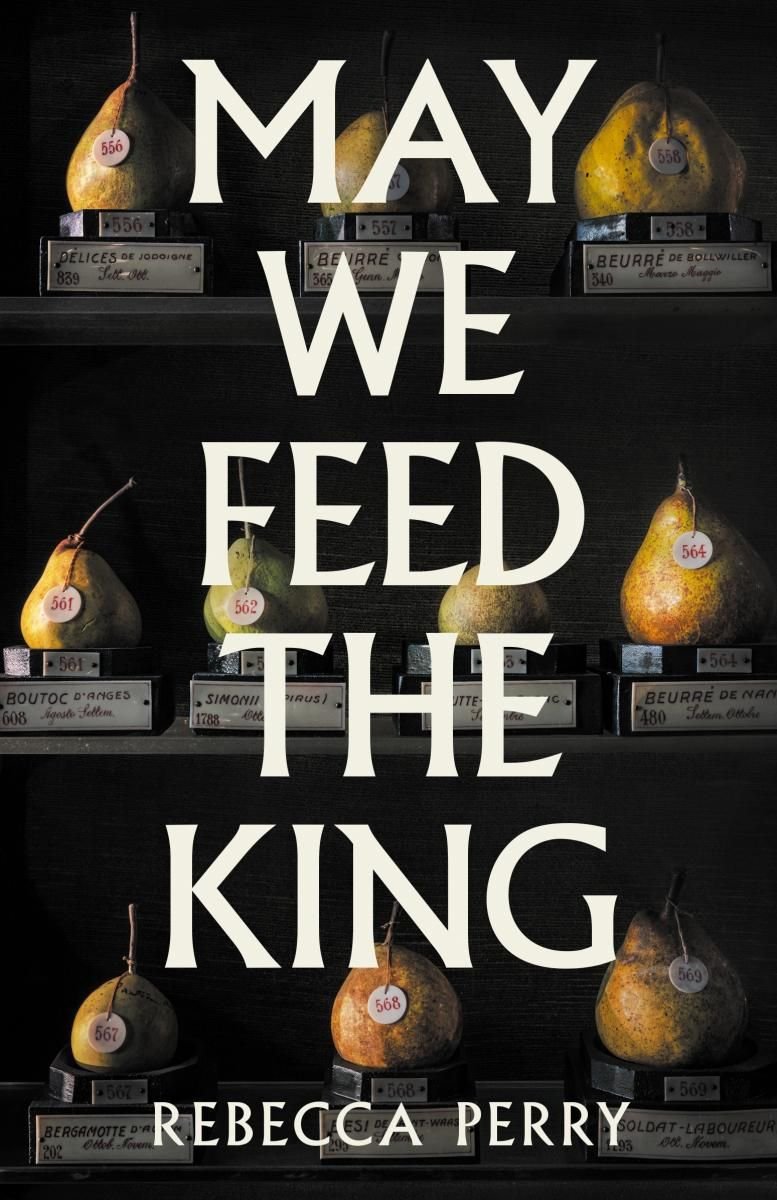
May We Feed the King by Rebecca Perry
Review: by Misha Honcharenko
Rebecca Perry's May We Feed the King is one of the boldest works of fiction to emerge this year. Refusing the comforts of conventional historical narrative, it unfolds instead as an experiment in perception, language and memory. The novel follows a museum curator reconstructing the rooms of a medieval palace, whose research gradually dissolves the boundary between archival history and imaginative immersion. A forgotten king, reluctant to rule, begins to inhabit not only the curator's mind but also the novel's own shifting form.
Rather than reproducing history, Perry describes an interest in exploring how we narrate it and how imagination fills the gaps left by the archive. This shifting between imaginative realities is one of the novel's greatest achievements. Perry excels at resisting the impulse to anchor the narrative in specificity or certainty. Instead, the novel moves fluidly between different registers of perception, allowing ambiguity to become a source of meaning rather than confusion.
That ambition is visible on every page. May We Feed the King is unafraid of experimentation, yet its formal daring never feels ornamental. Instead, Perry's background as a poet produces prose of remarkable precision, where rhythm and syntax carry as much meaning as plot. Reading becomes an act of attention rather than consumption.
“Rather than reproducing history, Perry describes an interest in exploring how we narrate it and how imagination fills the gaps left by the archive.”
What stayed with me most was the novel's closeness to language itself. Here, text is not simply a vehicle for storytelling but something almost liturgical: words move with the gravity of ritual, sentences become sacred gestures, and meaning emerges through repetition, silence and texture. Perry asks us not merely to follow a narrative but to dwell inside language. The result is fiction that feels genuinely radical – intellectually rigorous, emotionally resonant, and quietly transformative.
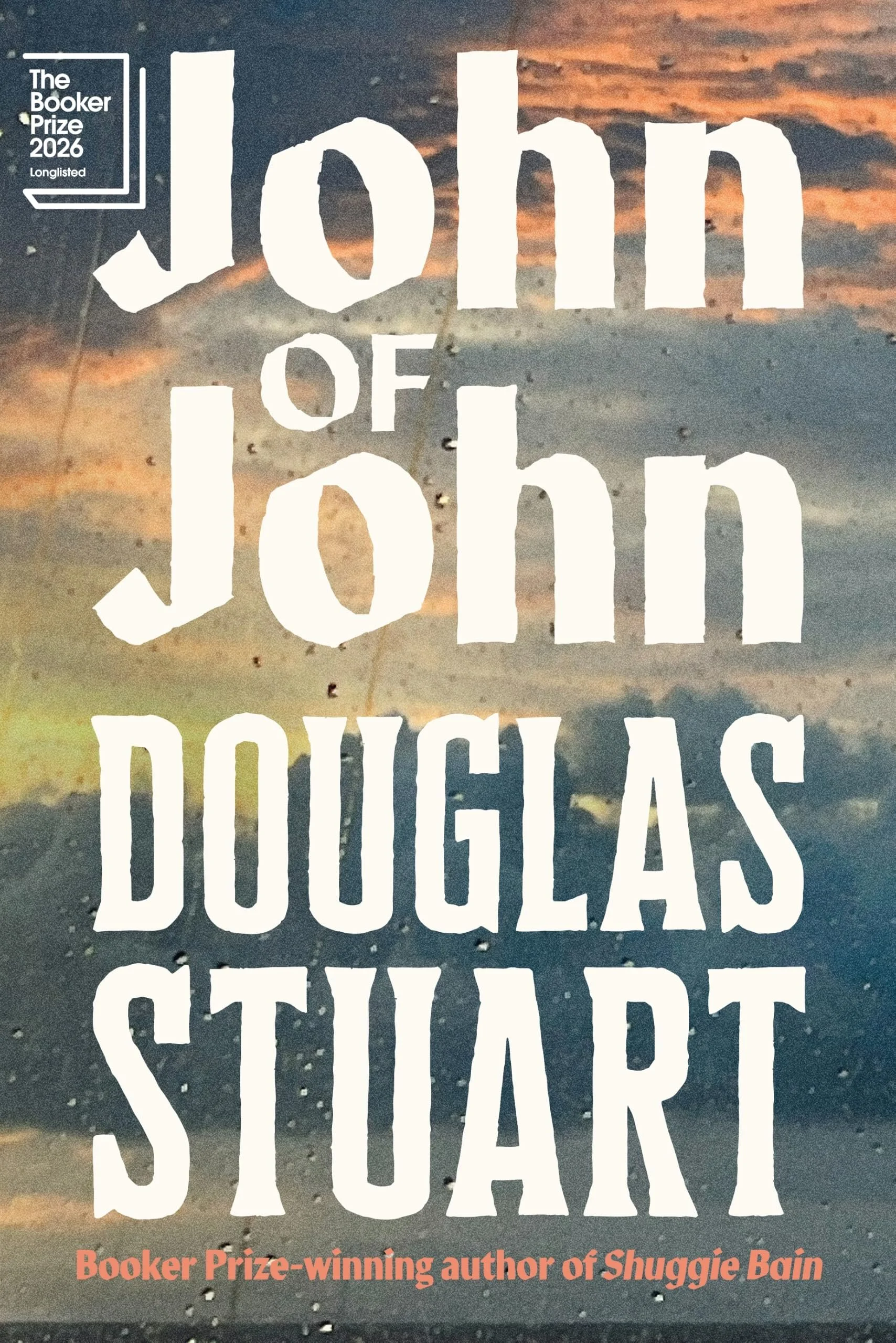
John of John by Douglas Stuart
Review by: P. Eldridge
I read John of John in parks and in my garden recently turned to dust, the pages taking the weather with them: thumbprints, a tidemark of coffee, grass in the gutter of the spine. It’s the sort of novel that seems to ask not merely to be read but to be lived. For the first time, Douglas Stuart leaves Glasgow behind, carrying his fierce interest in family, masculinity and concealed desire to a croft on the Isle of Harris in the 1980s. Cal Macleod returns from art school in Edinburgh with little money, few prospects and badly bleached hair. At home, his father John farms sheep, wears tweed and preaches at the local church; his grandmother Ella, Glaswegian and gloriously profane, has maintained a decades-long trust with the son-in-law she never chose. Beneath this austere domestic arrangement, however, lies a more dangerous inheritance: secrecy. Cal is hiding what he is. His father, it turns out, is hiding something too.
Stuart’s great strength is his ability to make silence feel as consequential as speech. Harris is not simply a backdrop but a pressure chamber: its wind, isolation and unforgiving landscape intensify every glance and omission. The novel’s emotional weather is as changeable as its physical one, shifting between tenderness, shame, anger and the peculiar comedy of family life.
“Stuart’s great strength is his ability to make silence feel as consequential as speech.”
What makes John of John compelling is Stuart’s refusal to reduce its characters to their secrets. Cal is not merely a young man struggling towards self-knowledge, nor is John simply a symbol of repressed masculinity. Both are painfully, sometimes infuriatingly, human. Ella provides a mordant counterpoint, her profanity cutting through the novel’s silences like a match struck in the dark. The result is a beautifully observed novel about inheritance: what fathers pass to sons, what families refuse to name, and what it costs to become visible. Stuart writes with brutality, but also with great tenderness. John of John lingers like weather on the skin.
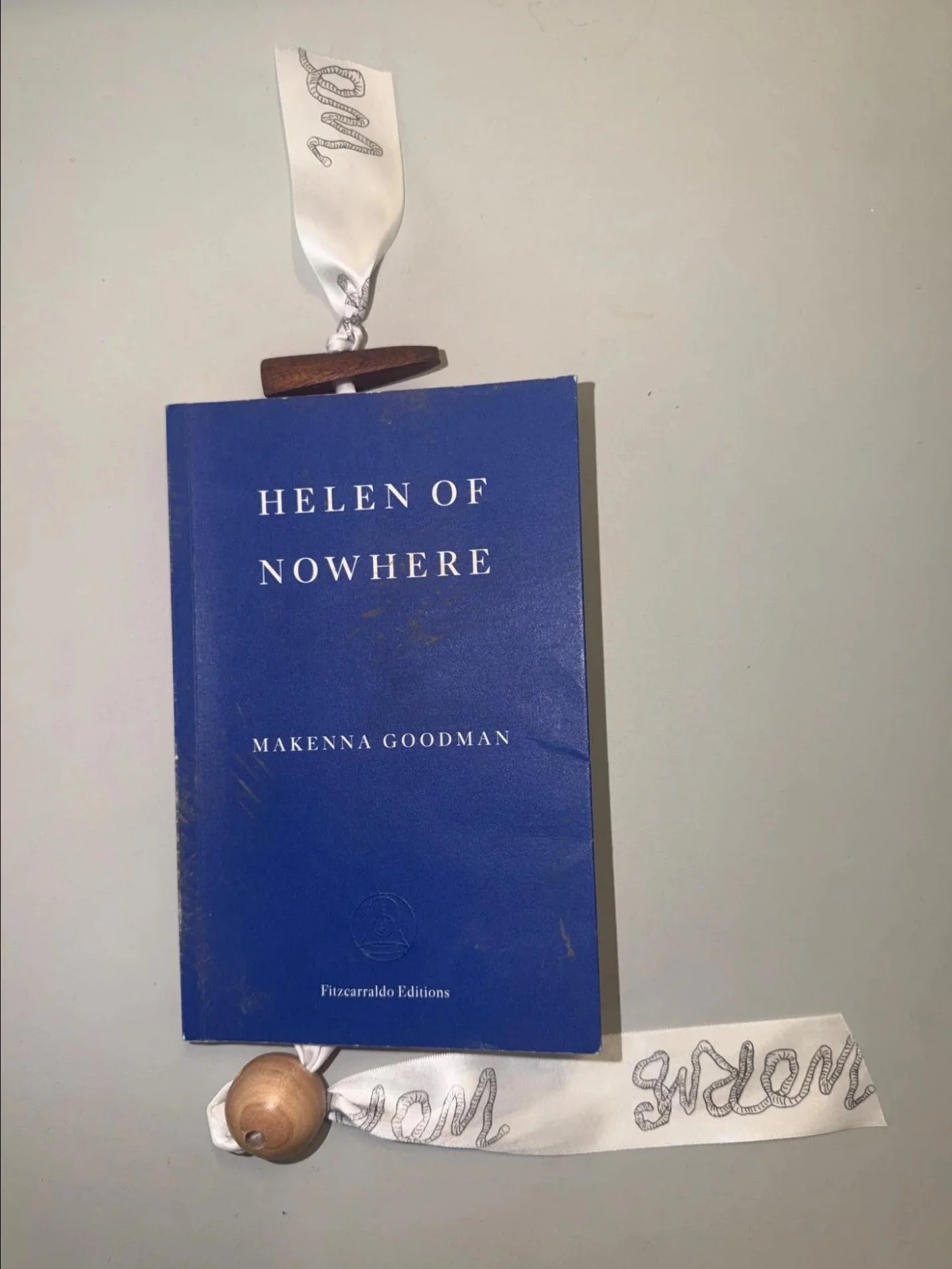
Helen of Nowhere by Makenna Goodman
Review by: Clem MacLeod
This book took me massively by surprise. I basically read it in one sitting, which is really rare for me. It's got some very beautiful messages hidden within it, some philosophies to subscribe to.
On the surface, Helen of Nowhere follows the story of a disgraced academic who has been cancelled by his female university cohort and wants to run away to live in nature. Upon exploring real estate in the countryside, he meets a realtor who ends up being a spiritual medium for the titular protagonist. This lady, who spends what seems like a lifetime with our male lead, offers him advice and philosophical guidance that is both cathartic and chilling. I'm not sure if I was meant to, but I found this book really funny. What I took as Goodman's humour was very sharp and dry; she spends the book interrogating her main character, without being totally horrible. She also manages to create great suspense in a narrative where essentially nothing happens. I didn't hate the guy by the end, by any means. She captures masculinity and ego through him, but also reveals a more universal tendency to cling to identities when we feel threatened. I actually thought about writing a lot whilst reading this. I thought about how in writing we often feel that we need to 'be' a certain way in order to write, how we feel we need to fit a certain mould, but how this thinking leads to misery, ultimately.
I listened to this podcast with Goodman where she talks about the fact that the voice of the male character came to her as she was working at a progressive community oriented school. It was in the wake of George Floyd's murder, and this voice came through to her as a symbol of a need to evolve our thinking. She was influenced by All About Love, which also makes a lot of sense. She was reading it whilst she was teaching at the community high school, and she talks about how bell hooks emphasises the importance of love in social change. Goodman uses love as a central message of change for the man in her book.
She wrote the book at night, saying she needs the darkness of the night to mirror the soul. As the darkness goes deeper, the character goes deeper into their soul/subconscious. This is mapped out pretty chronologically throughout the book.
“I actually thought about writing a lot whilst reading this. I thought about how in writing we often feel that we need to 'be' a certain way in order to write, how we feel we need to fit a certain mould, but how this thinking leads to misery, ultimately.”
I want to live inside of Goodman's mind for a little while. I wanted the meditative ramblings to go on for many pages beyond its close. I'd never read any Makenna Goodman before, and I now have The Shame at the top of the lineup for my next reads. I highly recommend her work.
I'll leave you with a quote:
"You think you've lost everything, but you haven't lost anything at all because you had nothing to begin with. None of us has anything, in fact. None of us has anything at all, and that is beautiful. This is about removing the power of the ego from the soul, removing the myth of something into the truth of everything."
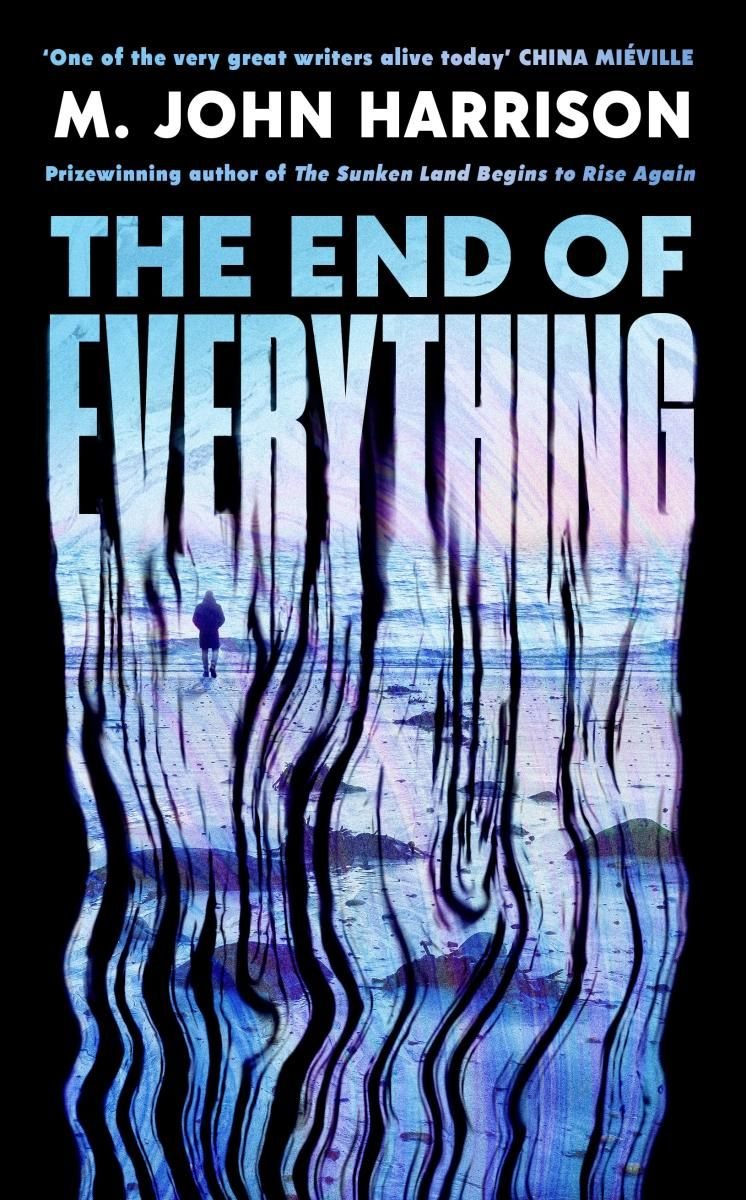
The End of Everything by M. John Harrison
Review by Arcadia Molinas
The End of Everything is set in a not-too distant future, where the arrival of alien entities baptised the ‘iGhetti’ (eyebrow raise?) has taken over the City of London and forced Londoners to the coasts of Kent. There, they comb the beach in search of “artefacts” while they long to go to the "faraway continent” they can just barely, sometimes, catch glimpses of across the ocean. We meet Stephen Tennant there, at the beach, just as he finds an artefact that seems to be alive, or coming into life, or at the very least in possession of consciousness.
“There are moments of true emotion in this short, unusual book. Its style will either win you over or send you over the edge.”
The plot that follows is ambiguous. There is a sense of post-Brexit isolation, an aimlessness that is derived from the knowledge humanity has conjured its own demise, and the ever-present looming spectre of the iGhetti, which to me, seemed to directly speak to AI, but could stand in for many of the fears that define our present era: surveillance, social media, accelerationalism and sure, why not, a real alien invasion. The artefact, which grows slowly but surely into a human-like shape, was the highlight of the book for me. Its depiction was particularly vivid, gelatinous and unsettling, and brought up questions about the role and presence of artificial intelligence, whether it aspires to live like us, feel like us, look like us. Art has a strong presence in the narrative, one of the characters eventually finds refuge in an old gallery, and paintings are referenced constantly. What the point was, or what I was supposed to feel through these allusions was unfortunately not really made clear to me.
The characters speak to each other in disjointed phrases that are at once philosophical (“We’re suspended in this new catastrophe. We’re held in suspension. It’s ongoing and unresolved. It never ends. The nature is that it has no nature. Not for us.”) as they seem to be devices for the author to have his characters tell us, directly, the metaphysical dwellings of his book. Otherwise, the action and descriptions are suffused in a vagueness, confusion and ambivalence that can lose even a committed reader.
There are moments of true emotion in this short, unusual book. Its style will either win you over or send you over the edge.
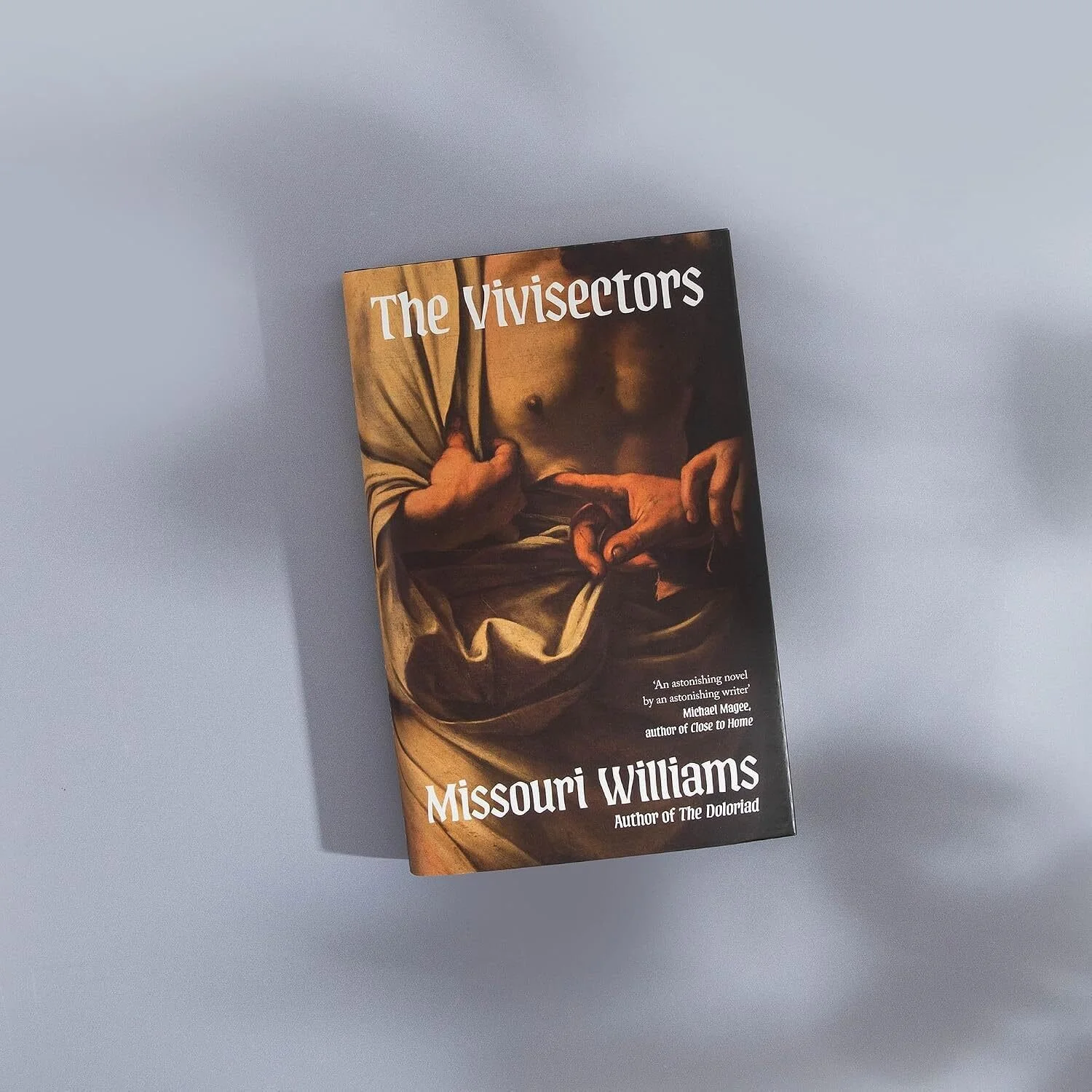
The Vivisectors by Missouri Williams
Review by Caitlin McLoughlin
The Vivisectors by Missouri Williams was one of the first books I read this year. Whilst different in its formal offering from her first book, The Doloriad—as Missouri explains to me in our recent conversation for Worms 12—The Vivisectors is similarly preoccupied with broad, philosophical questions concerning the collapse of society and the problems of scepticism and cruelty. It’s set in a crumbling city once famed for its world class university, now succumbing to a pervasive malaise that has seized its population who survive largely on the dwindling prestige of their past and the relentless narrativising of experiences. At the heart of the book is a park that is taking over – its relentless, implacable growth threatens to consume the city and surrounding suburbs.
Agathe, the book's narrator, was born into a family of celebrated writers, editors, and academics, part of the city’s cultural aristocracy, and now lives with her uncle in a large suburban house, estranged from both her parents. She despises her boss, also an academic at the university, and her insatiable anxiety and desperation to be liked by her students and peers. In opposition to the academics are the gardeners, an army of men who feel like a species unto themselves, with their broad-rimmed hats and weather-worn skin, they are the only people who can keep the unstoppable flourishing of the park at bay.
The book’s central conflict is ostensibly a campus dispute that is amplified through gossip and relentless debate. It’s a conflict that has echoes of some of the cultural debates of our own time: the necessity of identity politics, the proliferation of conspiracies, the rejection of discomfort. And yet it’s impossible to locate as we only gain an understanding of it as refracted through the subjectivities of the different characters. It is in this way that Williams offers us no moralising objective, instead allowing the reader to navigate their own way through complex and conflicting ideas and beliefs.
“The success of The Doloriad and The Vivisectors lies in the worlds Williams has created that feel as once ancient and monumental, contemporary and astutely observed.
Whilst both Williams’ books arguably borrow facets from sci-fi and fantasy, it is perhaps the gothic sensibility that they can be more accurately mapped across. The success of The Doloriad and The Vivisectors lies in the worlds Williams has created that feel as once ancient and monumental, contemporary and astutely observed. They are testament to what fiction can do, as a space for testing ideas, probing discomfort and building something that can hold a mirror up to ourselves, yet at the same time feel wholly original.
