Slipperiness and Survival
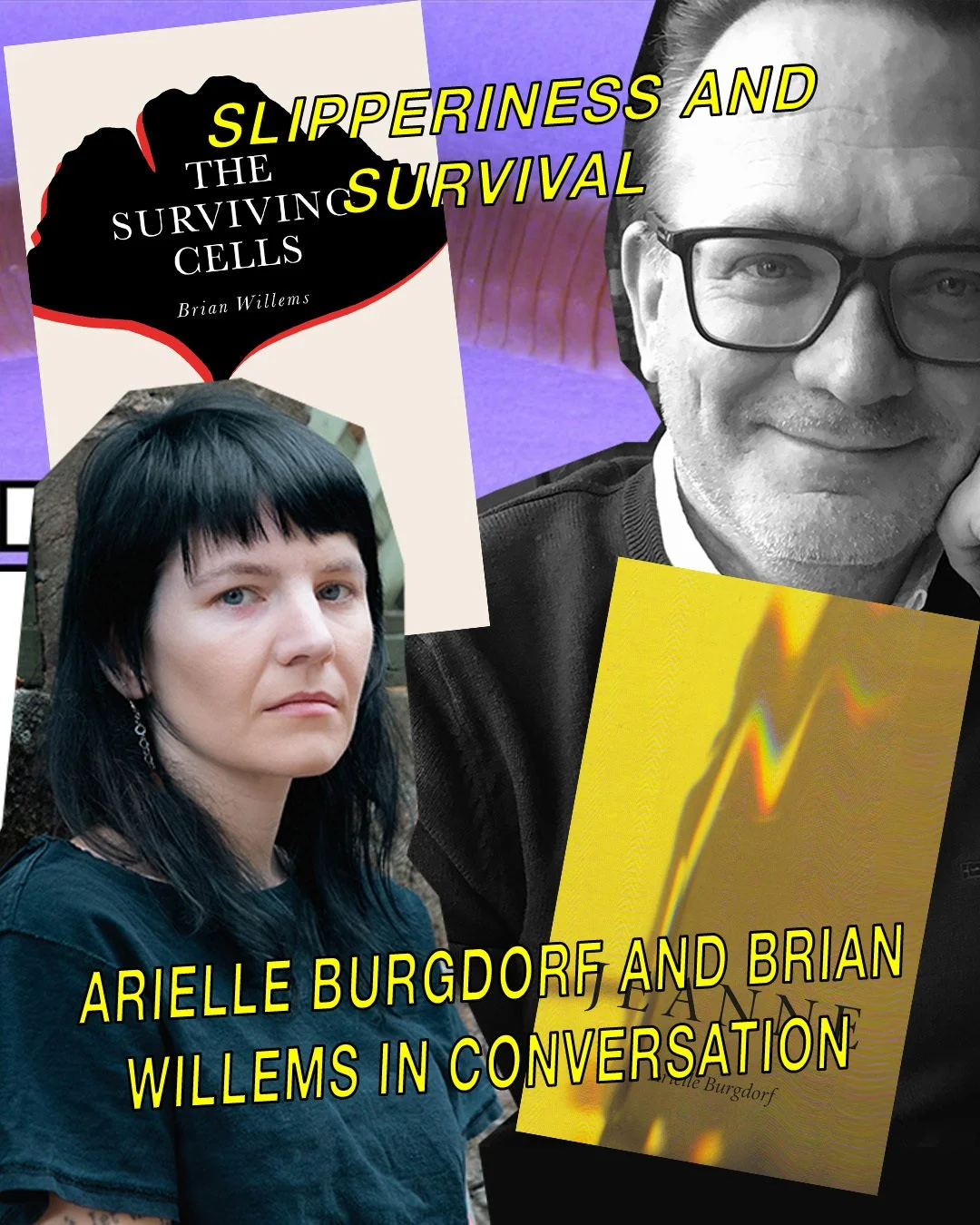
In the following conversation, Arielle Burgdorf and Brian Willems interview each other about their recent novels, touching upon subjects including translation, the writing process, difficulties and pleasures of the body, illness, and belonging.
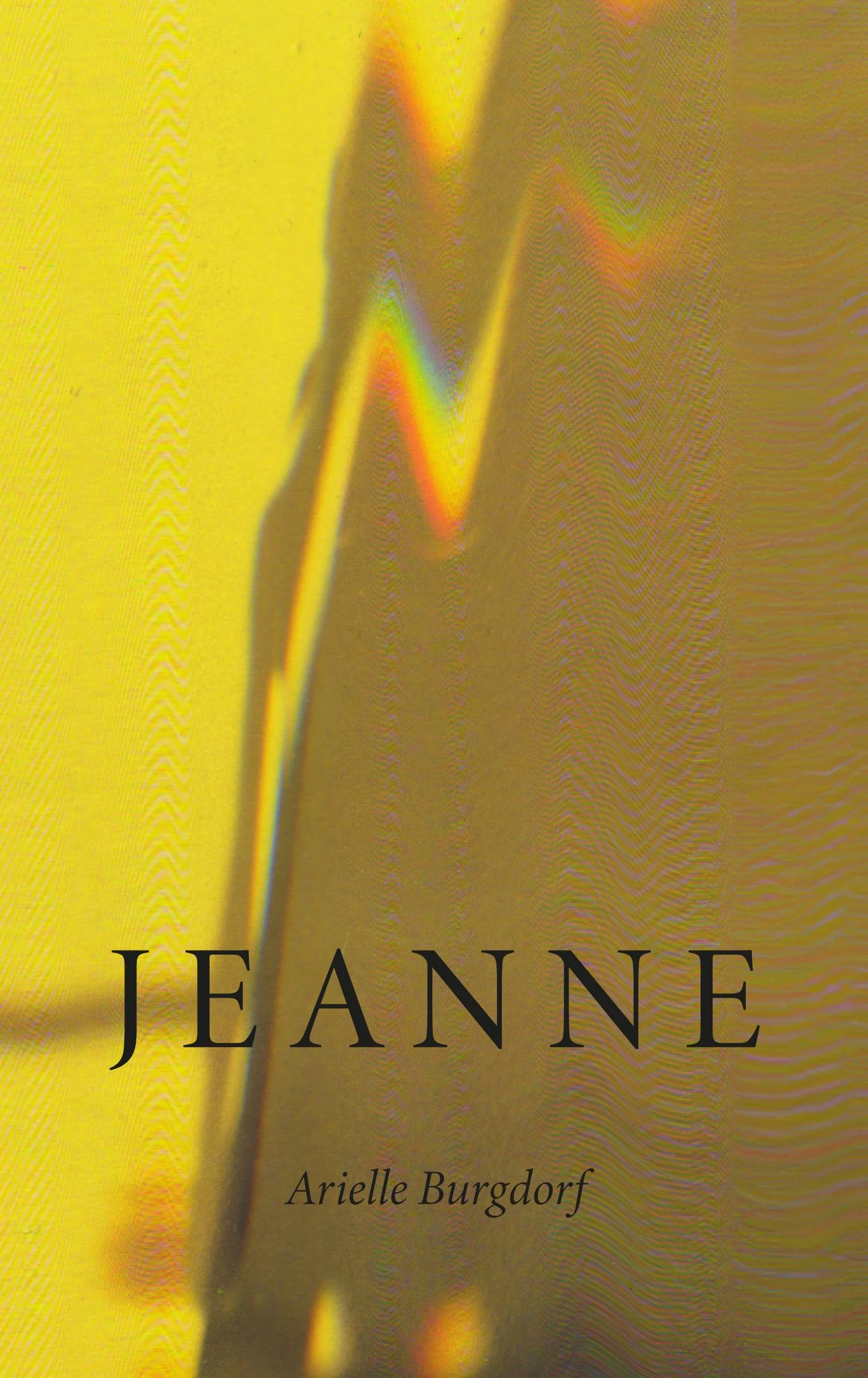
Arielle Burgdorf is an American author who moves around a lot, most recently to London. Their novel Jeanne, released by MOIST Books in 2025, tells the story of a translator of French and Russian who takes a chance on a mysterious offer to fly to Montreal to start on an unusual translation project.
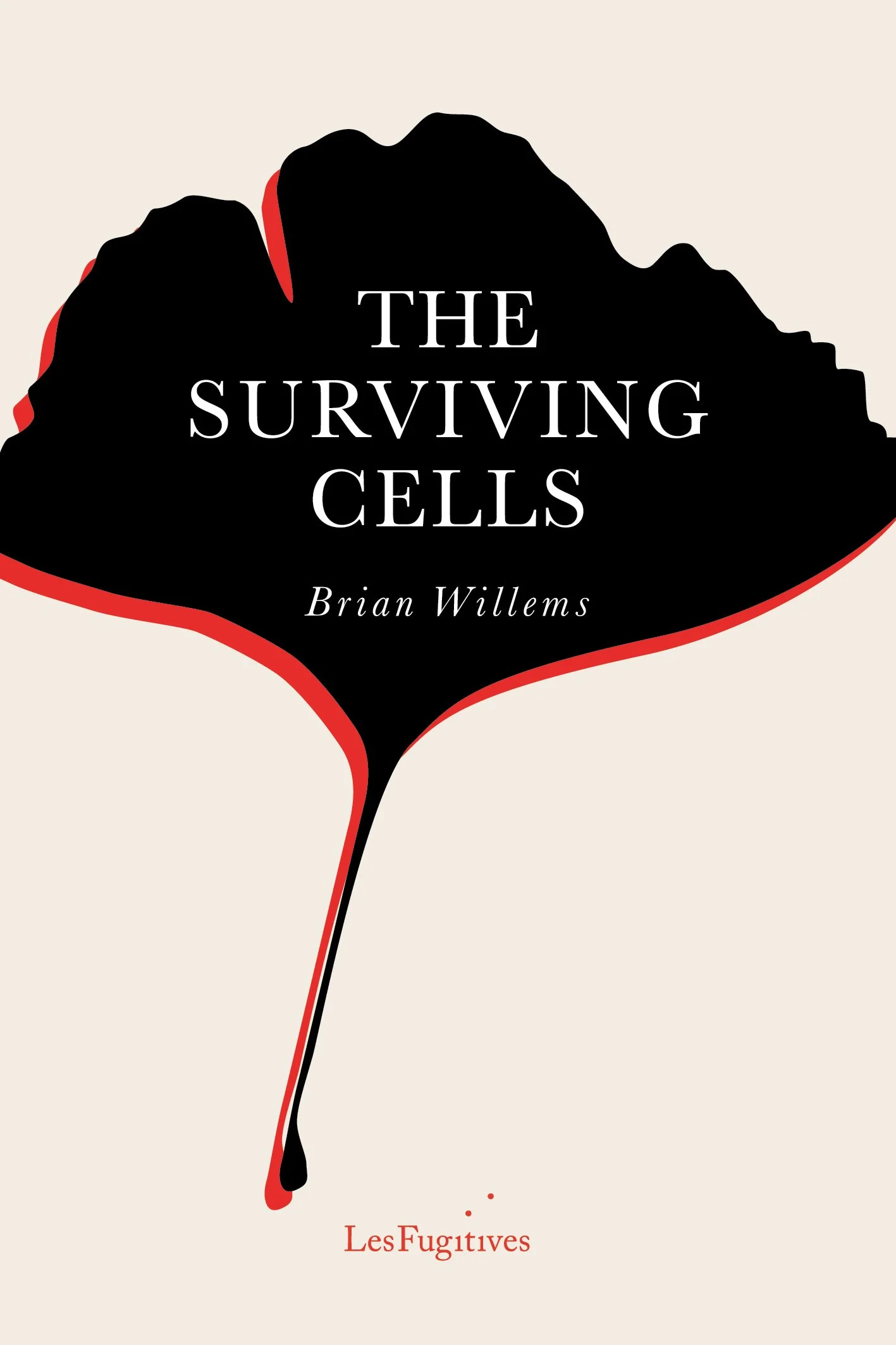
Brian Willems is an American who has been living in Croatia for the last two decades. His debut novel, The Surviving Cells, published by Les Fugitives in September 2026, centers on an oncologist and her daughter, both of whom have to make hard decisions about their own lives as well as the lives of others.
While the two novels are distinct in topic and tone, some of the commonalities brought out in the following dialogue include: the way that translation impacts many aspects of life, not just the movement of a text from one language to another, the difference between writing about what could be considered "home" and "elsewhere," and the negotiation of identity through ideas such as slipperiness and survival.
Brian Willems: To me, Jeanne seems to be not just a novel about translation, but a novel of translation, as seen, at least in part, in how large passages in French and Russian are left in the original in the English text. This seems different than, say, the way French is left untranslated in War and Peace, since it was expected that readers of the novel would know French too. I am not sure you expect your readers to know French and Russian in the same way, so I wonder what is it that you want them to experience when engaging with these untranslated passages? My guess is somehow the act of translation itself, but I am not sure.
Arielle Burgdorf: Yes, this is a good question. It would be difficult for every reader to have the same experience of the text, given the differing language abilities that exist. And what I was also trying to point out in the book is that there isn’t just one French, there are many Frenches, many francophone populations, and Quebecois French separates itself in many ways from Hexagonal, metropolitan Parisian French, which is assumed to be the standard. My hope was that if readers did understand French or Russian, that the text would add a little more to their reading of the book, but also if they didn’t, that it wouldn’t impair their understanding of the text as a whole.
At the same time, I did want to create that sense of alienation and otherness for some readers that happens when you encounter a language you don’t speak, and your brain struggles with various associations and ways to make sense of it. Monolingual English speakers rarely get to experience this, you can even visit another country and the signs will be translated into English for you. I think Westerners can also have this sense of entitlement that shows up as an assumption that they should be able to read and understand everything in the world, that nothing should ever be off limits to them. It’s a very colonial mindset. That’s why there’s one section where French and Russian are mixed in the same sentences so much that it becomes gibberish, and in theory, no reader can understand it because it doesn’t have a legible meaning. Untranslatable.
BW: Much of the book seems to be about the ambiguity of language and place, with these amazing lines on the opening page: "Shuffling between borders, currencies, and time zones, countless imaginary markers she doesn't believe in, the old Jean dissolves. She slips, she becomes slippage, slippery. The markers blur and blur until finally they blur the very silhouette of self. When everything breaks down, what is left of her? She is not sure." Yet when Jeanne works on approaching the translation of a manuscript by the artist M., there seems to be firmer ground: "Jeanne is beginning to put together a skeleton of the work, then slowly filling it out with skin, figuring out the curves and muscles. When she can eat and breathe the text, when it moves within her body like it is her own, then she will know that she truly understands it." It seems that one way translation works in your novel is to constantly shift between slipperiness and understanding. Does that seem right? And if so, how do you negotiate that shift in the book? And is part of that shift worked out in the use of the names Jean/Jeanne for your main protagonist?
AB: Yes, hopefully there is a progression towards understanding as we get further in the story. But one of the main points I really wanted to make is that both language and identity are inherently unstable concepts, and we as humans spend a lot of time trying to avoid this knowledge. It’s also just the way I relate to the world. I have lived so many places and loved so many places that I honestly don’t know how to answer the question of where I’m from. I’ve always felt like I related more to wandering than having roots, which is also a privilege in some sense. Humans are so convinced of the need for boxes and binaries and labels but if you look at the totality of someone’s life, things are usually a lot more nuanced.
As a translator, it’s always about balancing slipperiness and understanding. You want to understand the author when at the same time that’s an impossible task, two people can never completely understand each other. You’re searching for this invisible thing in the author’s voice and that can be difficult to hold onto. And yet to me the impossible task is also essential. We may never completely understand each other, but we have to try.
“As a translator, it’s always about balancing slipperiness and understanding.”
For Jean/John/Jeanne I wanted there to be a progression towards understanding and embodiment. She starts out very disconnected from her body and her life, and then it starts to catch up with her and she is kind of forced to face reality. I wanted to play around with the idea of naming. As a queer person I believe in the freedom to identify how you wish and to change your name as you transform as a person, or even on a whim. The names were also connected to different languages and parts of her personality. Jean/John/Jeanne are all translations of our protagonist, they are all distinct but they are all her, and they are all valid. But because her husband Konstantin rejects some of her names, it was important to kind of land on a specific place in terms of identity.
BW: In a passage describing time in Iceland, the dying pink of a geyser is described. I thought the way you worded it felt like a key for much of the novel. Is there any way you could walk me through your word choices in this passage:
She had seen plenty of fountains dyed hot pink for Breast Cancer awareness or neon green for St Patrick's Day. But this was different. A subtler shade of artificial. Evaristti's geyser gestured towards nature, the pink hues of sunset. If not exactly in perfect harmony with nature, it was not in conflict with it either. The pink geyser existed in its own realm, alien yet legible. Part fantasy, part reality.
AB: I think you’re right about it being something of a key, although this was more subconscious than intentional when I was writing it. I really wanted to question this idea of the original, and of authenticity, and the values we place on certain things being more authentic than others.
So in the beginning we have a reference to American consumerism essentially, with the dyeing of fountains to go with publicity campaigns and even St. Patrick’s day in itself in the U.S. which is this sort of strange attempt at reconstructing Ireland in an American context. And then I compared that to this artistic act by Evaristti that I obviously have mixed feelings about. But what I was trying to get at was that apocryphal Camus quote, “fiction is the lie through which we tell the truth.” Art can be the lie through which we can see other things more clearly, in this case, nature. The pink geyser picks up on something latent in the environment and draws it out, and at the same time is creating this fantasy realm that previously didn’t exist before. Reality is also just so disappointing to me sometimes, and that’s why I feel like we need art and fiction as an antidote.
BW: You are doing a PhD on queer and feminist writers from Quebec, and there are a number of such writers (and others) mentioned throughout your novel (which I am grateful for and have been following up on). Is there a relationship between your academic work and the novel? If so, how do you see them interacting with each other?
AB: Yes! I’m glad you picked up on this. The book was originally inspired by research I did for my PhD, in particular, Nicole Brossard’s book Le desert mauve or in English, Mauve Desert. It’s a novel that uses the space of fiction to think about theories and ideas of translation, and I thought, maybe I could do something similar. It’s funny also because Brossard is from Montreal and her book is set mainly in the American southwest, and my book is set mainly in Montreal, so we sort of switched places.
As with the French and Russian, I wanted readers who knew about Quebecois history or literature to have an added layer of references in the text, easter eggs, but my hope is that if you don’t know anything about it, that doesn’t add too much confusion. I didn’t want it to be super academic, that’s where all the sex and drugs come in, but I was reading about Lucy Ives’ concept of the “weak novel,” and I think Jeanne could fall under that category.
What about you, what does exploring translation in literature do for you?
BW: I like literature that takes translation into account, even if it's not about translators per-se. For example, the work of Cathy Park Hong, including her books of poetry Translating Mo'um and Dance Dance Revolution. They're created out of multilingualism, books which couldn't exist without the multiple languages they contain. I think that, having lived the last 27 years living in what is problematically called “Eastern Europe,” it is not understanding everything that is being said in these books that I relate to.
Something similar is done in the first book of Dorothy Richardson’s Pilgrimage series. The main character Miriam goes from England to Germany to teach, and doesn’t understand German very well at first. Initially, when other characters speak German, it is provided without translation, giving non-German readers a similar experience as the main character of not understanding. Then, as Miriam’s language skills improve, translations are provided for the German she understands. I see this as similar to the way you leave large parts of French and Russian passages untranslated in Jeanne, representing an important aspect of translation, the struggle of it.
AB: I like that idea of the text mirroring the character’s understanding. I tried to do some of that as well, but it was more about the form mirroring Jeanne’s emotional or mental state (or disintegration, at times). In my novel I felt that including untranslated text made it impossible to ignore the act of translation.
“Reality is also just so disappointing to me sometimes, and that’s why I feel like we need art and fiction as an antidote.”
BW: In your novel you negotiate understanding through multiple languages, but objects also play an important role. In one part there is a visit to the Museum of Broken Relationships in Zagreb, Croatia. Since I live in Croatia (although in a different city), this was of special interest. People donate personal items that are related to a break-up to the museum. And at the end of this chapter of your book, you say that "But Jean was a romantic. She would have liked to freeze both of them [Jeanne and Konstantin] in the museum as artefacts. Two wasps trapped side by side in a thick golden tomb of amber. Forever, happy." I thought this was a powerful way to both read and use the museum. How do you see such artefacts as being "happy"? And what does this wish to be such an artefact mean in the context of Jean and Konstantin?
AB: This passage was mostly about narrative and how humans construct narratives of their lives. Museums are a really clear example of this because exhibits are curated and the way information is presented is chosen by someone who can emphasize or erase certain aspects of history or culture. But at the Museum of Broken Relationships, visitors were allowed to contribute, which shifts the power balance. If you stop narratives at a certain point, they can have a happy ending, but another point turns it into tragedy. Even that short story incorrectly attributed to Hemingway — For sale: baby shoes, never worn. “For sale: baby shoes” isn’t necessarily sad but then we get to the end of the sentence and then the last two words completely change our understanding of the previous ones. Or take the way people curate their relationships on social media, choosing to begin and end the story at places that suit them. As a writer I’m constantly thinking about where to begin and end the story. And it’s very confusing to be a human trying to fit your life into a form or narrative, because it doesn’t fully end until you die (and maybe not even then!).
In terms of artefacts being happy, the stasis of the physical object essentially creates this end to the narrative, outside of time and context. Especially ancient artifacts that survive for a long time, we’re observing them far from their initial context, and this distance can give it more of a positive gloss. At this point in the story Jeanne and Konstantin are at the beginning of their relationship, and it’s been mostly good so far. So Jeanne wishes to objectify them as a couple —literally turn them into objects, in order to preserve the narrative she wants, which is true love.
Have you visited the Museum of Broken Relationships yourself?
BW: I haven't been there, but I liked your writing on it. The idea of displaying items that relate to a break-up is a good idea. I also like the location of the museum, which is right in the centre of town, occupying the most expensive real estate, and not hidden away in some suburb. Having a museum about broken hearts in the heart of the city seems healthy, and hopefully transcends the "gimmicky" nature of its concept.
AB: I’m curious to know more about Croatia in general. Would you say that Croatian has a personality as a language?
BW: Regarding the "personality" and humour of Croatian, the part of Croatia I'm in, Dalmatia, a southern part, along the coast, is known for its humour. But I think this humour comes out most strongly in personal interaction, rather than in literature or film. It doesn't seem to translate often (with a few famous good examples), at least not for me. It seems more of a conversational humour, which can actually be quite harsh, quite emotional. As if people will do anything for a joke: skewer any topic, any idea, especially anything deemed to be held dear by another. Not so much an attack on sensitivity, but rather a politics that says, You might be saying everything correctly on the surface, but let's test what you really feel. It's a strong personality, which has the potential to go horribly wrong, but can lead to some good jokes.
AB: Do you ever write about the US? How does it compare to your relationship to Croatia?
BW: I tend to write more about the US than elsewhere. But it's the US of when I lived there, which was 1972-1997, which then gets superimposed onto the present. My novel The Surviving Cells takes place there, in the US, and is about my having had cancer in the mid-1990s, but has a contemporary setting. In the book's sequel, the characters do visit Croatia, but I based that part on the time I lived in Prague, 1997-2003.
I am from Minneapolis, Minnesota, and that is where the novel is set. It takes place during early 2026, when ICE raids were particularly focused on that city, resulting in the deaths of Renée Good and Alex Preti. As someone living abroad, I felt both removed and connected to these events, and I wanted to translate that feeling into the book. I am not the right person to write about people on the front lines, but I tried to describe those who were both affected by what was going on but also distant from it, seeing the violence through the fog of illness and treatment. This is similar to how I tend to treat writing about place in general. It's as if, in order to write about a place, I need to translate it into somewhere and sometime else first.
AB: Yes, I relate to that as well. However, I don't usually write about places in the US where I've lived directly, but I write about them inside or transposed onto other places.
When you moved to another country, did you feel like anything was destabilized or knocked loose?
BW: I have had a very easy and privileged move to Croatia. I teach at a university, have a stable home and family. In terms of my writing, I guess what gets knocked loose is a feeling that what I say will be easily understood by a reader. What I mean is that, when I write, one of the "big Others" watching over my shoulder is a non-native speaker who is simultaneously translating everything I say into another language, asking me exactly what each bit means, wondering if I could have said things more simply.
I like this voice, which I think of as the voice of translation, because I think that translators are the closest readers anyone has of their work. When I'm writing, I have that voice in the back of my mind: that whatever I write will have to be "defended" to the translator.
By chance I have recently read a few novels about one person being "obsessed" with another (Aria Aber's Good Girl, Annie Ernaux's Simple Passion). Perhaps you don't see your work fitting into this line, or you would word it differently, but what is it do you feel you are exploring in Jeanne's relation to her main romantic interest Konstantin? I feel like it is connected to the role of translation in the novel, but I am not sure how.
AB: I love that you mentioned two books I recently read and enjoyed as well! In Good Girl I do see a connection; pretty much as soon as Nila starts dating Marlowe, we know he’s bad news and probably a fuckboy, and you’re almost shouting at her as a reader to get away like someone watching a horror movie. Jeanne and Konstantin are a bit like that, but with Nila, who is the daughter of Afghan refugees dating a white man there’s also this added racial dimension that brings in all these histories. But in both books, the reveal is not that these two people are in a really abusive relationship, but how and when it will end. Simple Passion is different in that it's more rooted in Ernaux's direct experience, but the theme of obsession and fidelity definitely runs through all three texts.
In terms of what I was exploring, Konstantin was supposed to encapsulate all the negative ideas about translation that we as a society need to get rid of. This includes everything from the shift towards machine translation to pay for translators. Things have really improved in the last few years, thanks to translators like Jen Calleja, Anton Hur, Emma Ramadan, and Jennifer Croft advocating for greater transparency and respect for the art of literary translation, and Heart Lamp winning the International Booker with the prize split evenly between author Banu Mushtaq and translator Deepa Bhasthi. But outside of the literary translation world the general public still often doesn’t understand how translation works, and the labor is devalued. Jeanne initially finds Konstantin compelling and seductive up to a point, but ultimately he is confining her and making growth impossible. Again, she has to leave him, we know this, the question is when and how.
“When I'm writing, I have that voice in the back of my mind: that whatever I write will have to be "defended" to the translator.”
BW: And finally… I find that when I end one project and move on to another, the new project is somehow always written "against" the previous one. Sometimes to prove it wrong, and sometimes to work on a problem I couldn't see while writing, but that became glaringly obvious afterwards. If you're working on something new, how is it related to Jeanne (if at all)?
AB: I relate to this, although I do often indulge in the same themes and obsessions. Jeanne was really focused on cities and people, and the novel I'm working on now is more interested in rural areas, in animal and plant life. I wanted to challenge myself to think more about nature and the natural world because it's something I love but often feel very disconnected from, I used to really hate eco poetry, for example. So far it's also first person, Jeanne was the first book I wrote in third person and it worked for some reason, but first person seemed to make more sense for this one. But it’s still about romantic love and language and travel because that’s what interests me.
Ok, now I want to shift to you. What are some literary works close to your heart (and why)?
BW: Regarding my novel The Surviving Cells, in 2020 I read Anne Boyer's The Undying, which was the first real book about cancer that I had read since having it myself, 25 years before. That led to Siddhartha Mukherjee's non-fiction book The Emperor of All Maladies, and started my thinking about my own experience. Then I began seeing cancer in everything I was reading, which made me wonder if I had just been skipping over the topic before, willfully blinding it out. Importantly, these books lessened my fear about writing and thinking about cancer, as well as realizing that the story of my experience could only be told by me.
More recently and generally, Doris Lessing's The Golden Notebook changed things around me. Sometimes I just read books to finish them, not really paying attention or even skipping pages. But Lessing's novel made me stop doing that. It made me dispense with books that I wasn't being overwhelmed by. To demand a bit more from both the books around me, and from myself as a reader. Margaret Drabble's Jerusalem the Golden was similar. Another novel, and one which you recommended, Charlie Porter's Nova Scotia House, overwhelmed me in the way it sustains the poetic line throughout. And Latifa Al-Zayyat's The Open Door, an Egyptian novel from 1960, is a lesson, in part, on what it means cognitively for two people to connect. I can't stop thinking about it.
AB: In The Surviving Cells, there's a great authority to your descriptions of hospitals, drug trials, conferences, and the thought processes of doctors that felt very real to me. What experience, if any, do you have with the medical world (if you feel comfortable speaking to this)?
BW: This was one of the areas I was most worried about with the book. My only contact with the medical world is as a patient, mainly through the cancer I had myself in the mid 1990s, and of course through the illnesses of those around me. Otherwise, any experience came about through reading. In the novel I try to mention the authors who had the most influence on me, such as Siddhartha Mukherjee, whose history books on cancer, the gene, and the cell are all amazing, but whose The Laws of Medicine, about the practice of being a doctor, was very important for trying to understand what the hospital world could be like. Another good source for the feeling of being involved in medicine, was Aude Mermilliode's graphic novel A Woman's Voice, which is adapted from the novel of the same title by Martin Winckler.
Another aspect to this question is the way I wrote the novel. I usually write a first draft as quickly as I can, but with this, I slowed down, writing in small chunks, about 200-250 words a day. Then, in between each writing period, I read around 150 pages from various books. This was not just about research, but energy, to be able to concentrate as much as I could into each moment, which I think has to do with the feeling of "authority" that you mentioned, which I am seeing as a kind of "energy."
AB: It’s interesting how this slowed down writing period echoes the slowed down reading you experienced with Lessing.
Maybe that slowing is also necessary because, as you mentioned, the subject matter, cancer and death, is very heavy. Did you find it draining to recall and write about, and if so, what ways did you have of revitalizing or caring for yourself?
BW: That’s a very kind question. Well, I cried a lot while writing it. It was hard, at first, to even write down the word "cancer." Susan Sontag talks about that, about how when we don't have a cure for a disease, then its name takes on magical properties, as if you could catch it by just mentioning it.
But I don't know if I did anything specific to revitalize or care for myself during the writing. I think I might be in more need of that now, as people actually start reading the book and letting me know what they think.
AB: Yeah, that makes sense, I hope you’re able to find something that works for you. Were there other authors you looked to as models for writing about illness?
BW: The non-fiction writing by Anne Carson and Susan Sontag on illness helped me open myself to being able to speak and write about my cancer. In terms of fiction, the way cancer appears in Kathy Acker's Eurydice in the Underworld, and some of Octavia Butler's novels, such as Dawn and the Patternist books, helped me think about how cancer can be part of a novel but not the only thing a novel is about, and how cancer can be a metaphor beyond just spreading and loss of control, becoming a way to talk about what my novel circles around, which is making hard choices, thinking about others, and learning what is most important for yourself.
AB: I'm trying to think of other books that focus on cancer without it being the whole story, but I’m realizing now that I often avoid novels that deal with cancer, even though it’s deeply impacted my life and the lives of almost everyone I know, because of my preconceived notions about what the text will be like. And maybe because of that fear Sontag described.
There's a new book out by Katie Yee called Maggie: or, A Man and a Woman Walk Into a Bar that’s supposed to be really good and write against cancer tropes. But when I hear “novel about cancer,” I picture Nicholas Sparks’ A Walk to Remember or John Green’s The Fault in Our Stars, something that is maybe a little manipulative, trying to pull on your heart strings.
Your book is nothing like that. If anything, it’s unsentimental and clear-eyed about death as part of life. I’m wondering if you could speak to your use of tone in the book, it’s very carefully deployed in my opinion. Sometimes used to create distance, and in other places to create more intimacy with the reader.
BW: Thank you for noticing that difference, and I think it is one of the reasons the kind people at the publishers, Les Fugitives, reacted positively to the text. I also find it hard to engage with “straight” novels about cancer, which is reflected in the novel itself, with Ana struggling to admit that she finds one of the most popular non-fiction books on the subject helpful – Atul Gawande’s Being Mortal.
In a more general sense, I think that is what being involved with the medical world is like: moments of great distance, both from others and from your own body (especially as people "work" on it), and then there are moments of great, physical, fleshy intimacy. Or as a patient, that you accept your body and its problems, but with a need to have a distance from yourself in order to both live with pain and be operated on to get better. It is great that you saw the book moving between those two poles.
AB: Related to dis/embodiment in the story, why did you choose a female narrator?
BW: The start of the novel is based in fact: when I had cancer, my oncologist made a decision that, as far as I remember, went against the advice of her peers, and this decision saved my life by stopping the cancer from spreading too far. I wanted to write a novel about that decision, not about how the decision affected me as a patient (because I knew that already, and is one reason the "me" character in the book bows out early). My doctor in real life was a woman, so I never considered anything else for the novel. But I didn't want to research her real life at all while writing. I looked all that up after, and was very pleased with what I found. But the real woman who was my doctor was not what I was writing about, but rather about my understanding of that one decision she made. However, I did, without consciously thinking about it, name the doctor's daughter, Maggie, after my real-life doctor. So perhaps the book is not so removed from reality as I think.
AB: I really appreciated the relationship between Ana and Maggie. What was your inspiration for her?
BW: Maggie was supposed to be a small part, and then I just liked her so much that the part grew bigger. I've written a sequel to this novel, which is all about her, and there is one more book planned about her too. So in a sense this book becomes Maggie's story, or Maggie's back story. But regarding my inspiration for her, I think her personality came about in relation to the serious topic of the novel. Maggie's mother, Dr Ana Jovanovic, lead oncologist, spends her time doing many serious things, and I wanted someone who did not take her too seriously, as kids often don't with their parents, and things kind of rolled out from there.
AB: That’s the best feeling for me, when a minor character makes themself known and you have to give them more space. She’s a great character and I’m pleased to hear there will be a sequel as well. Another complex character in your story is Duri. Ana and Duri have an interesting relationship. What were you trying to communicate about their personalities through their affair?
BW: Just as Maggie started out as a character who didn't take Ana too seriously, I wanted Duri, who is a young intern just starting out, to show how privileged Ana's position is, both in terms of work and family. Also, because Ana's life as an oncologist involves a certain distance from her patients suffering from cancer, Duri is a figure where she can negotiate issues of sex and other forms of intimacy.
AB: Towards the end of the book, one of the characters is ill, and their loved ones surround them with objects they associate with them or think they would enjoy (old lilies, a painting, a Harry Potter book) that the character finds somewhat disappointing; it makes them feel somewhat misunderstood. This made me think of a friend of mine who died in her 30s. Her estranged mother wrote her obituary, and it was clear that the version of her that her mother had was frozen in a very specific moment in time, just like in your book, the painting of the sailboat made in junior high freezes the daughter at that age for those who see the painting.
Not sure exactly what my question is here, maybe, can we ever really know each other’s inner worlds as humans? And if we can’t, is that even a bad thing, or is it ok that we present idealized versions of ourselves to please or reassure others, even if they’re not accurate?
BW: That’s a great point. When I was ill, I felt like I had to redirect so much of my energy away from my own healing to taking care of other people. Trying to make them not feel sad, or pretending to feel better than I felt so that they didn't feel so bad. And I'm sure they were doing the same with me. I also wanted to write about how it's OK if you get the end of life wrong, if you're not there for someone, or if you misinterpret people's wishes. Because maybe the end is not that important, it's all the stuff that comes before it that matters.
Arielle Burgdorf is a writer and literary translator from French. They are the author of the novel Prétend (End of the Line Press, 2024) and the revised UK edition Jeanne (MOIST Books, 2025). Their writing and translations have been published in Lambda Literary, Electric Literature, Worms, Amsterdam Review, Full Stop, and elsewhere. Originally from the U.S., they now live in London.
Brian Willems is the author of the novel The Surviving Cells (Les Fugitives, 2026), and has poetry and prose in The Antioch Review, Poetry Salzburg Review, Prague Literary Review, and elsewhere. He is professor of literature at the Faculty of Humanities and Social Sciences, University of Split, Croatia, the author of six academic books, most recently Anger and Change in Korean American Literature, and is co-editor, with Nicol Barria-Asenjo and Slavoj Žižek, of Global Manifestos for the 21st Century.
