How I Started My Press with Prototype
I can’t remember when or where I was when I picked up my first Prototype book. I do remember the book: Incubation: a space for monsters by Bhanu Kapil, and that it caught my eye because of its striking cover – the seductive graphite drawing by artist Stuart Middleton, a close crop of shiny metal pumps and levers, wraps around the front and back. The book is slightly bigger than your average paperback, its paper is warm and tactile, and its font graphic but readable; all consciously selected attributes that speak to Prototype—and their founder Jess Chandler’s—keen eye for aesthetic detail. Beyond its good looks, what I was met with inside is an expansive, genre-bending novel that oscillates between poetry and prose, battle-cry and lament. It’s a book emblematic of the press’s approach to the experimental – a rebellious, vibrant, vulnerable work that, as Jess explains here, “use[s] language in the way it needs to to communicate honestly and directly.” To my devastation I lost this copy not long after I first read it, though I’ve since managed to get hold of a replacement. But from this first encounter, it’s fair to say I’ve been a Prototype fan, eagerly awaiting the next book in their catalog that has expanded since its inception in 2019 to include over 100 titles of poetry, fiction, prose, translation, and much in-between.
In the latest iteration of our series ‘How I Started My Press’, I ask Jess about Prototype’s beginnings, the importance of independent publishing and the challenges it faces today.
Caitlin McLoughlin: Tell me about Prototype’s origins? What drove you to start it?
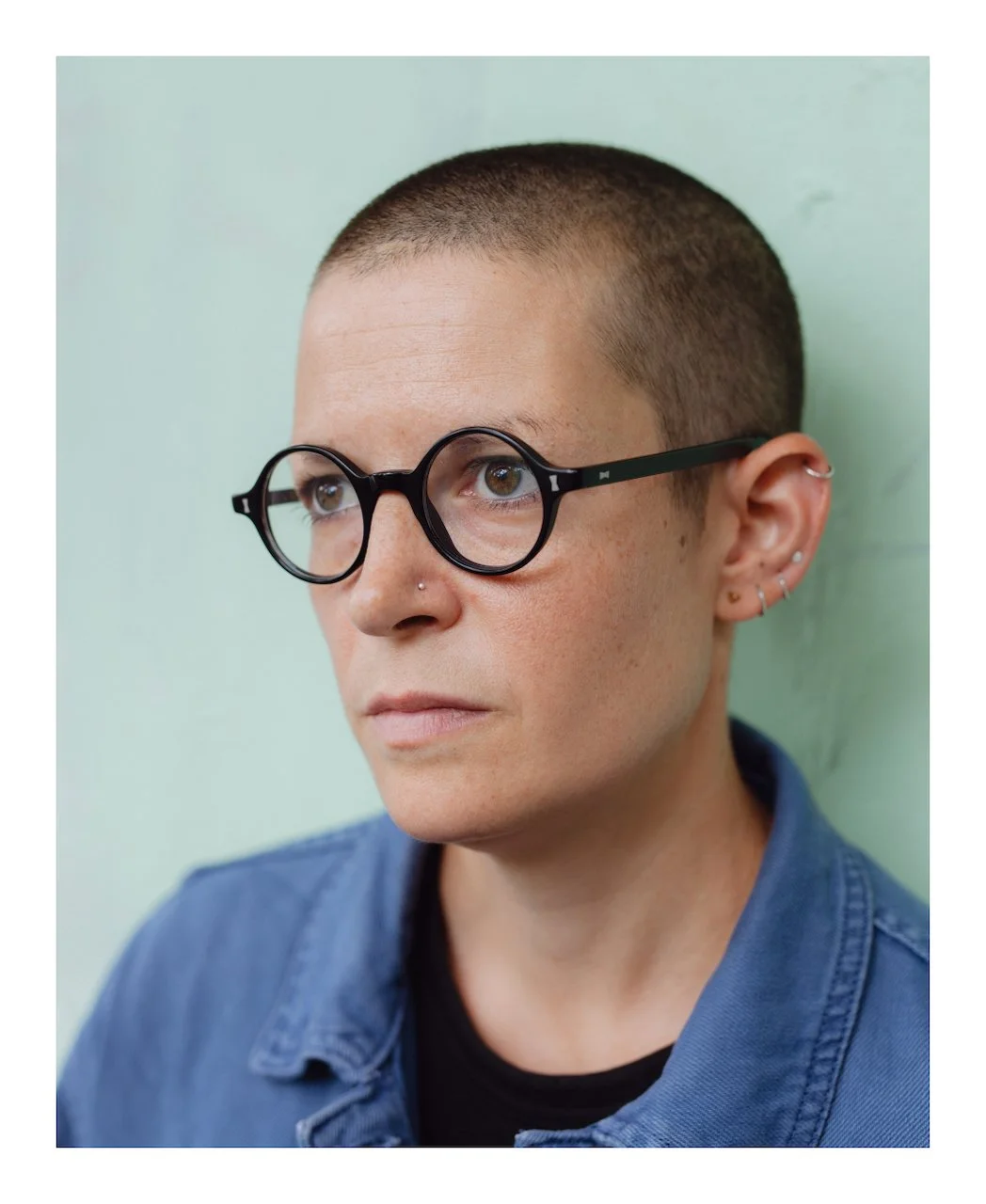
Jess Chandler: Prototype grew out of another small press that I started with a friend in 2011, called Test Centre. We began by publishing spoken word records, then a DIY magazine, moving into poetry collections, experimental novels, and anthologies. We paid a lot of attention to design and aesthetics and really believed strongly in emphasising the importance of the book as object. When Test Centre came to an end in 2018, I decided to build Prototype on its foundations. I felt that while there was a really exciting and eclectic poetry publishing scene, an equivalent variety of approaches didn’t really exist for fiction. My ambition with Prototype was to try to build something sustainable that would become a home for work outside of the mainstream; work that was unconventional, free from formal constraints, hybrid, playful, experimental. I wanted to give this work a platform and to find the wide readership for it, which I knew existed. Setting up Prototype was also a response to the kind of work we’d been receiving at Test Centre: so many collaborative, interdisciplinary projects – works that just didn’t fit neatly into the categories of traditional publishing. I wanted to be the publisher to give these projects at home.
“My ambition with Prototype was to try to build something sustainable that would become a home for work outside of the mainstream; work that was unconventional, free from formal constraints, hybrid, playful, experimental.”
How did your background at Reaktion Books prepare you for starting your own press?
My time at Reaktion was very brief. I just worked there as a desk editor for about a year towards the end of running Test Centre, which I did on the side in my spare time. Before that I was actually working full-time in factual television, as a researcher. So I wouldn’t say that I had any kind of career in publishing before starting Prototype and I’d already started a small press, which is why I was able to apply for the job at Reaktion. So when it comes to publishing, I really had to teach myself (I’m still learning). But being Reaktion did allow me to observe the way that a larger publishing house operated, to learn from their processes and to think about how to run something more efficiently, more professionally.
What's changed since you began – both in the publishing world, and the press itself?
It felt like such a risk starting Prototype and I had no idea whether it was going to work. I still get a thrill seeing our books in shops, or being reviewed or discussed. It’s gone from being a tiny self-distributing DIY publishing project to an independent press with distribution throughout the UK, in the US, and beyond. I’ve been able to publish some extraordinary work and to form relationships that have changed my life. Our books have been on the shortlists of prizes and our work has made it onto the syllabuses of various higher education courses. In so many ways independent publishing is thriving; just look at the International Booker lists and it’s clear that indies are leading the way. There’s no doubt that the respect for and significance of the work of independent presses has changed hugely in the years since I’ve run Prototype, thanks to the incredible work of publishers like Tilted Axis, Fitzcarraldo, and And Other Stories. What’s so frustrating is that the circumstances and economics are now harder than ever. You reach a point which from an earlier vantage point would have seemed like great success, and which you’d think would equate with sustainability, but in fact things feel more precarious than ever. This situation is true across the arts, which are chronically undervalued, and indie publishers are one of a number of groups affected by this gradual dismissal of the importance and value of creative work.
“I still get a thrill seeing our books in shops, or being reviewed or discussed.”
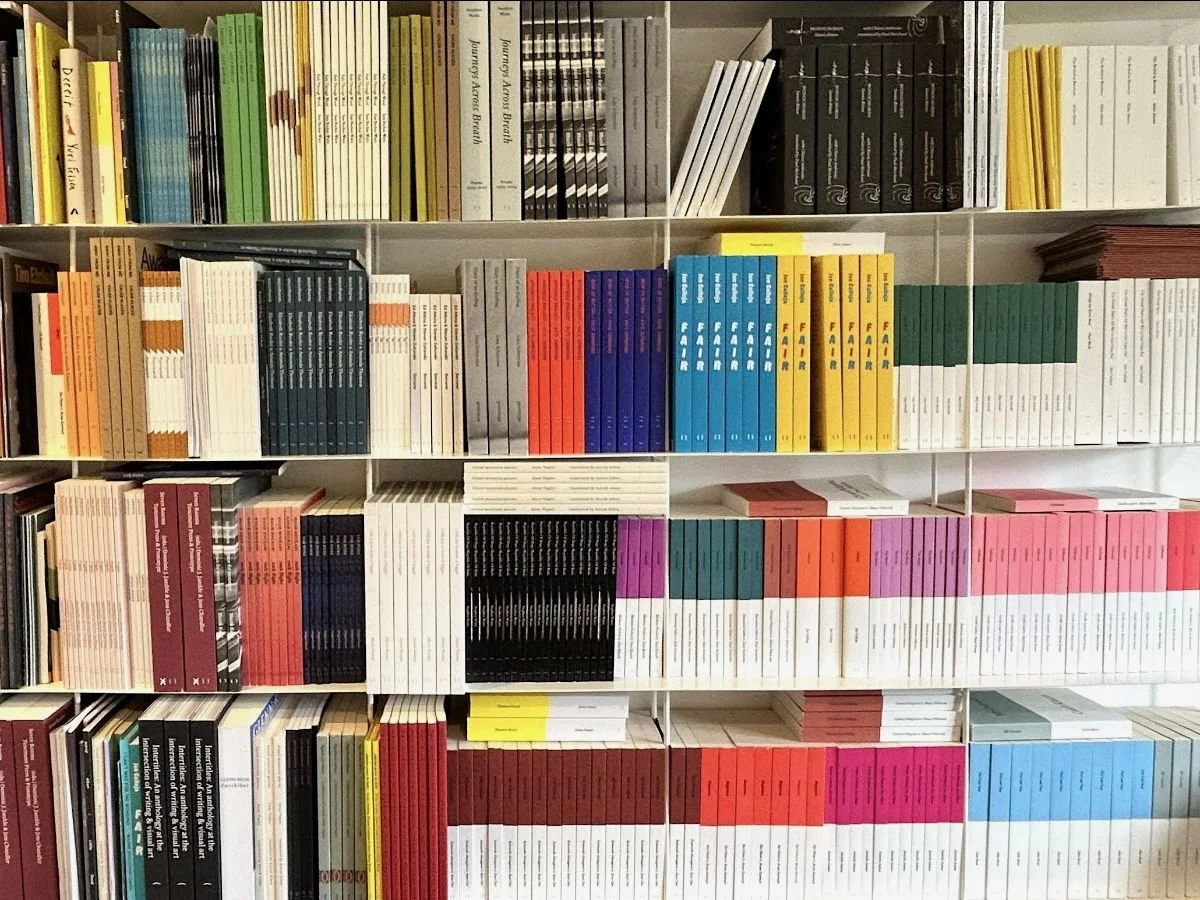
You group the books you work with into four different strands: (type 1 // poetry) /(type 2 // prose) / (type 3 // interdisciplinary projects) / (type 4 // anthologies). What do these designations offer you as a publisher?
I realise that in some ways it might seem contradictory for a publisher interested in works that break down genre boundaries to categorise its own work like this! I came up with these strands mainly as a way of signalling the broad and varied kind of work that I was interested in. I hope, however, that the way that I fit books into and across these ‘types’ shows the range and openness of the designations. It felt important to me to lay out my aims clearly when starting and that was where the idea for these strands came from. (I also liked the play and intentionality of ‘Prototype’ and ‘type’.) Often I place books in more than one of the strands. And I was careful to call type 2 ‘prose’ rather than fiction, to allow freedom and flexibility in the future. Things evolve in ways you can’t always foresee and thankfully I don’t feel I’ve been restricted by giving this shape to what I set out to do.
Like us here at Worms, championing experimental writing is at the heart of what you do at Prototype. How do you define experimental writing?
I think that every publishing house, particularly independent ones, needs to have a clear reason for existing. The publishing world is already so oversaturated and we need to find our niches. There’s no point in trying to replicate what other publishers are already doing. I saw that there was a gap and a need for a publisher committed to making experimental writing more accessible, more welcoming – both for writers and readers. I was receiving proposals on an almost daily basis from writers and artists whose projects were bold and unconventional and were struggling to find a home elsewhere.
“I also feel strongly that we need to get away from the idea that ‘experimental’ equates with ‘difficult’ or ‘inaccessible’.”
I also feel strongly that we need to get away from the idea that ‘experimental’ equates with ‘difficult’ or ‘inaccessible’. I don’t believe that’s true. Experimental work should be playful and use language in the way it needs to to communicate honestly and directly. If it does this well it won’t be difficult or hard to understand; the experimental form will be the only form that fits its subject. Interestingly, and I’m not sure how you deal with this at Worms, I often try to stay away from the term experimental as I still feel that it puts people off. It shouldn’t, but it does, because of the way it’s understood. So I always find myself trying to think of other words. Perhaps we can find a way of renewing the term together!
Works in translation feel integral to your catalogue. How do you approach translation projects?
It’s been really exciting to start publishing translated literature. It wasn’t something I gave much thought to when I started Prototype as I had no experience at all in that area. But then I started receiving proposals from translators for projects that felt like they fitted with what we were doing so perfectly, it became a natural next step to expand our catalogue to include writing from other languages. Many of the translations we’ve published have come to us through translators. The work translators do is incredible and so vital to UK publishing.
Another bonus of publishing work in translation, which has become increasingly important in recent years, is that there is often excellent funding from the literary funding bodies of different countries, which allows us to pay translators properly. Without this, it just wouldn’t be financially viable for a small press like us. This kind of support has undoubtedly been crucial to many of the other indie publishers having such success with translated literature at the moment. Publishing literature in translation also feels increasingly important in the world in which we now find ourselves, and celebrating internationalism and a diversity of voices matters more than ever.
In terms of how we approach translation projects, we treat them in the same way as our other books. We look for works that show the same interest in formal experimentation and I hope that all of the translated books we’ve published feel like a natural and enriching edition to our catalogue.
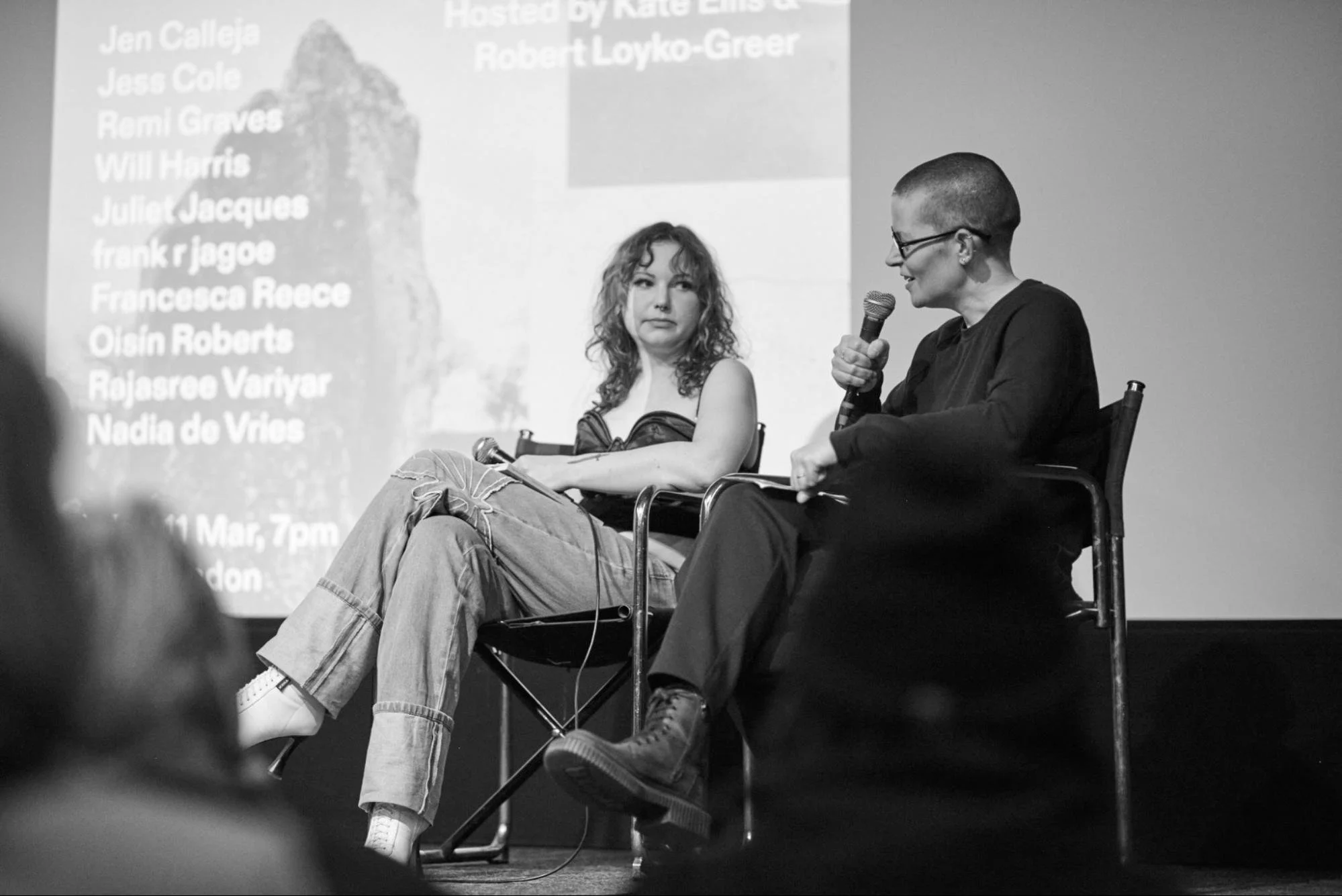
Jess on stage with frank r jagoe at New Cannons at the ICA
We saw you talk at the ICA for the New Cannons event back in March, alongside one of your authors and Prototype Prize winner, frank r jagoe. Tell us about the prize and how frank’s book, Significant Others, came to be?
The Prototype Prize again grew out of a sense that interdisciplinary writing deserved wider exposure. The prize was partly funded by the Arts Council and by three private funders connected to the visual art world. We ran it alongside a Development Programme, in partnership with New Writing North, which ran over six months and offered editorial time and a series of workshops to 8 unpublished writers. It was very important that the two ran alongside one another so that the prize offered something to more than just the authors shortlisted and those who won. We ran the prize in partnership with Monitor Books and frieze magazine, awarding categories for both book-length and short-form works. There were three judges: artist Elizabeth Price, and writers Bhanu Kapil and Tom McCarthy. Rory Cook from Monitors Books and I got the entries down to a longlist which we passed to the judges, who made the final decisions. We received over 500 submissions in each category and read some really remarkable work. It felt like further evidence of how many people are engaged in and committed to the kind of writing we care about. frank jagoe’s Significant Others, which won the book-length prize, is a really extraordinary piece of writing, unlike anything I’ve ever read before, and it was wonderful to sit alongside frank at the ICA New Cannons event. That evening restored my faith in and love of independent publishing; the sense of community, of joy, of energy, of care and integrity and dedication felt so wonderful. I came away full of gratitude.
Us too! On a slightly different but important note, what are some of the biggest challenges currently faced by independent publishers?
Despite the successes I’ve mentioned, these are extremely challenging times for independent publishers. Last year I was part of a group of publishers who wrote and shared an open letter to raise awareness of the existential crisis among publishers in the UK at the moment. In answer to this question I will direct you to that letter and to the campaign that is still ongoing, called UK Small Press Futures: https://small-press-futures.info/. The open letter outlined the various challenges so many of us are facing. The campaign aims to bring people from the industry together to address these challenges and see if, collectively, we can find ways of overcoming them.
“In so many ways independent publishing is thriving; just look at the International Booker lists and it’s clear that indies are leading the way.”
Why does independent publishing remain so important to the wider literary landscape?
Without independent publishers the literary landscape would lose so much. It is vital that we find a way to allow small publishers to survive and thrive, contributing to the diversity of voices that make the literary landscape so interesting and ensure its continual evolution. Independent publishers discover and create new talents and new approaches. We do things in a different way, placing creative integrity and originality, relationships and community, and political acuity and conviction above commercial interest.
Can you give us some book recommendations?
I’ve just read Rowe Irving’s Life Cycle of a Moth for the second time and am continuing to tell everyone to read it. I think it’s brilliant, imagining a whole language and world of its own. The paperback recently came out and I cannot recommend it highly enough.
I’ve also just read Christian Kracht’s new novel Air, which I loved. It’s strange, unsettling and prescient, and will stick with me for a long time.
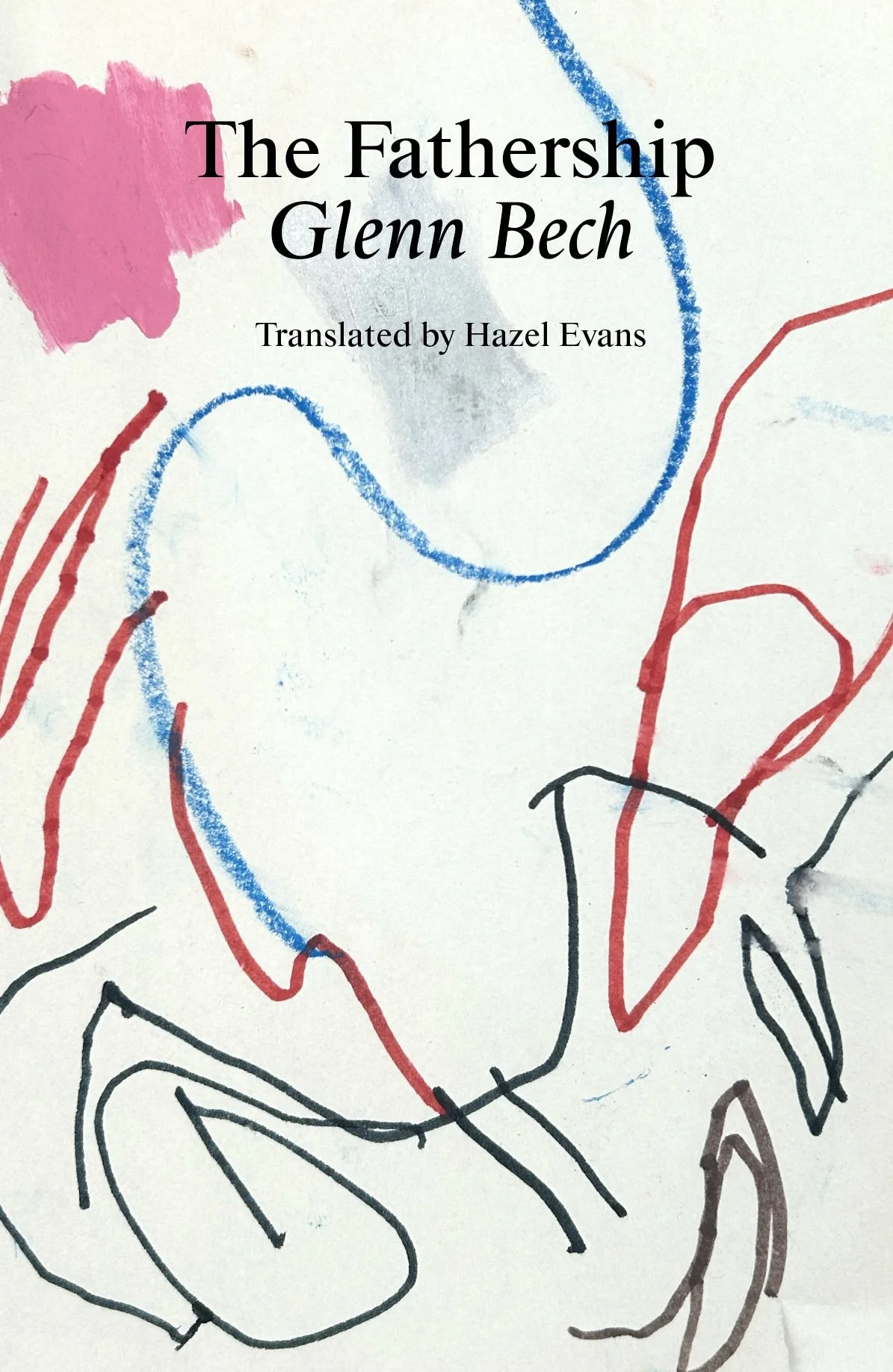
If it’s not too cheeky, my final recommendation is for one of our forthcoming novels in translation: The Fathership by Glenn Bech, translated by Hazel Evans. It’s a hybrid work of autofiction, that explores the devastating aftermath of a father’s suicide, written in fragments of prose, poetry, letters, and home-video transcripts. I think it’s one of the very best books we’ve published and I’m excited about it.
It sounds excellent, I can’t wait to read it! Thanks so much, Jess.
Jess Chandler founded Prototype in 2019, an independent publisher of fiction, poetry, and interdisciplinary projects, committed to championing the work of new voices in free-form contemporary literature. She was a co-founder of Test Centre, which ran from 2011 to 2018, and co-runs the imprint House Sparrow Press. She has worked as an editor at Reaktion Books, and used to work as a researcher and producer on factual television programmes. She was the Digital Editor of Poetry London for six years.
Caitlin McLoughlin is an editor, writer and designer. She is a Director and Editor at Worms Magazine and Publishing. Her work has been featured in It’s Nice That, AnOther and Mag Culture. She is from Leeds but now lives and works in London.
