
WORMS REVIEWS: A Woman Becomes A Wolf When She Learns How to Scream
Words by Arcadia Molinas
Photography by Jake Pitcher & Issac Fisher
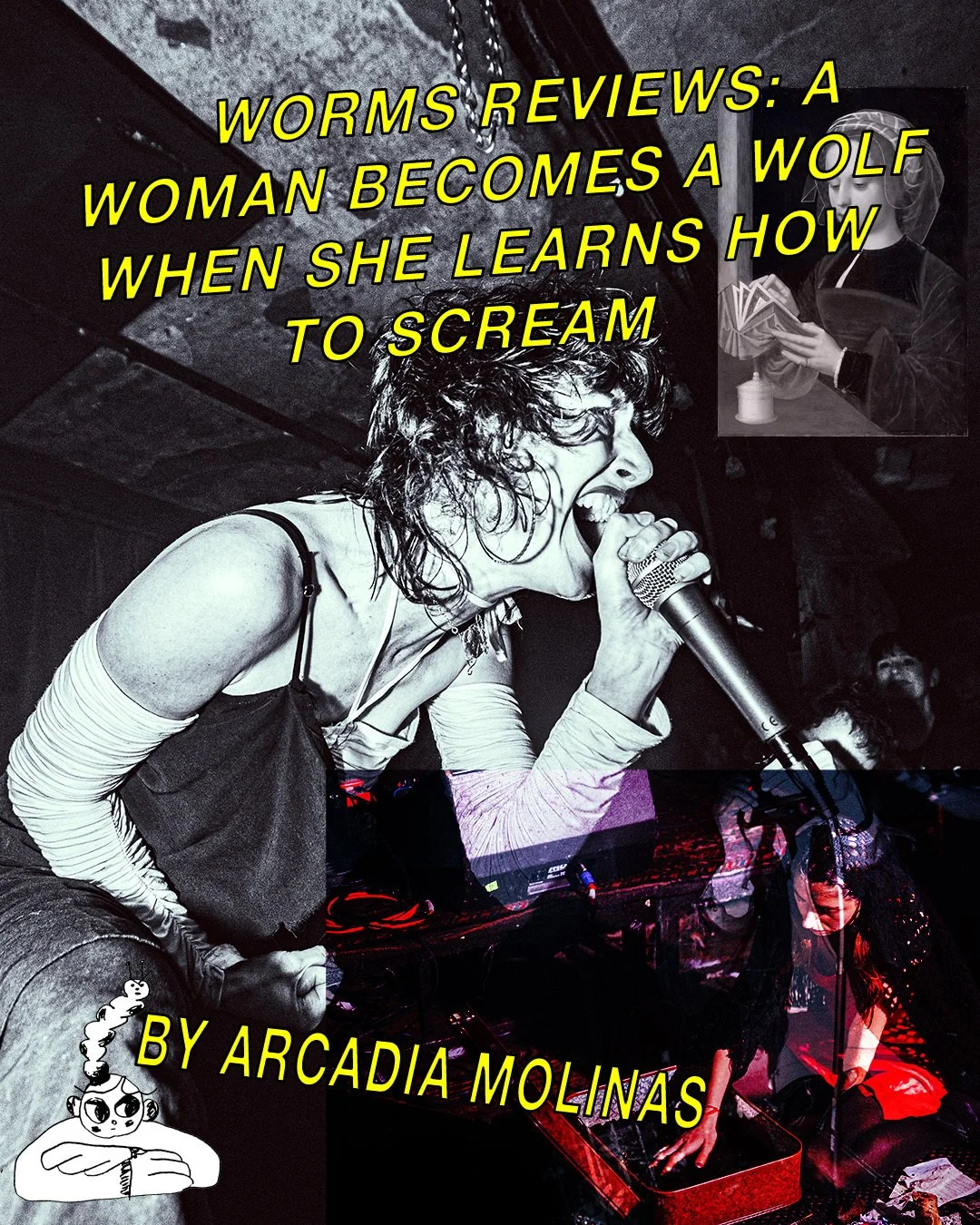
On February 8 of 2026, it was the two-year anniversary of the experimental arts collective A Woman Becomes A Wolf When She Learns How to Scream. To celebrate the occasion, the collective held one of their eponymous events at London-favourite independent venue and longtime host of the event, The George Tavern. Self-described as a “a safe + intuitive experimental space for underrepresented voices to be heard and take risks in a live, community driven, intergenerational setting,” the night marked the collective’s seventh event, and as is custom, presented an eclectic and ecstatic array of performances. From harpists, poets, mimes, dancers, violinists, performance artists to people who sit somewhere in between all the above, A Woman Becomes A Wolf is a pioneering collective, guiding the way in the London performance scene when it comes to fostering imagination and intuition. Their nights bubble with joy but their political edge is keen and sharp. It’s a space to witness risks; exciting, radical, but also vulnerable, in formation – a phoenix hatchling.
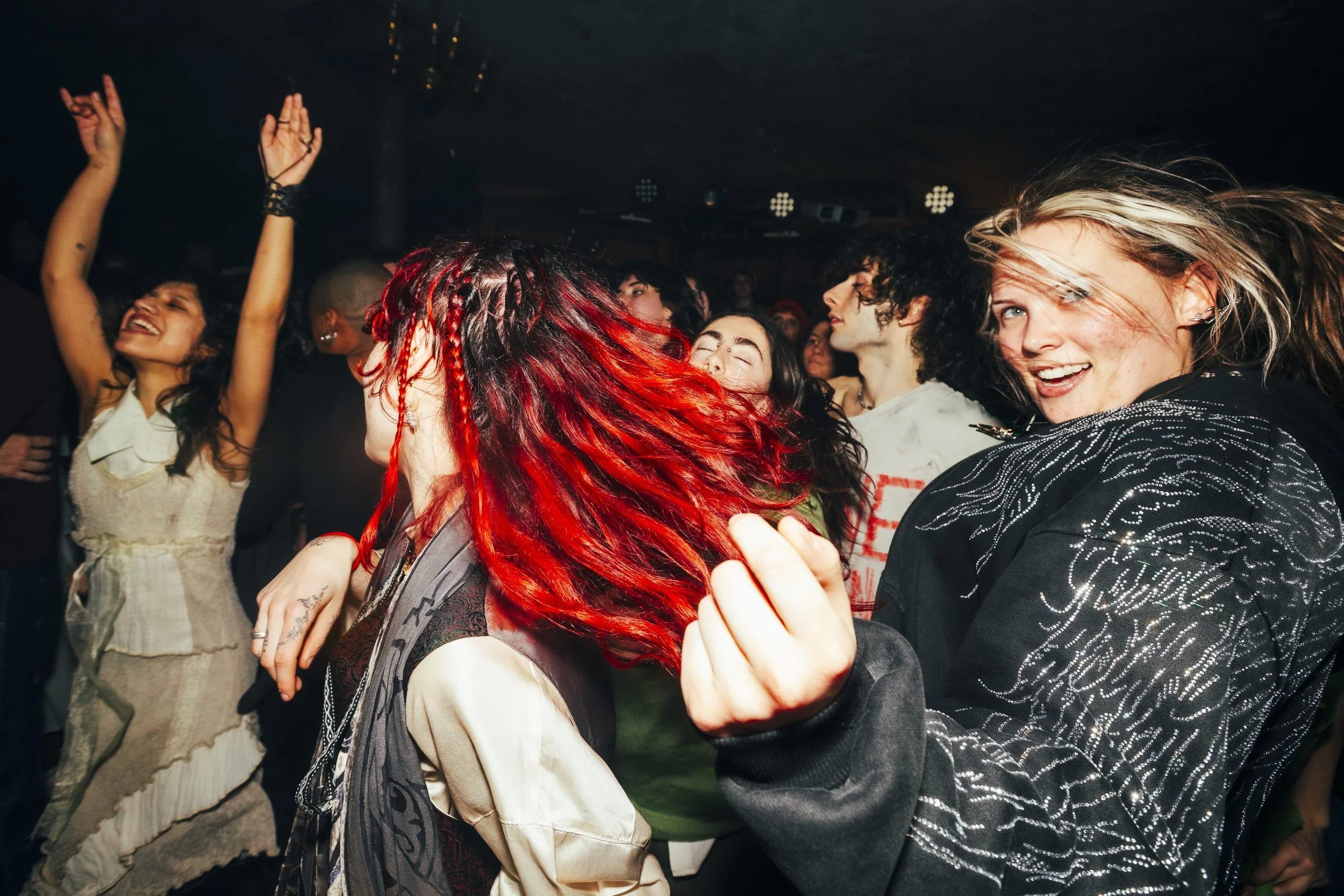
One of the most remarkable aspects of the event is that every A Woman Becomes A Wolf night averages over 10 individual performers. It is a feat of coordination, organisation and sustained trust that very few could pull off – it is the combined efforts of Scarlett Woolfe and Alexander Gallimore, collaborators, housemates and co-directors of the collective that make it happen. Together they compose a call-out for each event, conceptualise themes and ideas, facilitate workshops that build up to the final performance, and ensure the smooth running of all operations on the night itself; from stage design, artist liaison to frequently performing themselves. On the night you can see them crouched on the edges of the stage, beaming up at the performers, a staunch look of pride across their faces. Gallimore hosts the evening with a gallant gratitude, announcing the start, coming back in for an intermission and welcoming everyone to the second half once its time. To the effect of the energy in The George Tavern, the collective consistently draws a huge crowd: past performers frequent the nights, as do long-time fans of the project, fellow musicians, poets, artists, and a fair share of bandana-sporting waif-like creatures. The crowd is bustling with artist and hippie-looking types. Everyone looks genuinely excited to be there. The air sizzles with a ‘happening’ energy. There’s hardly a moment to be bored as an enraged mime, fighting a bodiless, uniformed aggressor, switches out for a poet who declaims a poem about grief and racial tension, swiftly followed by a dancer who clings to one of the columns, slowly, very slowly slithering down. It’s a feast for the eyes and a squeeze for the heart.
I had the privilege of experiencing the duo at work firsthand during the sixth iteration of the event, where I performed a hard-to-categorise piece, somewhere between a monologue and a poem, about gender fluidity and desire; the type of piece that the collective particularly welcomes – uncategorisable, mouldable, elastic. Throughout the two workshops that preceded the event, Woolfe and Gallimore helped me build on my piece through a series of object-based exercises and open discussions between all the performers, drawing out the similarities and connections between our work. I felt challenged and encouraged to play with the edges of my practice, incorporating movement and choreography into my performance. Woolfe offered nuggets of wisdom at every turn, a million tips and tricks up her sleeve to help me embody my writing. She encouraged me to climb up and onto The George’s piano, to make the space my own, to make the space itself be in service to my work. Gallimore posed inquisitive, thoughtful questions about our practices and led exercises that invited us all to arrive into the space, mentally and physically. There was a real group feeling among us by the time show day arrived. We had all fed off each other’s work and gotten to know each other in the process. Gallimore and Woolfe share a background in theatre, Gallimore’s practice has its roots in Expressionist Theatre and Experimental Physical Performance, and Woolfe has a foundation in European stage performance, and together, they have directed theatrical productions. In many ways, A Woman Becomes a Wolf can be described as an experimental play.
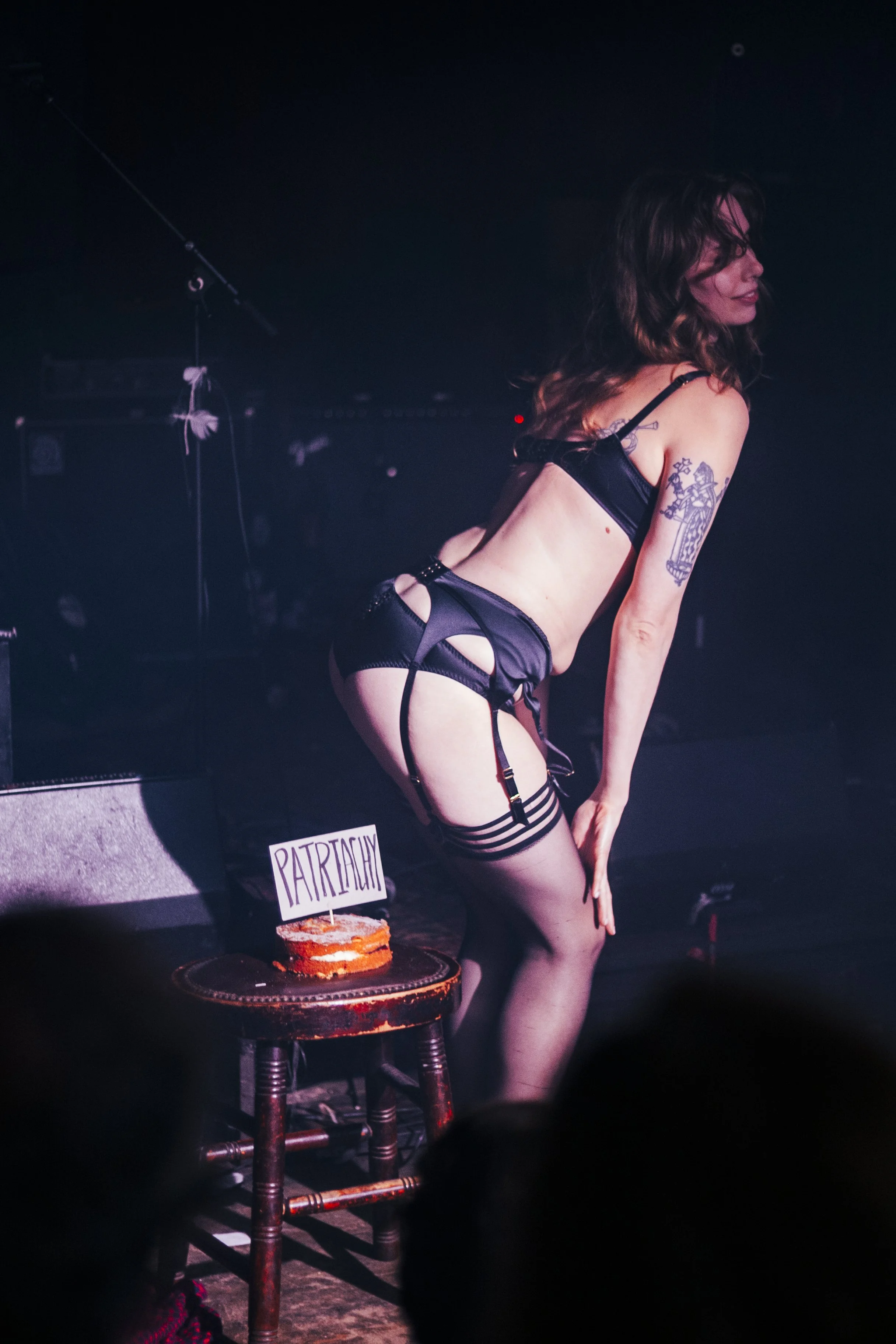
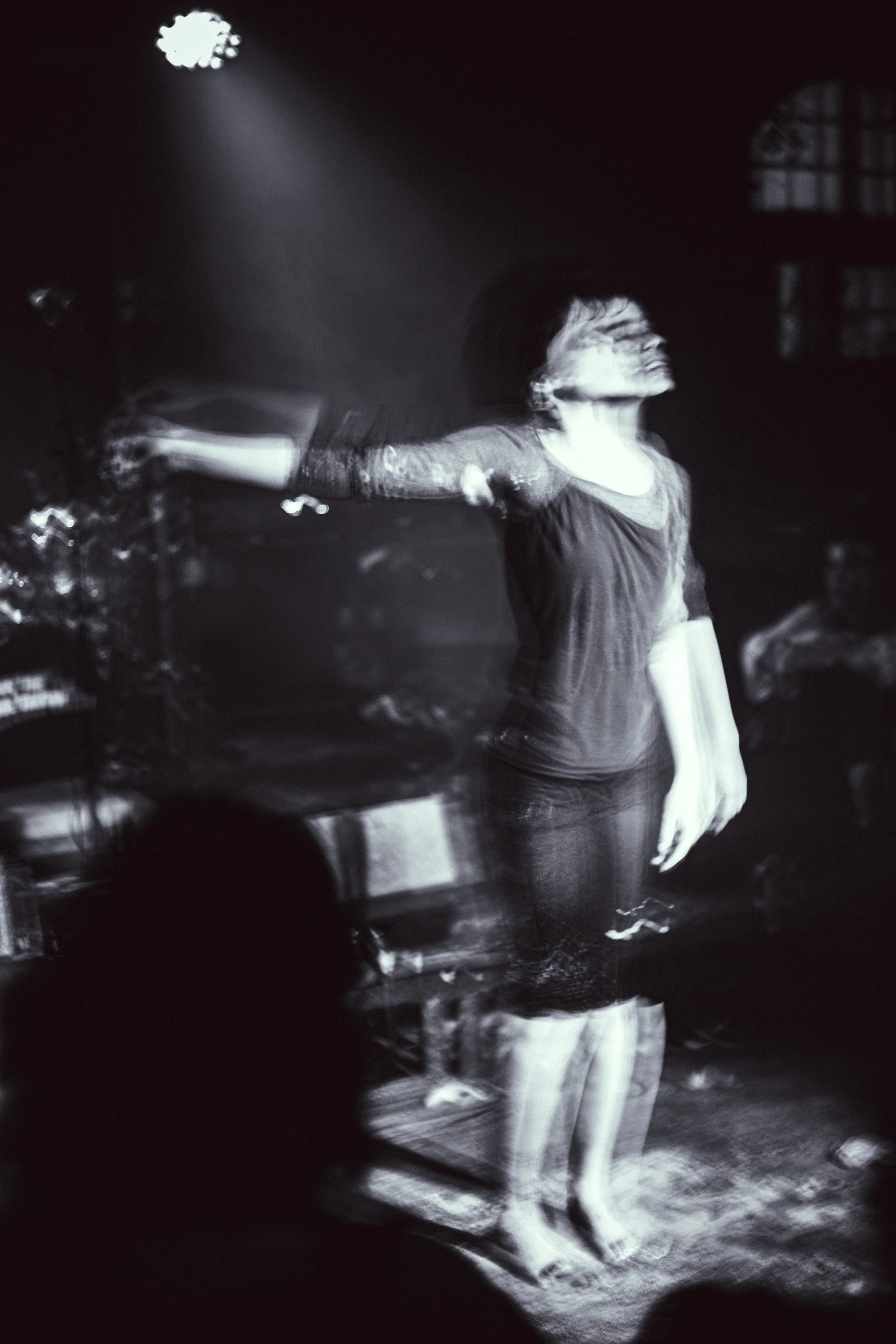
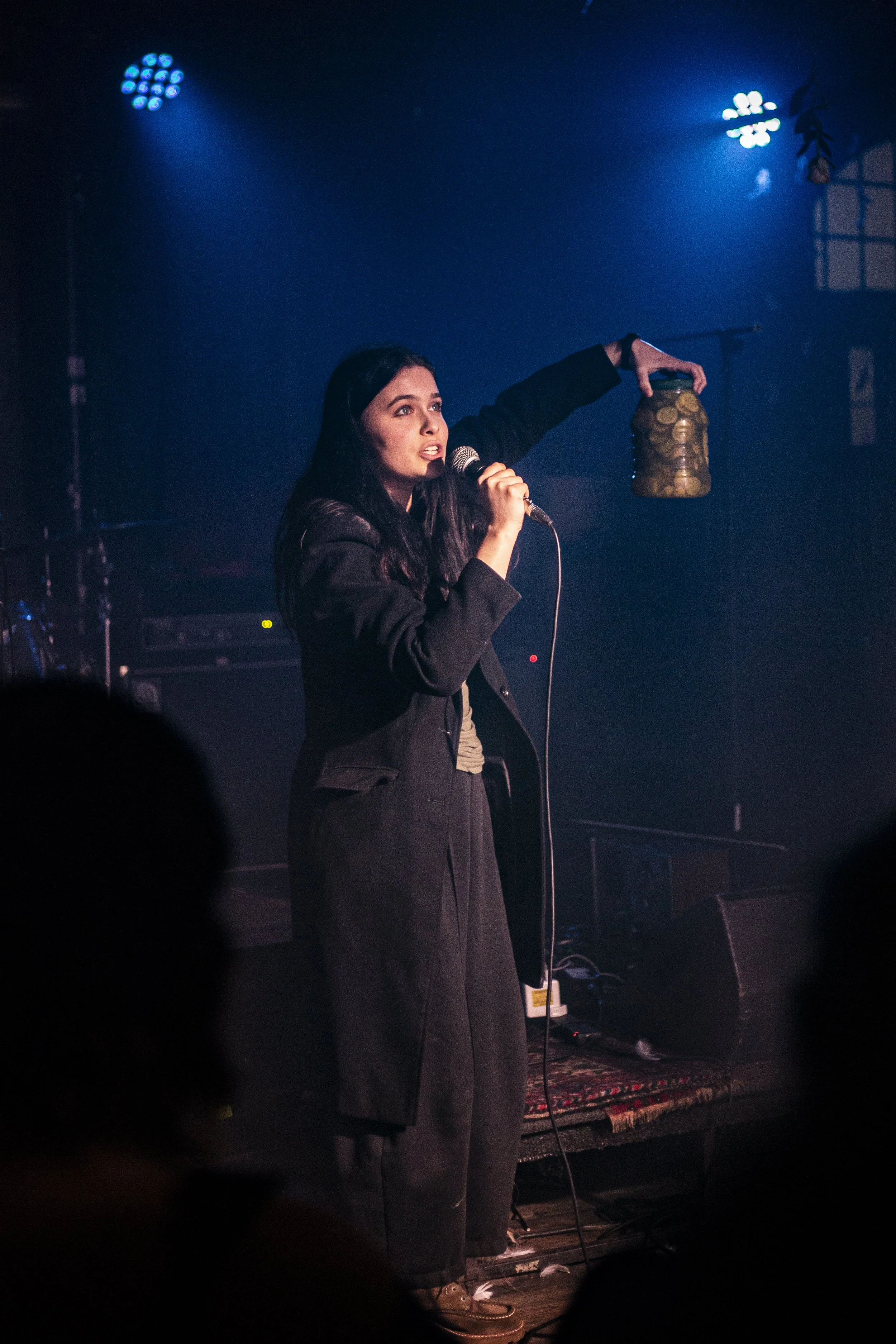
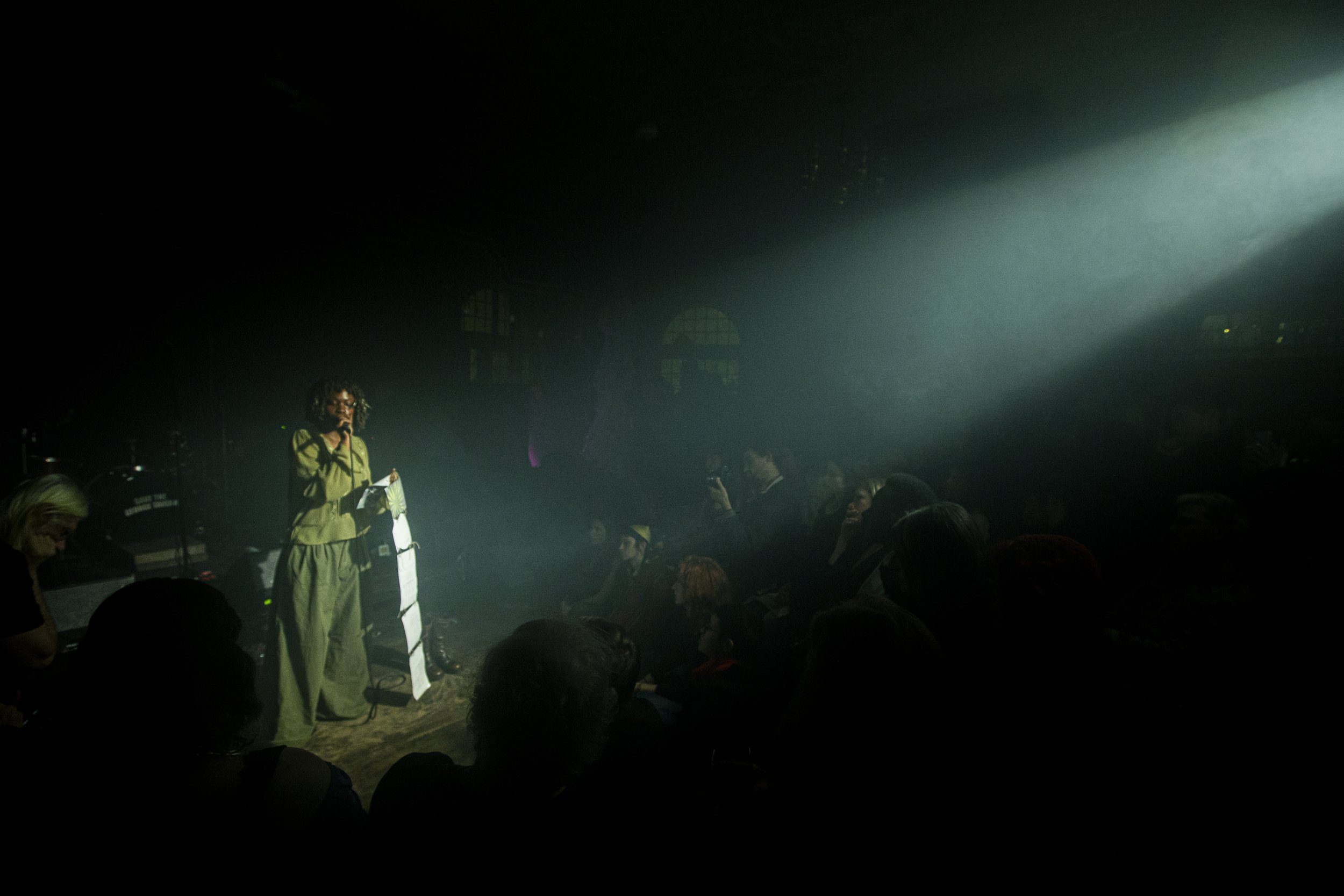
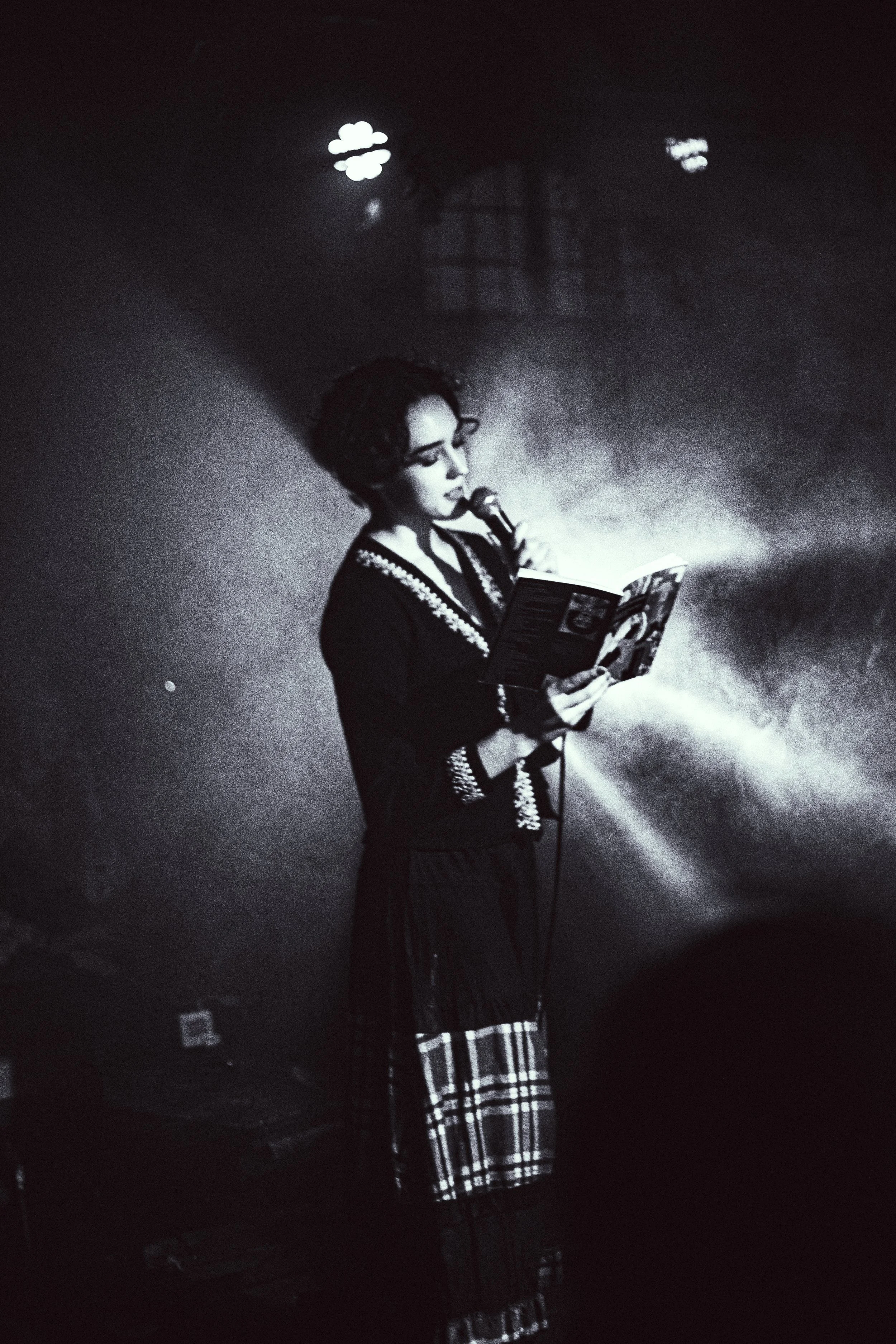
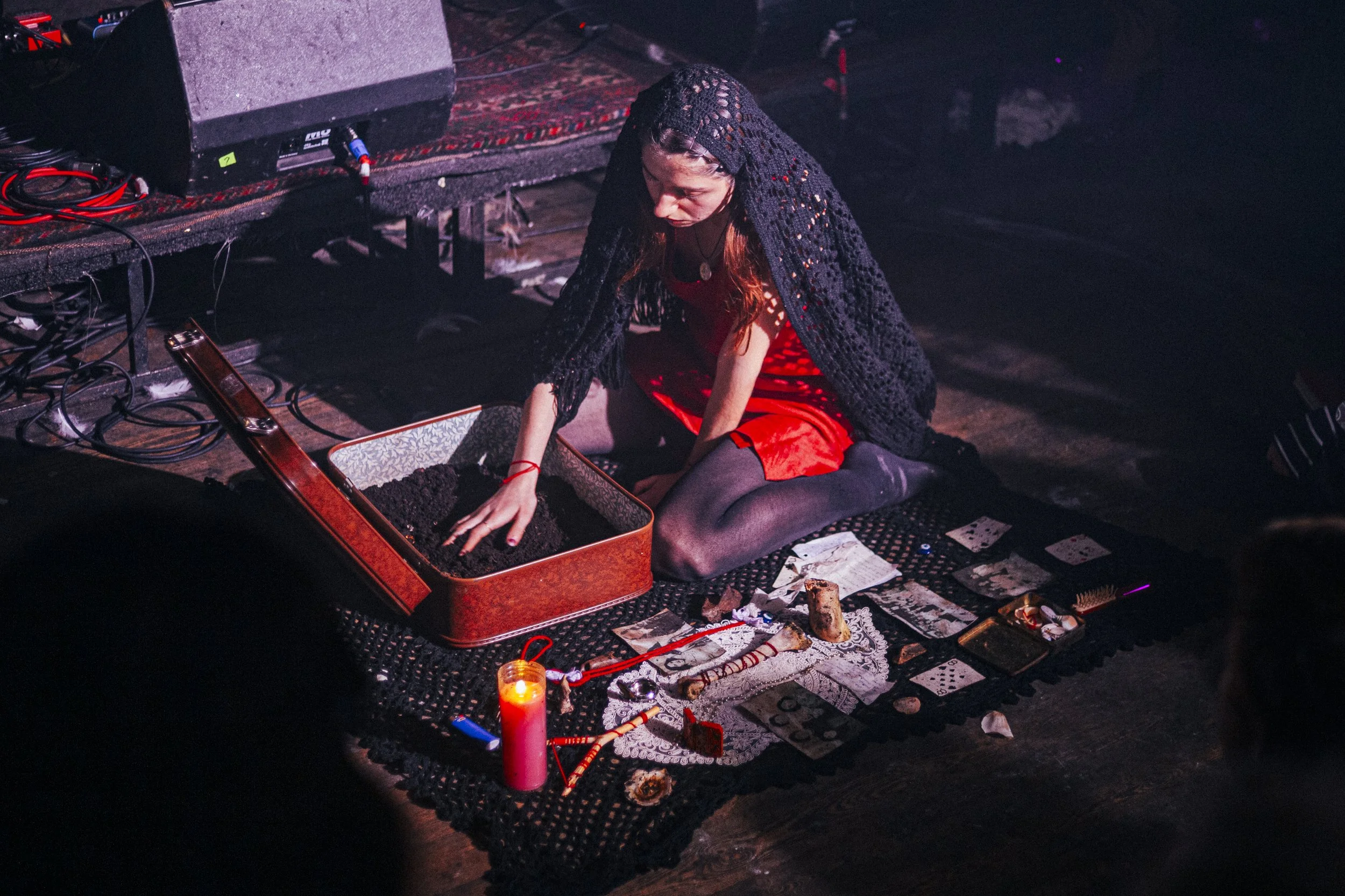
A Woman Becomes a Wolf has no barriers. They invite an array of voices that fit under a ‘underrepresented’ umbrella, and contrary to most other performance nights in London, a range of ages is always present. On the second anniversary, seasoned performers were present – violinist Miranda Aragoneses, performance artist Jacqueline Lipman and poet Phoenix Yemi – but first time performers were also there. The theme for the two-year anniversary event was The Waste-land, past themes have considered ‘Entrances & Exits’, ‘Home and Wild Cathartic Womanhood’, and the theme threads through the performances in a unifying manner, presenting to the audience a collage of feelings, thoughts and explorations around it, that are interpretative as they are specific. Molly Crisp and Sophia Dowson-Collins delivered a dance-musical fusion piece, Crisp performing an original song—drenched in melancholy—about a bird flying through a wasteland, with Dowson-Collins embodying the bird through a series of caged, fluttering movements. The lighting, at the hands of Hywel Pryer of The George Tavern, imbues each performance with a dramatic flare that elevates each reading, dance, or song, into a pathos-fuelled tale.
When you go to A Woman Becomes a Wolf, you leave with a reinvigorated sense of the potential and talent inhabiting the streets of London. In the fashion of a variety show, there is something for everyone. Woolfe closes off the night with a musical performance accompanied by her band and the night ends with a jubilant sea of head banging. Woolfe is as compelling of a performer as she is a person, magnetic, self-assured and a touch of unbridled fierceness.
I spoke to Woolfe and Gallimore about the collective, asking about the process involved to bring everything together. You can read that below.
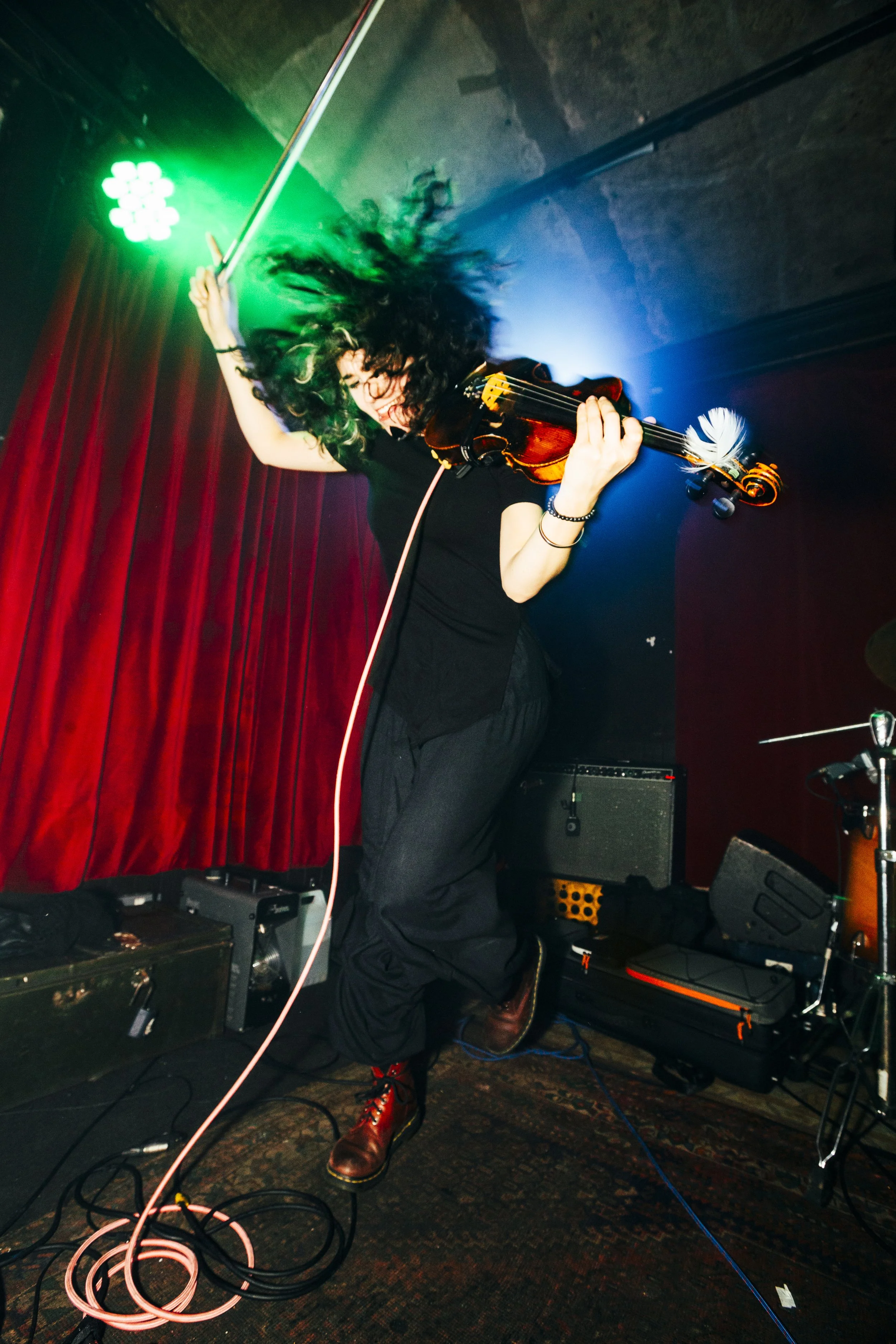
Miranda Gray-Aragoneses by Isaac Fisher
Arcadia Molinas: Talk to me about the inception of A Woman Becomes a Wolf. How did it start?
Scarlett Woolfe: A Woman Becomes a Wolf began as a phrase I wrote down in a notebook one day, after coming out of a period of darkness. During this time, I was lucky enough to meet some incredible women who inspired me and helped me to find my voice again. One of these women was a friend called Asena, who I sent the page of my notebook to saying: A Woman Becomes A Wolf When She Learns How to Scream, and she said, “you have to use this for something!” Simultaneously, I had been reflecting on the experiences my grandmothers had endured in their lifetime: years of abuse and not feeling seen or heard. I felt drawn to creating a safe and intuitive space for underrepresented voices to take risks and explore their creative practices freely—merging poetry, dance, music—within a community.
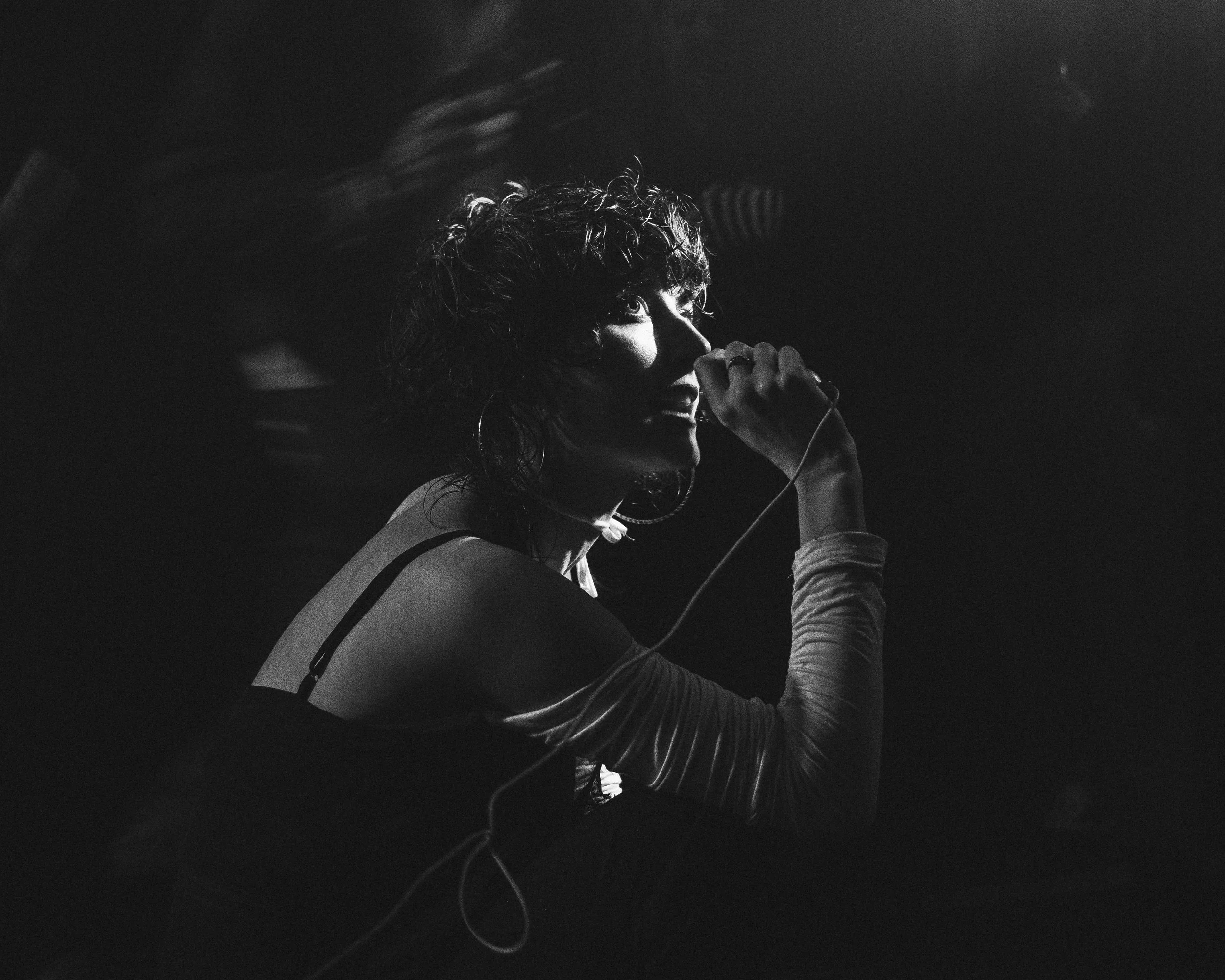
Scarlett Woolfe by Jake Pitcher
What is the process of putting together the show like? Talk me through the process, from conceptualizing the call-out, the workshops, to show day.
Scarlett Woolfe and Alexander Gallimore: The process leading up to a Wolf event is quite intuitive. We often spend prolonged periods of time, usually consecutive late nights, in research, reading and listening. We try to be as present as possible, listening to both the immediate feelings we have in response to the social and political climate, as well as the parallels in what we’ve been interested in exploring or experimenting artistically. The theme of Wolf 7 was the waste-land, the desert, and forgotten dreams. Around this time many of our friends were experiencing levels of displacement due to the current housing crisis in London and the UK at large. We (Scarlett and Alexander) live together in the Isle of Dogs in a two-bedroom flat. Our flat became a transient space for those who needed a place to stay and ground themselves as they explored new avenues of housing. Some stayed for a few nights, some a few weeks, some even months. Though there were massive anxieties and fears around where to go next for our friends, we decided, for our collective consciousness, that we would use this time to actually navigate these tensions with hope and light as our pinnacle. Though our bodies feel as though they are at the discretion of political happenings that threaten us, we decided to reframe this structure; where can we allow the extractions of our physical roots to take us mentally? What parts of ourselves can we nurture during this time that may be in direct contrast to the fears we are being pushed towards?
For each call out, which is placed about 2-3 months before every event, we introduce a theme and invite people to respond to this in any way that feels right to them. This can be through music, dance, poetry, spoken work, scenes, sound scapes etc. No limitations. A magazine is published alongside every event which displays a diverse range of prose, poetry, and photography. In this way, by the end of the event and the magazine’s creation, we have over 20 artists that have contributed to the body of work that audiences get to see and read each time around.
“On the night you can see them crouched on the edges of the stage, beaming up at the performers, a staunch look of pride across their faces.”
The workshops are a crucial part of each event leading up to it. It is a space for the artist doing live performance to meet one another, share their practice and explore how they might be able to investigate the legs and bodies of their pieces in the space. It is a space to explore intuitively, and so artists are encouraged to improvise and depart from what they may have planned, if it feels right to them in their moment of performance. The workshops and the event always take place on Sundays, which is a day that tends to welcome slow reflections. We find that in this way, after the rush of every week, we can all ground ourselves together and create an open safe space.
On show day, performers arrive at 4pm, we often stretch and breathe together, and then it is straight into dressing the space, sound checking bands and sorting out any other technical details like sound and light for each performer that requires a different staging. Doors open at 7, the event begins at 7:30, and we see what the night welcomes.
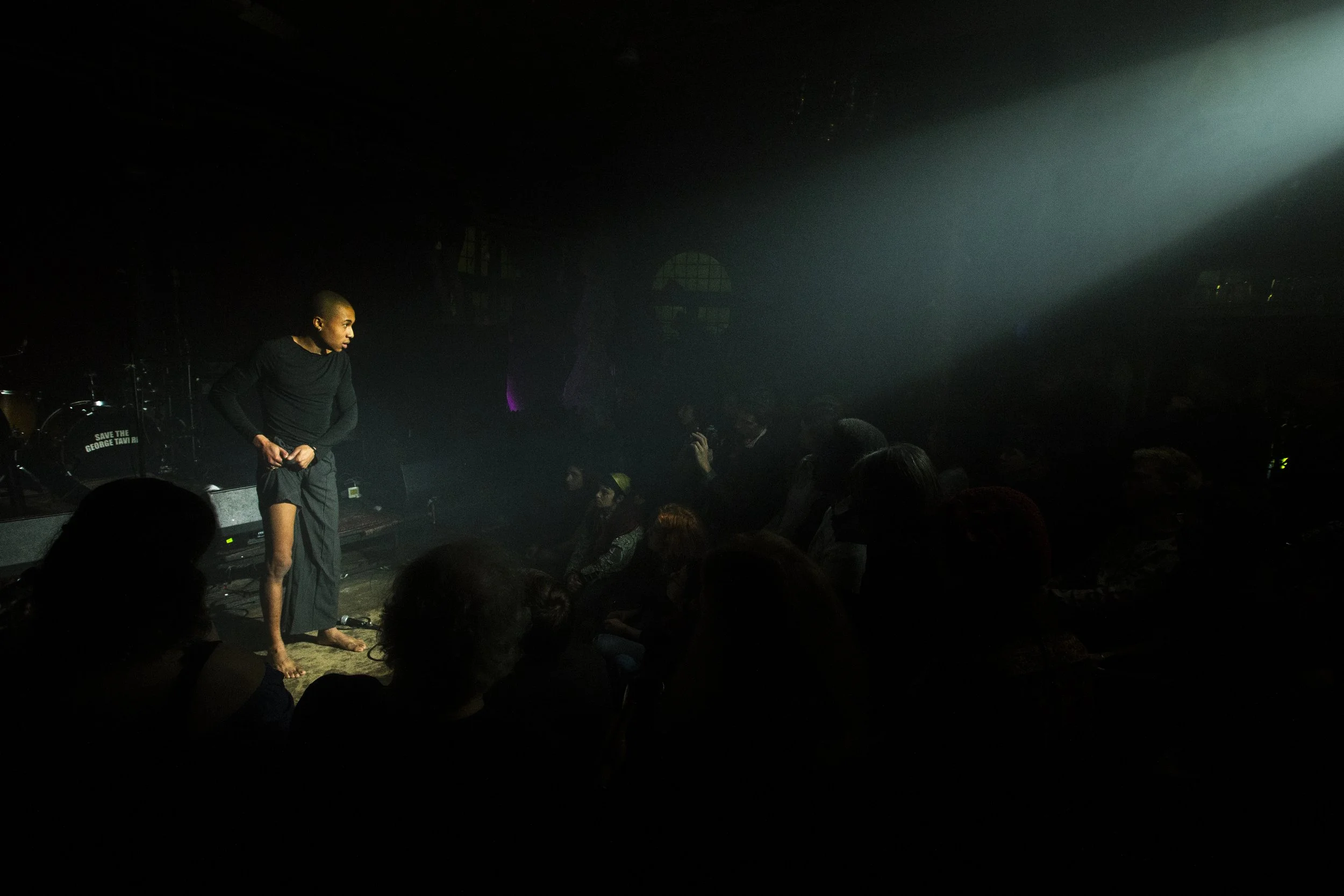
Alexander Gallimore by Isaac Fisher
How does A Woman Becomes a Wolf nourish your own practices?
The primary nourishment comes from re-centring the community as a safe environment, as a place for artistic reference, and as a collection of bodies, creating new experimental work that can directly influence change. The artists that take part in the event, and the artists that surround it, including those in the magazine, all get to communicate and learn from one another leading up to the event through workshops and sometimes through conversations/meals that we often host at our flat. The community as a place for artistic reference for us deinstitutionalises and reimagines a new framework that disregards artistic hierarchies that are often perpetuated by race, gender, and class inequality. It is also just wildly inspiring. It is a reminder of the strengths we have when we come together. It is a reminder that we are stronger together than we are apart.
For us, we get a great sense of fulfilment from being able to bring people together, all from different ages and stages in their lives, and create a space for us to surrender to our emotions, ones that are especially heightened in the world as we see it today, and collectively channel our feelings into artistic expression. We all have something we need to say. This is a place to say it. We have to thank The George Tavern for being the heart of where we have been able to execute these workshops and events. The staff there have welcomed us openly for the last two years without judgement. We both also take part in the event: Alexander as a performance artist and Scarlett as a musician at the end of the night. In this way, we both get to exercise and experiment with new ideas.
How would you like to see A Woman Becomes a Wolf progress in the future?
Our direction with this project is continuously influenced by the voices involved and the spaces that open up. Though The George Tavern has been a hub for new creations, A Woman Becomes a Wolf has been taken to other spaces like Theatreship in Canary Wharf and Reference Point in Temple. We are open and very much welcome new exploration in spaces we have not yet staged work in before. Ultimately we simply hope to continue creating a space for underrepresented voices in any way we can, and we are excited about the prospect of this shape changing, adapting and evolving over time.
A Woman Becomes A Wolf is a London based, community driven experimental arts collective founded by Scarlett Woolfe, born out of an urgent need to continue raising awareness of domestic violence, whilst providing an inclusive environment for women to speak. Over the last 2 years, the space has progressed into a platform for unheard and underrepresented voices, both emerging and established, to explore the inner workings of their creative practices through community lead workshops and staged performance events. These nights showcase poetry, dance, theatre and music, alongside a quarterly magazine. Woolfe's individual practice has a foundation in European stage performance, which is intrinsically tied to her musical career as well as her art facilitation. Over the last year Woolfe has been co-facilitating and co-directing A Woman Becomes A Wolf alongside Alexander Gallimore, a Jamaican playwright, performer and archivist, whose practice stems from Expressionist Theatre and Experimental Performance.
Together, through facilitating workshops, artistic residencies, and at times, directing theatrical productions, they have been developing and nurturing a unique and intuitive space for artists to exist, be heard and take risks.
Find out more at:
Arcadia Molinas is the online editor of Worms.
