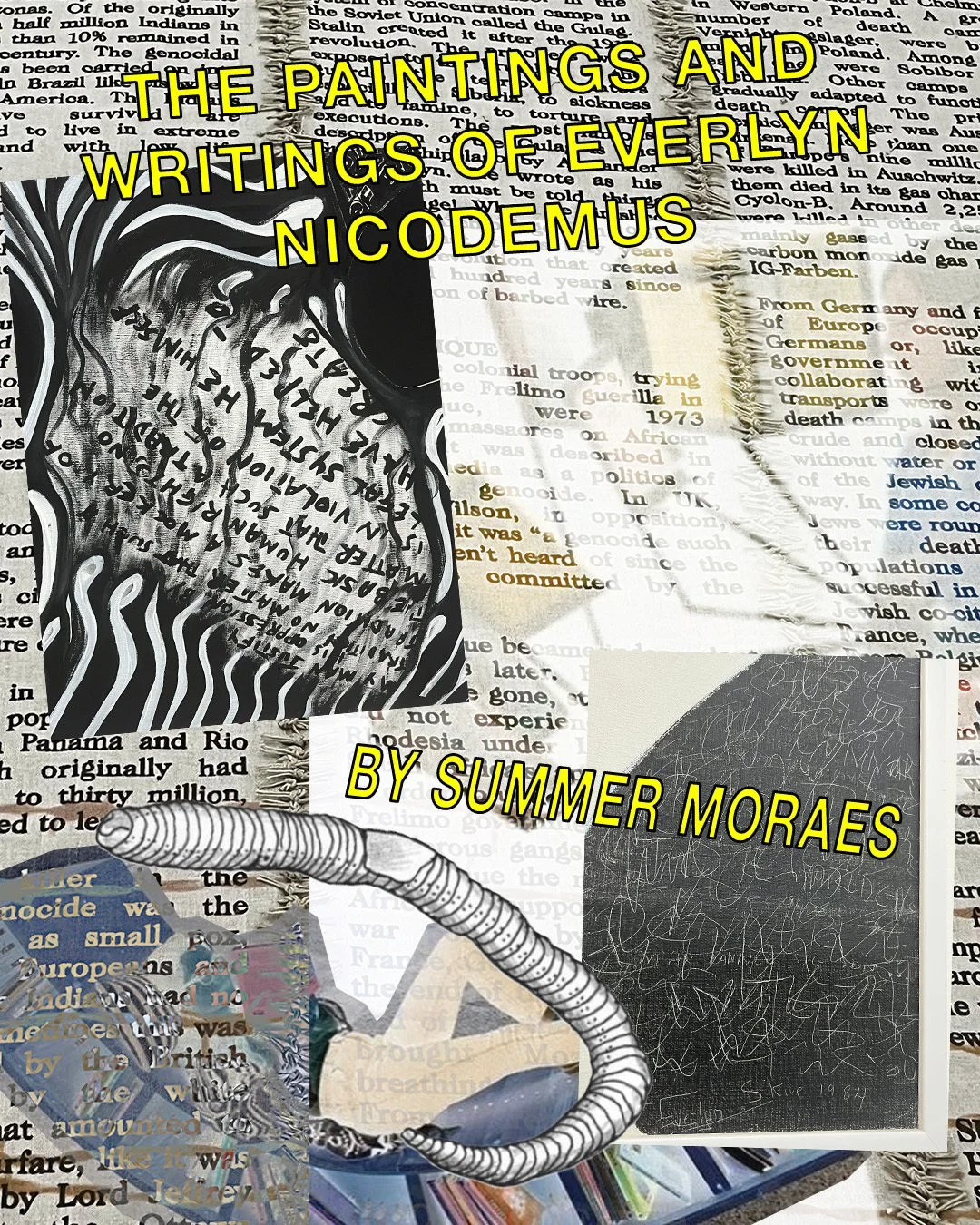
I was invited on a last-minute press trip to Brussels to see Everlyn Nicodemus’s exhibition at WIELS, which was a pleasant surprise. I packed my notebook and my recorder and arrived at St. Pancras two hours early. I ate a Pret a Manger breakfast, queued for the toilets even though I didn’t particularly need to, then, strolling to the gate, I was told that I'd missed my Eurostar. I've never been on it before, so I didn’t know that the gates closed thirty minutes early. The panic hit instantly. I rang my mum, then my friend Matt, in tears, certain I'd ruined the trip. But two hours and a painful ticket purchase later, I was on the next train. Phew!
The show I was heading toward, ‘Black Bird’, is based on an unpublished manuscript Nicodemus wrote. “For now, it's just a manuscript – a journey through her life and work. It's part artist's memoir, part poetry collection,” explained Sofia Dati, curator of the exhibition.
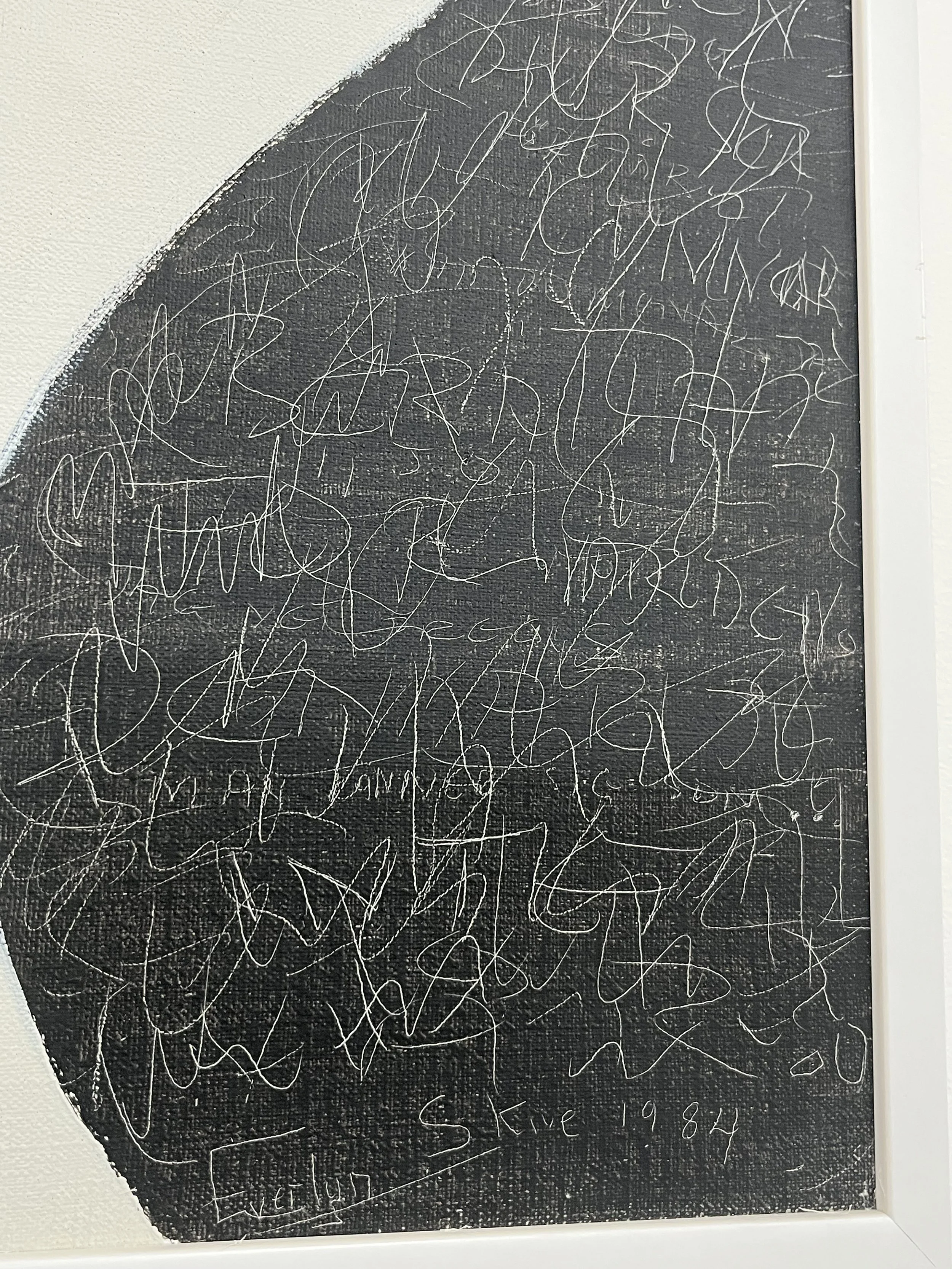
People who know Nicodemus speak first of her as a writer and poet. In her early work, Nicodemus wrote poems in response to her paintings; later, the text began to merge directly onto the canvases through scrawled phrases, scribbles and invented languages. “For Nicodemus, this experimentation with text is tied closely to her research into trauma”, noted Sofia Dati. The scribbles and invented languages emerge as a way of processing experiences that are otherwise inexpressible.
“To be born a woman is to be traumatised from the moment you are born, because you are born into a patriarchy that places you in a second-class system. A woman's life is traumatic,” Everlyn Nicodemus once said in "State Of The Arts", a Youtube video by ‘The Institutum’. She has described how living through that reality, combined with her experience of racism as a Black woman living in Sweden, contributed to a personal breakdown. As Sofia Dati notes, “She is one of the strongest feminist voices to come out of Africa in the last thirty years.” Reflecting on the role of her practice, Nicodemus has said, “I have saved thousands of dollars on therapists because of my art.”
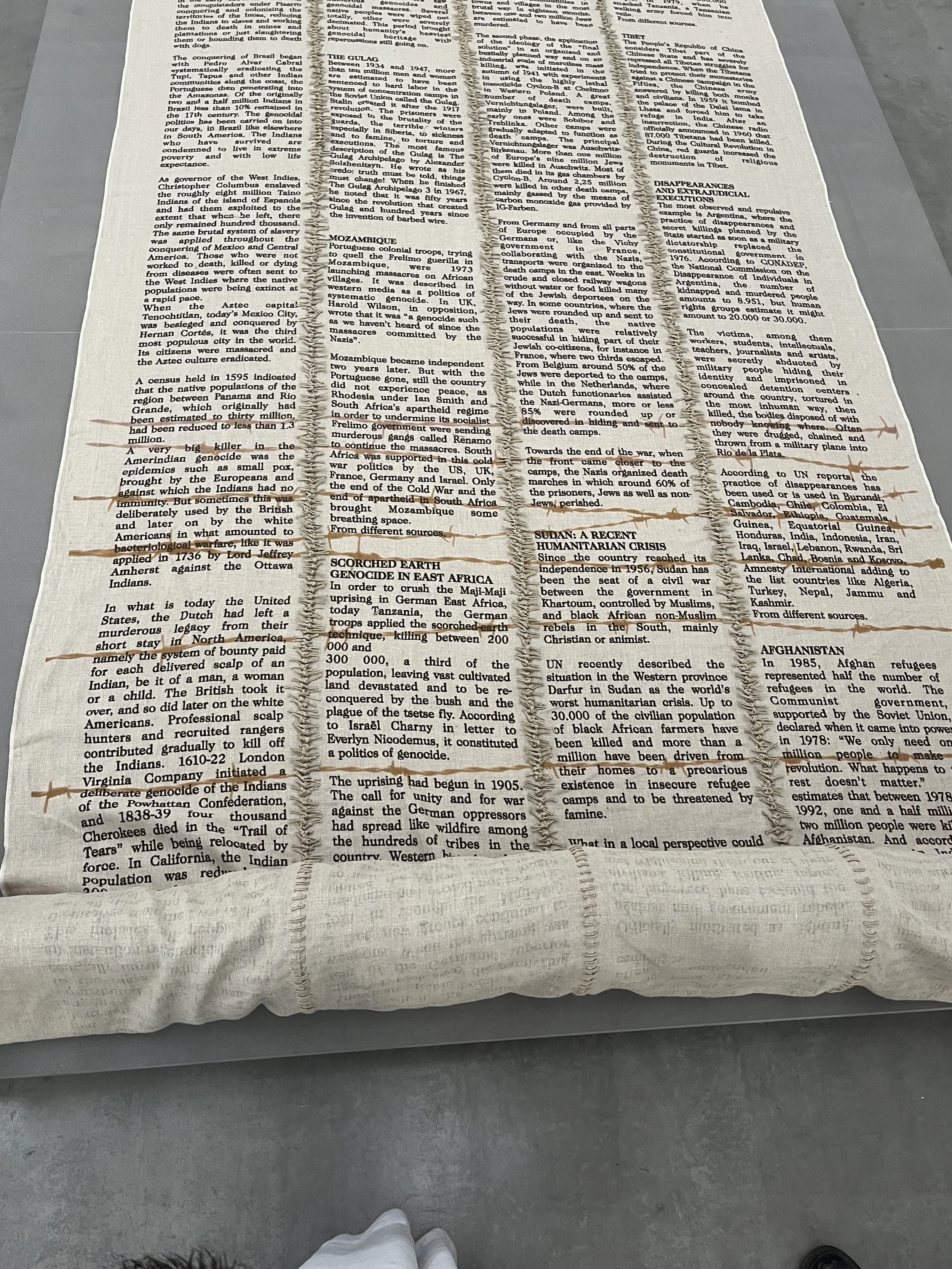
Her work addressing real-life atrocities and historical events also became a form of personal healing, offering a way to help her process and come to terms with them. Her work, “On Witnessing”, is the result of a meticulous, patient process of editing, printing and stitching together accounts of innumerable horrors that have marked global human history. “Slowly”, she says, “I moved by stitching along the frightening tales.” She travelled to concentration camps, studied the Encyclopedia of Genocide and Crimes Against Humanity by Dinah Shelton, and asked what responsibility comes with witnessing horror, even from afar. Her paintings embody that question, there is a collective grief you can feel in the work, especially in the round, expressive eyes of her figures, and the incorporation of subtle macabre and folk-elements that reminded me of skull-like forms.
Wandering back through Brussels’s grey, damp streets, I nearly missed my returning train, but this time I didn’t panic. Nicodemus's paintings had left me spiritually full, as if I'd been replenished from a well of art. Her work is not always comforting, yet it gave me that rare feeling only art can give, a sense of courage in the face of fear.
“For me, going to a museum is like going to church” she once said- and that was the feeling I carried home with me that day.
Summer Moraes is a London-based multidisciplinary artist working primarily through writing and performance. Under the name Mother Of The Insane, she creates wacky short stories filled with horror, surrealism and absurdity. She hosts the WORMS magazine podcast.
Everlyn Nicodemus is an artist, writer, and curator, based in Edinburgh, Scotland, whose work spans painting, collages, mixed media and poetry.