
Wrestling with the Angel: Remembering Fanny Howe
Feature by Caitlin McLoughlin
Photos courtesy of Danzy Senna
Kazim Ali, Eileen Myles, Chris Kraus and Fiona Alison Duncan share their memories of the late, great author and poet Fanny Howe, reflecting on a life and body of work that illuminated the intertwined mysteries of justice, faith, and bewilderment, and left an indelible imprint on generations of writers and seekers alike.
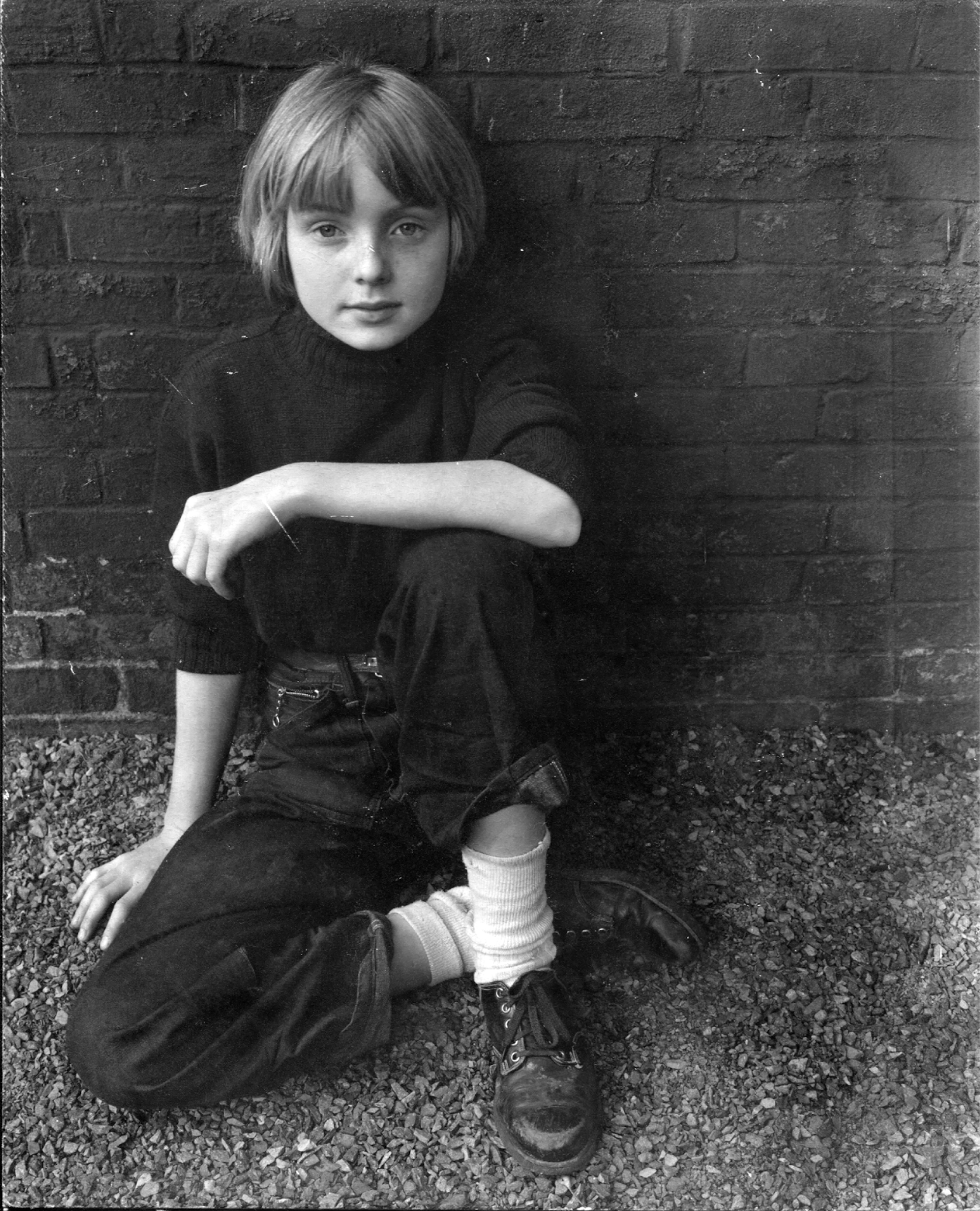
“All my life, I have been obsessed, overly distressed, by injustice,”(1) proclaims the narrator of London-rose: Beauty Will Save the World by Fanny Howe.
I first read London-rose, written in the early 1990s but published in 2022 by Divided in the UK and Semiotext(e) in the US, while on holiday in Suffolk in 2024, mostly on the train from London, which was fitting because it’s a book about transience and traveling around the UK. It begins as perhaps one of Howe’s more pessimistic works. Its dreary descriptions of English cities—replete with devastatingly accurate observations such as, “The greatest sin in England seems to be the sin of whining”(2)—along with its reflections on the tormenting monotony of office shit-work, and crushing explorations of failure, felt all too painfully recognisable. But then it becomes about beauty, and about God.
I have since sought out as many of her fifty-plus books as I could find – no straightforward task, with many out of print or not readily available in the UK. As Fiona Alison Duncan writes in her introduction to her conversation with Howe for The White Review, “to be a reader of Fanny Howe is to be a seeker.”(3) I spoke to Duncan—novelist and founder of literary social practice Hard To Read—about her exchange with Howe and what initially drew her to her work. She explains, “I think part of the appeal of her was that you feel like you've encountered a secret.” Howe’s work offered her a space to explore latent questions around the existence of a higher-power, whilst simultaneously grounding them in a reckoning with injustice.
When Duncan first spoke to Howe it was in a bohemian, ground-floor apartment in Greenwich Village where Howe was staying while visiting New York. It was one of the first interviews she had done in many years. Duncan was initially apprehensive, she explains that to her Howe was a writer who “is writing to figure out how she thinks and feels. The text is doing the work. And so, what do you ask beyond that? Because the text has so many of the answers.” She remembers, “She was this tiny person. It was like all her books would weigh more than her.” The conversation they go on to have, partly in that first in-person meeting and then “more fruitfully via a shared Googledoc,” is broad and beautiful, imbued with all the weight of Howe’s many books and the elasticity of her rapt, intuitive observations.
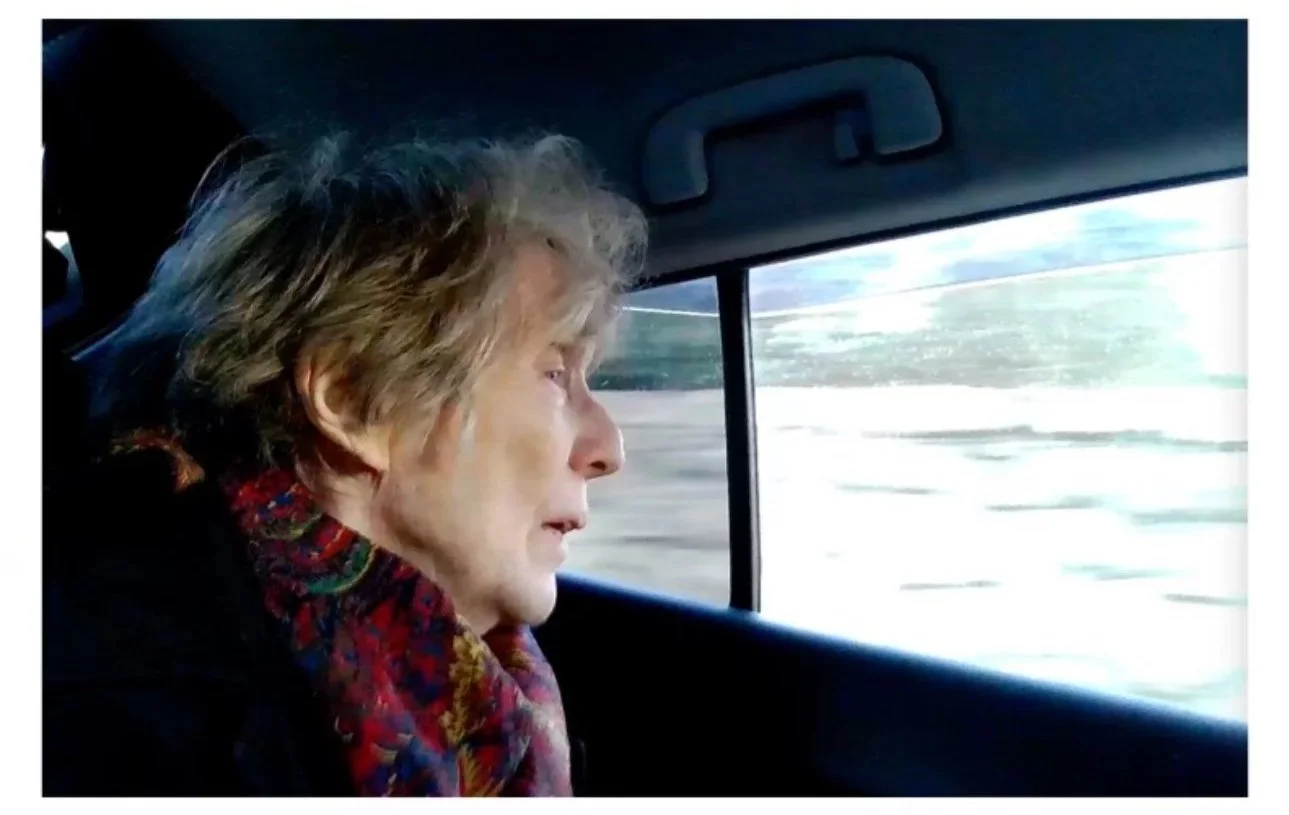
When we first landed on the theme of Faith & Worship for this issue of Worms, Howe was the first person I hoped to reach out to. Like Duncan, for me her books presented a way of thinking about spirituality, and of asking sprawling metaphysical questions about the self, that were not detached from a rigorous collective politic and a probing study of structural injustice. It felt like a salve to contemporary iterations of spiritual thought that sought personal development and ended there. However, not long after we began work on this issue, and before I’d had the chance to propose a conversation, Howe passed away.
✴︎✴︎✴︎
It was just over a week after Fanny Howe’s memorial service, organised by her daughter Danzy Senna, that I got on a video call with Kazim Ali, founder of New York based press Nightboat Books. He was initially a little tricky to pin down, his job as a writer and professor bouncing him between time zones. When we do talk he is generous and open, and it’s clear that his relationship with Howe was deeply meaningful to him. They first met, he explained, in 2000, when he attended a reading of hers in New York. Though their second meeting was the more significant one, facilitated by poet and mutual friend Paolo Javier, while Howe was teaching on a summer residency at Bard College, just ten minutes from Rhinebeck, where Ali had settled after finishing his MFA. “He [Javier] told me, Fanny's coming up. You should get together with her.” The pair went to Dia Beacon, a museum in upstate New York on the banks of the Hudson River and “we just sort of made a connection.”
Like many of Howe’s significant connections, a pull to her work was the initial spark for Ali, prompted by friends within the poetry world. It was to her prose that he was first directed, which for him “walked the line between philosophy and lyricism.” He recognised this as something he was seeing a lot of in the poetry he loved, “but in the fiction that I was reading, I wasn't seeing it as much.” He couldn’t understand why many of her novels—amorphous, experimental works that combine sophisticated plot-driven narratives with unwieldy explorations of God, loneliness, family, and failure—weren’t in print anymore. As their connection crystallised into a friendship, he conceived of Nightboat to start publishing her prose – “that's where Nightboat came from. It came from Fanny.”
Nightboat’s first title, Howe’s The Lives of a Spirit/Glasstown: Where Something Got Broken (2005), clouds poetry with fiction in a metaphysical investigation that is as much about the investigation itself as it is about discerning any answers. In 2006 they published their third title, Radical Love, a collection of five of Howe’s novels written between 1985 and 2000: Nod, The Deep North, Famous Questions, Saving History and Indivisible. In her author’s note at the beginning of Radical Love Howe says, “I hope this collection will contribute to the literary tradition that resists distinctions between poetry and fiction as one way to save history from the doom of duality.”(4) In the years since, Nightboat has become world-renowned for its distinct, experimental books that straddle borders between form and genre. I asked Ali how else Howe’s work continued to influence Nightboat as it grew: “this idea to publish work that didn't have as wide of an audience as I felt like it deserved, that ethos really continued with the press.”
“that's where Nightboat came from. It came from Fanny.” — kazim Ali on the founding of nightboat books
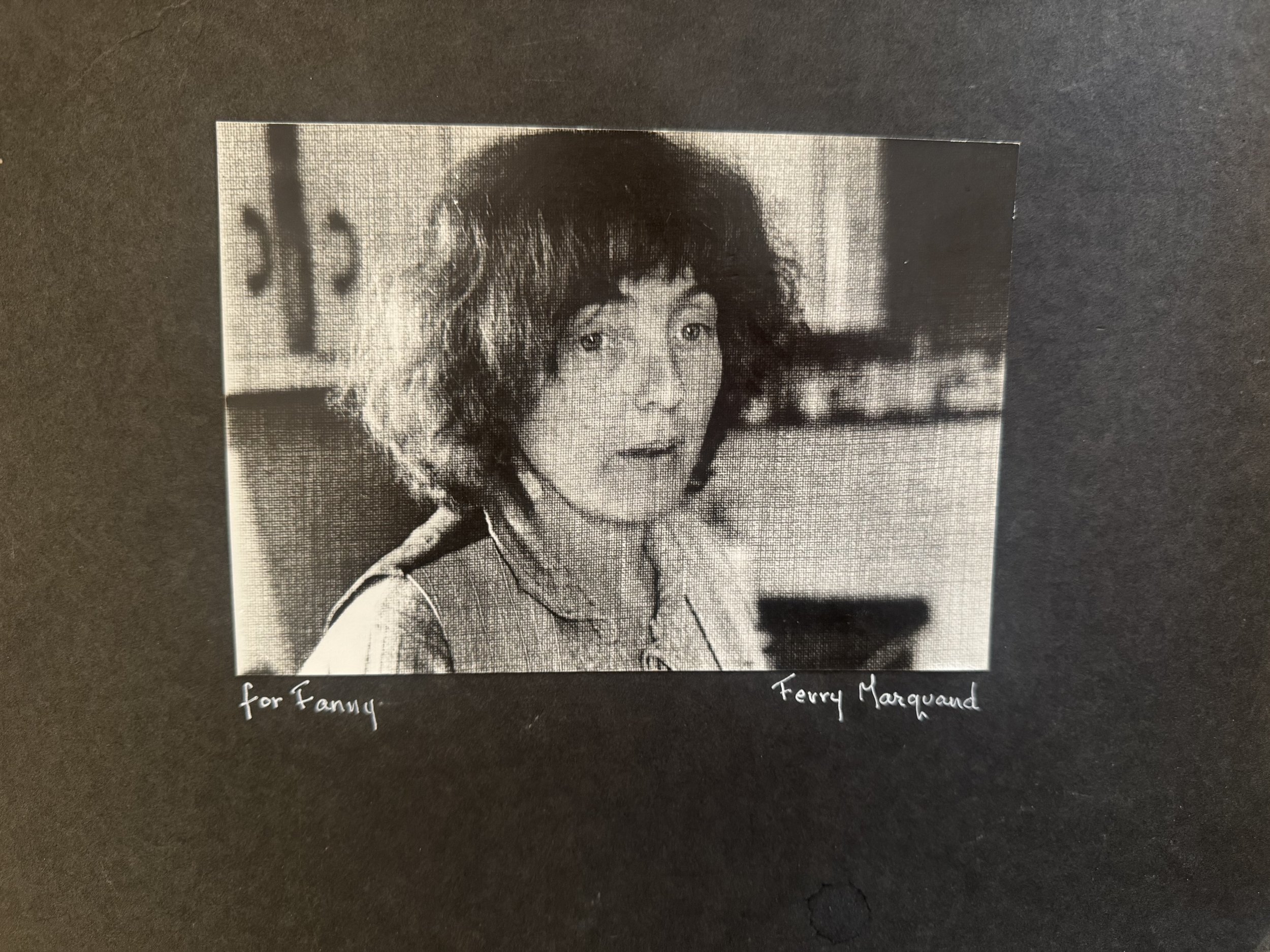
Beyond Nightboat, there are many further parallels between Howe and Ali’s work; in particular an expansive, exploratory study of faith. Raised in a strict religious background—“as soon as I learned how to read, I was reading religious scriptures”—Ali is Muslim and his faith remains a large part of his writing. He also studies and teaches yoga as part of the Jivamukti lineage, which incorporates spiritual teachings within its practice. I ask him what Howe’s work has offered him in his thinking and writing about faith and he tells me: “Oftentimes when people try to write about the spiritual, it's not speculative. It's within whatever vocabulary or tradition that we have been given to think about broad questions like, Who are we? What did we come from? If there is a soul, then what happens to it? Where is it going? Whole organised religious traditions have sprung up over many thousands of years to try to answer these questions.” What Howe’s work allowed him to do was to dare to break from these existing structures and vocabularies, “to think and write about the metaphysical and the philosophical.” He continues “I think there's a reason why spiritual thinkers are sometimes thought of as insane. Because to be a radical, to actually contend with the metaphysical, is to wrestle with the angel – to fall back on another scriptural metaphor. That's what Fanny did. That’s what bewilderment is about.”
“to be a radical, to actually contend with the metaphysical, is to wrestle with the angel… That’s what fanny did. that’s what bewilderment is about.” — kazim Ali
Bewilderment is a concept that Howe developed first as a method through which to construct her poetry and fiction. In an essay called ‘Bewilderment’ collected in The Wedding Dress: Meditations on Word and Life she outlines the idea: “Bewilderment is an enchantment that follows a complete collapse of reference and reconcilability.”(5) It borrows from the swirling, deceptive logic of dreams—“a dream breaks into parts and contradicts its own will, even as it travels around and around”(6)—and builds in layers, dissolving before it solidifies into something tangible. Both an observation and a practice, it eschews conclusions, revels in doubt and confusion, in not knowing and, especially, in never pretending to know. In her writing, it was a way of “sustaining the necessity associated with plot and the blindness associated with experience.”(7) Something she achieved to no end in her beautiful, extensive body of work.
But bewilderment is also an idea that acts as the linchpin to her understanding of faith. In the same essay, Howe defers to a faction of Sufi thought that attributes creation to God’s loneliness, which made Him send “the heavens into a spasm of procreating words that then became matter.”(8) In this creation story “words proceed existence,”(9) imbuing language with enormous power. And yet, language fails to reckon with the staggering complexity of experience. As Howe puts it: “Language, as we have it, fails to deal with confusion.”(10) Bewilderment begins here, simultaneously with God and with language. This same puzzle of contradiction refuses to be solved, and yet Howe persists. “The mystery of thought can only be solved by thought itself – which is what?”(11) This is what faith offers, endless spiralling questions, perplexity, failure – it keeps the mind sharp and strong.
In the Book of Genesis (32:22–32) Jacob wrestles with the angel who is both man and God, in a scene interpreted as both one of struggle, and of persistent prayer. A simultaneous act of devotion and resistance. Even later, after many years as a practicing Catholic, Howe reveals to Kim Jenson in an interview for Bomb Magazine: “I don’t agree with many of the teachings. But this is the interesting part of being Catholic: The heresy that comes along with it. Indistinguishable from the rites is the rage, the arguing, the rebelling, the mind on alert. I like to be on alert. And I like to be in an atmosphere where people examine one more completely insane vision of the universe.”(12)
✴︎✴︎✴︎
Certain details of Howe’s biography are well documented. She was born in Buffalo, New York in 1940, but her family moved to Cambridge, Boston when she was just three years old. Her Irish mother, Mary Manning, was a writer and the founder of the Poets’ Theatre, a dedicated experimental troupe that hosted emerging American poets such as Frank O’Hara, John Ashbery and Richard Eberhart, and is credited with introducing them to the riotous sensibility of Irish dramatics. Her father, Mark De Wolfe Howe, born into a family of historically upper-class Bostonians, was an academic and teacher, eventually becoming a Civil Rights activist. Fanny was still an infant when Germany declared war on the United States and he joined the war effort, where he was posted to North Africa and then Sicily. While he was away she was haunted by his absence, reflecting later in her essay, ‘My Father Was White but Not Quite’, for The Poetry Foundation: “That war was like an immense umbrella held high in the air and shadowing our every move.”(13) After he returned he became a professor of law at Harvard and not long after that, as Howe describes to Jenson, he “underwent the conversion that a few white men did. He woke up to the existential reality of race in America.”(14)
“I was really attracted to auto fiction and a new journalism - hype-hyper subjectivity. and it kind of got undone in that moment.” — Fiona Alison DUncan on her conversation with Howe in 2020
By her own reckoning her childhood home was one of poetry and political consciousness. Her mother was a larger than life character full of fun and stories, a superstitious Protestant who, conversely, was also a lover of Catholicism. In Howe’s essay ‘Fairies,’ also collected in The Wedding Dress, she recounts listening to a recording of Orson Welles—who her mother studied with at the Gate Theatre, Dublin—reading ‘The Happy Prince’ by Oscar Wilde, which “reduced us all to tears every time.”(15) As a child, her father took her to political rallies and organising meetings for his activist work, and, over dog walks and while washing the dishes, patiently explained to her the intricacies of the American constitution and the fundamentals of civil liberties.
Her parents' contrasting personalities and interests—passionate, artistic mother and worldly, scrupulous father—provided her with a grounding in matters of the head and heart. Though, like any family, they had their difficulties. According to Howe her father worked all the time and she recalls that, “he never held our mother back from her drinking or anything else. My sisters and I took on the problem of her dramatic mood swings in very different ways.”(16) Being so embedded in the rigid structures of the law, he also was deeply sceptical of religion, once telling a young Fanny that it was perhaps atheists that needed protecting more so than the religious – “given the attacks on Communists as atheists.”(17)
The Boston of her childhood, the third participant in her earliest years, “had the feel of a graveyard. Epigrammatic, grim, entrenched, with avenues cut straight around the circular gardens.”(18) Despite its apparent gloom, it’s a place she will return to persistently in both her life and work, it’s riotous, ever changing weather a stark contrast to the dry, baron heat of California that she would later encounter. It was during her childhood in Boston, in her parents house, that her vibrant interior life was first formed, along with a guarded sense of a veiled order beyond the material world: “It was through my window facing onto their house that the sun fell around the walls as a living presence that I called (secretly) God.”(19)
It was perhaps this same vivid internal world that made her unsuited to the Western mode of repeat-after-me education. After hating school, Howe got a place at Stanford University but dropped out before she finished. It was there that she met her first husband, Frederick Delafield, a conservatively minded microbiologist several years her senior. Their childless marriage ended after just two years. From here she embarked on a solitary period—first in California and then in New York—of financial and emotional struggle, shaped by anxiety, paralysing shyness and what she described as “a morbid fear of human beings.”(20)
Writing was as much a way to keep to herself as it was to make a modest income, and it was during this time that she produced a series of pulp-fiction paperbacks under the pseudonym Della Field. The books, which she later referred to as her “sweet nurse books,”(21) were schlocky romance novels, charting the escapades of starry-eyed health care workers. However, as she explained to Fiona Alison Duncan in The White Review, it was writing these books that taught her how to construct narrative and ultimately gave her “a great respect for storytelling.”(22) To Duncan, Howe outlines the formula she devised: “The useless hopeless child goes out in the world, is terrified of leaving, but goes out anyway, and bad things and good things happen” … “The idea is you [sort of] can’t go home until you’ve been completely eviscerated by the outside world.”(23)
When I spoke to Duncan, she explained how at the time this idea represented a shift for her: “I was really attracted to autofiction and new journalism – hype-hyper subjectivity. And it kind of got undone in that moment.” The idea that cause and effect drives narrative and the irrefutable correlation between plot and consequence, prompted her to readdress the direction of her own approach to story. For Howe it was as much a process derived from experience as it was from practice, this sense of being “completely eviscerated by the outside world” was acute; a college drop-out, a divorcee; cripplingly shy and unable to cope in New York City. It was also during this time that she developed a preoccupation with the condition of failure, and it was in this fugue of failure that she returned to Boston.
In 1968 Howe married writer Carl Senna. Their marriage was somewhat bookended by two parental deaths. The first, her beloved father, happened just a few months before she met Senna in 1967. Her father’s death had a profound and lasting impact on her. Her great ally and confidante, he was her introduction to a revolutionary political sensibility that persisted throughout her entire life, and in some ways formed the basis of her connection to Senna, which grew from a shared political philosophy derived from the works of Paulo Freire, Ivan Illich and Frantz Fanon.
This second and final disappearance of her father “opened a door into a future as vertiginous as a long fall.”(24) The backdrop to his death, that would become the backdrop too to her union with Senna, was one of mired hopes and dashed expectations. The Civil Rights Movement, that he had so fastidiously committed his life to, was coming to a dwindling and then explosive conclusion. Since the initial legislative victory of the first Civil Rights Act in 1964, hopes that racial injustice might soon be a thing of the past had begun to falter as the depth of racist ideology in American society was relentlessly unearthed. In each instance of change, regardless of direction, new layers of darkness were revealed, crooked and complex.
“She was fantastic at meeting people on their own ground.” - Chris Kraus
Like many close to the Civil Rights Movement, by the time of his death Mark De Wolfe Howe was beginning to question the efficacy of law and legislation alone. In 1965, the same year that Malcolm X—one of Howe’s great heroes—was assassinated, De Wolfe Howe wrote “progress will again prove largely illusory unless we come more intensely to recognise that beyond the law there must be a morality.”(25) This internal struggle between his belief in the law and a continued failure of morality ultimately led him to contemplate what further, more radical action might be necessary in the battle for racial justice – a shift that did not go unnoticed by Howe.
Later, Howe reflects in ThePoetry Foundation, “My father worked for social justice and was eviscerated. I think when he died he had had enough. (Heart attacks can be a kind of suicide.)”(26) He was spared the assasination of Martin Luther King in 1968, which would spark a summer of unrest including violent retaliation by police forces across the country. Though in Boston, rioting was temporarily diffused by James Brown who played a concert to crowds at the Boston Garden with Fanny and Carl in attendance. This would be followed by the assassination of Robert Kennedy and ultimately the election of Richard Nixon, swearing in a new era of dog-whistle politics and a renewed resistance to Civil Rights shrouded in a rhetoric of “law and order.”
In what was originally an interview with Christina Davis of the Woodberry Poetry Room and redrawn by Howe as a conversation with herself, she describes the moment she got the call to say her father had died: “I wasn’t surprised by the news. I had been dreaming that he was dying.” Adding, “I will say that this coincidence increased my belief in a hidden order.”(27)
Carl Senna’s mother was an African-American school teacher and talented pianist; his father, who left when he was a child, a Mexican boxer. When he and Howe married, it was just one year after the Supreme Court overturned a law that had previously banned interracial partnerships. Their relationship drew attention in Boston, a city still divided along the lines of race and class. At the time, the highly controversial bussing program—where Black and white children were transported across the city in an effort to desegregate schools—was at its peak. It was into this mist of racial tension and political uncertainty—a vague hopelessness that emerged from a downward shift in the understanding of possibility—that Howe and Senna’s three children, Ann Lucien, Danzy, and Maceo Senna, were born.
The second death was that of Howe’s mother-in-law, another figure of great significance in her life. Anna (by both Howe and her daughter Danzy, she is only ever referred to as ‘Anna’) had moved from the South to Boston long before Carl and Fanny met. After they married she moved in with the young couple, bouncing with them from Boston to Salem Harbour, and back again, when Senna got a job as an editor at Beacon Press. She was a devout Catholic, attending mass daily and it was with her that Howe first began to attend too. It’s not clear what specifically drew Howe into the church: her grief at the death of her father, her complicated marriage that was at this point already tumultuous, or perhaps it opened an avenue through which to explore the dormant sense of otherworldliness that she had long kept hidden. She describes how during this time “the scepticism that was like a splash of iodine in the milk of my childhood home began to work its way out of my system.”(28)
Anna died a few months before Howe’s youngest child was born. Of her death she laments, “we were never the same without her, and the whole operation disintegrated in terrible ways.”(29) In 1976 Fanny and Carl divorced. Their separation was by all accounts incredibly bitter and at points violent. Danzy Senna, in her memoir, Where Did You Sleep Last Night? about her parent’s relationship and their wildly dissimilar backgrounds, captures some of the more disturbing details of the marriage breakdown and its aftermath, with Howe at one point acquiring a restraining order against her ex-husband. However it also details how they remained in touch beyond the custody negotiations and perfunctory exchanges around childcare throughout their lives. When we spoke, Kazim Ali told me that Carl was in attendance at Howe’s memorial service, adding that “life is complicated.” Their relationship, marred by the cultural and political expectations of the time, was indeed complicated, but as Howe herself explains, “in the end it was a failure of love.”(30)
It was during the period of her union and eventual split with Senna that Howe discovered the work of mystic and philosopher Simone Weil, as well as what at the time was a relatively new idea originating from a group of South American Catholic priests. Liberation Theology first appeared as a concept in the 1971 book, A Theology of Liberation by Peruvian Catholic priest Gustavo Gutiérrez. Undoubtedly influenced by Weil’s ideas, it sought to realign Christianity with its concern for the marginalised, asserting God’s identification with the needy, the vulnerable, the poor, and the oppressed. Whilst it was religious in its commitment, in practice it was deeply political, drawing from Marxist ideas that aimed to challenge the oppressive structures that lead to the creation and subordination of an underclass. The principles of Liberation Theology opened up a space through which Howe could forge her own path, melding together her palpable commitment to justice with her burgeoning spiritual yearnings – a way for her to square her resolute belief in our great responsibility to each other and her search for an inner, contemplative life as an individual. She officially converted to Catholicism at age 42, in 1982. (31)
“Failure, surrender, humility … these are all almost the same things. These qualities are what drew us both to Weil, and are portals to a spiritual life.” — Chris Kraus
After the divorce and in the midst of her spiritual awakening, Howe devoted her days to the task of raising three children as a single mother. It’s a time she describes as brutal, scrappy, exhilarating; where she learned to “bend the rules, to prevaricate, to be crooked, to get something for as little as nothing, to take now and pay later.”(32) But it was also an incredibly fruitful period for her as a writer, producing several books of poetry and novels, released with increasingly small and experimental presses. The all-consuming nature of mothering influenced her work in various ways. It began to take on new fragmented shapes, scrawled in snatched moments between school pick-ups and day-jobs. Linearity stalled and was replaced by new looping configurations of time, as she experimented with constructing spiralling plotlines, reflecting the beginnings of the technique that she would later call bewilderment.
Motherhood itself, in all its bewildering tenacity, pain, joy and loneliness, is a constant theme in her work. In her novel Indivisible, narrator Henny describes the radical assignment of mothering: “A motherer is willing to die for the other and she or he is more independent in her spirit than anyone who doesn’t love. She has eliminated the desire for rewards by the time she is a real motherer. And of course this is the essence of liberation because it is the opposite of what society wants people to want.”(33) But work as a writer was not enough to support a family and it was out of necessity that she—bugrudingly—turned to teaching, eventually leading her to California.
✴︎✴︎✴︎
It was in California that she met writer Chris Kraus. They were first introduced by Matias Viegener through their shared love of film and of Simone Weil. Kraus would go on to publish Indivisible through her Native Agents series at Semiotext(e). I ask Kraus about their initial meeting: “When we first met, she was still working on the Simone Weil film, she hadn’t started Indivisible yet. She took herself very seriously as a filmmaker while at the same time acknowledging it as a kind of hobby.”
Kraus is also a filmmaker. Her book Aliens & Anorexia follows a fictionalised version of herself in a failed attempt to launch her film career with a low budget production called Gravity & Grace. Simone Weil is a central figure in the book, her impassioned struggle and ultimate death from self-starvation emerging as a central thread, through which she explores themes of empathy and failure. Howe details the process of making the film that she was working on when she met Kraus in ‘Work and Love’ the final essay in The Wedding Dress. But, like Aliens & Anorexia, the essay is also about failure. I ask Kraus what has so fascinated her about the topic: “Failure, surrender, humility … these are all almost the same thing. These qualities are what drew us both to Weil, and are portals to a spiritual life. Weil wrote over and over again about decreation, how illusions of self must be destroyed before someone can really see.” In ‘Work and Love’ Howe writes of Weil: “She felt that it was only through work that a person fully comes to terms with the human condition.”(34) Weil’s life was one of constant striving and failing, a ceaseless reaching towards humility, towards helplessness, of emptying the self to make room for God, in this way she was one of Howe’s spiritual idols.
Howe and Kraus worked together at University of California San Diego, where for a period she was Kraus’ boss. Teaching was complicated for Howe, “Never in my wildest dreams did it occur to me that I would teach, and teach, and teach,”(35) she says in an interview with former UCSD student Jennifer Moxley. By her own admission she was “a drop-out and an independent reader” – her understanding of literature and writing were honed outside of the institution. Kraus echoes this notion: “Fanny was the least institutional person, but she suffered! She often said so long as she was teaching—actually chairing the writing program—she couldn’t allow herself to be crazy enough to write. So she lived for the breaks.” Though she never took her work as a teacher lightly, she always entered the classroom “armed with rituals and rigorous preparation.”(36) Kraus again: “She was also one of the most literate people I’ve ever met, but she didn’t force her sensibility on the—by that point—mostly commuter-school students. She was fantastic at meeting people on their own ground.”
It was during her time in San Diego that four of the five novels in Radical Love were written. They are wild in their scope and meticulous in their execution, each imparting findings from vibrant life-long investigations on race, injustice, suffering, religion, doubt, motherhood and loneliness. In Bomb, she rather modestly describes the collection as “a study of Americans during the second half of the 20th century. So it is trying to account for profound loneliness and its consequences.”(37) Moreover they are unblinking, unafraid to reveal our darkness, anxieties, and desires which often lead us to greed and cruelty. Formally, they are the culmination of much thought and experimentation, oscillating seamlessly between first and third person, and exercising a command of a plot that unites the dream logic of bewilderment with a startling, often brutal realism.
But they are optimistic, too. “The real love stories are friendships, and children are always present, watching.”(38) Like the children in her stories, Howe is a witness to the lives and worlds she creates. Like God she is an observer – and, also like God, she exists up close, in every fleeting thought and tiny movement. Later in the interview Kim Jenson asks, “Does it matter if there is a God watching us?” Howe, “Yes, call it what you will, it matters that there is full knowledge somewhere, that injustice is being noted, and that there is a source for courage that you can call upon.”(39)
“I see grammar as a form of quest for justice, the way people have so beautifully figured out how subject, object, verb, have to work together to produce a fair sentence.” — Fanny Howe speaking in 2023
Following the release of Indivisible in 2000—6 years before it was reissued in Radical Love—Howe stopped writing fiction, committing herself only to poetry, though she did go on to write several more hybrid prose-poetry essays. I asked Kazim Ali about why this was. He said, “She told me it was because Indivisible was the culmination of all of her fiction.” Why that book? “I don't know if people have talked about this or not in writing critically about it, but it was meant to be ‘indivisible.’ Characters from all of her previous fiction show up again in that book. Even the minor characters. A character will be walking down the street and then someone will walk by them and it's a character from one of the other novels.”
It’s true. Julio’s mother Gemma, who is imprisoned in Indivisible, is a main character from The Deep North. Tom, who accompanies narrator Henny to the Mexican border, is from Saving History. Henny’s husband McCool first appears in Famous Questions. Honey Figgis, a minor character and school friend of Henny's, is from Bronte Wilde. “Every character in that book is from some other book of hers.” There’s the sense that she lived with these characters for a long time, and perhaps she did – when asked if she would write an autobiography, she told Fiona Alison Duncan, “I feel my five novels in Radical Love are close enough.”(40)
✴︎✴︎✴︎
Later in her life, Howe divided her time between Boston, California, Ireland and the UK (where one of her children settled). While she maintained that she preferred solitude, as her daughter Danzy said to me over email, “She had a million friends.”
Fellow poet and Bostonian Eileen Myles was one of those friends. They read at Howe's memorial back in October. I asked Myles what their relationship looked like, “Bright. I think we kindled something in each other. She was, for a long time, the person who was ahead of me, who said go here Eileen in relation to Ireland or teaching. She sort of indicated some real directions in life—by her experiences and thoughts—on where I might also belong or what I would like.”
Howe passed away on the 9th July, 2025 in Lincoln, Massachusetts, just an hour from Boston, where she intermittently spent so much of her life. She was 84 years old. Myles recalls the time they spent there together and the time they didn’t, though might still in another life: “When she invited me to the home of her friend Margo Lockwood who lived in Brookline she anticipated my delight in the kind of house and neighborhood, and a lived-in Boston that was disappearing. Sometimes a place like The Plough and Stars that we never went together, existed in the friendship nonetheless, like in her final days she actually woke from a dream in which we were drinking together there. We were both Boston through and through, though we came from different versions of the city before finding the same one. Much of the Boston we shared is now gone.”
Like Myles, Howe’s bright, brassy Boston accent never dimmed. Even in her later years when it acquired a slight, musical tremor, it never lost its keenness or crackle of mischief. I ask Myles if they think Howe ever thought about legacy and they rebuff me, “I’m sure she thought about it but I also think her sense of humour compelled her to scorn it and go dark on such a thought. She had a terrific sense of humour. Really baleful.”
Like Howe, Myles' writing is in service of reckoning with existence. In an interview with Amelia Abraham for the London Review of Books podcast, they draw a line between poetry and philosophy, saying: “Poetry is philosophy – you’re really trying to figure stuff out.”(41) I ask Myles why poetry then, why not be a philosopher? “Poetry gives you something to do while pondering. It’s a place to collect. Thoreau said it about walking and my yoga teacher says it about asanas. It’s not the point but it’s how you occupy yourself while you’re approaching it.” Howe’s capacious, revelatory, sparkling body of work occupied her for her entire life. It is a collection of decades of spiralling questions, a study of justice, and a roving, boundless conversation with God. For Myles, it taught them to: “Wander. Trust God. Love.”
In a conversation with Kazim Ali on poetics and social practice for the Lannan Centre, Howe said, “I see grammar as a form of quest for justice, the way people have so beautifully figured out how subject, object, verb, have to work together to produce a fair sentence. Everything to me is about justice. In writing my poems and in daily life.”(42) Like bewilderment, her understanding of justice extends to the molecular level of words and sentences. In a novel she wrote in 1979 called Holy Smoke, recently reissued by Divided, she wrote, “Justice manifests itself madly, like a hurricane; it just appears and then it's gone.”(43) Howe understood justice as something that evades succinct definition: ever changing, amorphous, requiring perpetual negotiation and a vigilance that never hardens into certainty. It is an understanding of justice that exists outside the law. She abhorred prisons, which often appear in her novels as spectres of the utmost malevolence, the closest things to hell on earth.
She found within Catholicism a mode of attending to this notion of justice, one that advocated for the marginalised and the oppressed, that—much like bewilderment—was “devoted to the little and the weak.”(44) In reading and thinking about Howe's work, and in talking to people who knew her, her life emerges as one of constant struggle and immense beauty, where the pursuit of God, of justice, and of perfect sentences converged on a single, luminous plane.
“She had a terrific sense of humour. Really baleful.” — Eileen Myles
The last time Kazim Ali saw his friend Fanny Howe was in 2023, in Washington D.C. He recalls: “I was helping her into a cab to go to the airport. We gave each other a big hug and she told me that she felt it was the last time we were going to see each other.” I ask him if he also felt it in that moment, “I didn't. You know, she had a dramatic side and she would often say these very dramatic things. I thought it was her being dramatic. But she ended up being right about that.” He has time for one last question before he has to rush off to teach a class. I ask: What is the greatest lesson you learnt from Fanny? He pauses. Then: “That one writes every day, all the time, in one's mind, in one's thought. That engagement is a way of just being alive; thinking about things deeply, all the time, is a way of being alive.”
(1) Fanny Howe, London-rose: Beauty Will Save the World.
(2) Ibid.
(3) Fiona Alison Duncan, “Interview with Fanny Howe,” The White Review, October, 2020, https://www.thewhitereview.org/feature/interview-with-fanny-howe/.
(4) Fanny Howe, Radical Love.
(5) Fanny Howe, The Wedding Dress: Meditations on Word and Life.
(6) Ibid.
(7) Ibid.
(8) Ibid.
(9) Ibid.
(10) Ibid.
(11) Ibid.
(12) Kim Jensen, “Fanny Howe by Kim Jensen,” Bomb Magazine, January 1, 2013, https://bombmagazine.org/articles/2013/01/01/fanny-howe/.
(13) Fanny Howe, “My Father Was White but Not Quite,” The Poetry Foundation, December 1, 2008, https://www.poetryfoundation.org/poetrymagazine/articles/69163/my-father-was-white-but-not-quite.
(14) Kim Jensen, “Fanny Howe by Kim Jensen,” Bomb Magazine, January 1, 2013, https://bombmagazine.org/articles/2013/01/01/fanny-howe/.
(15) Fanny Howe, The Wedding Dress: Meditations on Word and Life.
(16) Kim Jensen, “Fanny Howe by Kim Jensen,” Bomb Magazine, January 1, 2013, https://bombmagazine.org/articles/2013/01/01/fanny-howe/.
(17) Fanny Howe, “My Father Was White but Not Quite,” The Poetry Foundation, December 1, 2008, https://www.poetryfoundation.org/poetrymagazine/articles/69163/my-father-was-white-but-not-quite.
(18) Ibid.
(19) Ibid.
(20) Kim Jensen, “Fanny Howe by Kim Jensen,” Bomb Magazine, January 1, 2013, https://bombmagazine.org/articles/2013/01/01/fanny-howe/.
(21) Fiona Alison Duncan, “Interview with Fanny Howe,” The White Review, October, 2020, https://www.thewhitereview.org/feature/interview-with-fanny-howe/.
(22) Ibid.
(23) Ibid.
(24) Fanny Howe, “My Father Was White but Not Quite,” The Poetry Foundation, December 1, 2008, https://www.poetryfoundation.org/poetrymagazine/articles/69163/my-father-was-white-but-not-quite.
(25) Fanny Howe, “(HOWE)VER: Some Thoughts on Mark DeWolfe Howe,” The Woodberry Poetry Room, September 22, 2020, https://woodberrypoetryroom.com/?p=6092.
(26) Fanny Howe, “My Father Was White but Not Quite,” The Poetry Foundation, December 1, 2008, https://www.poetryfoundation.org/poetrymagazine/articles/69163/my-father-was-white-but-not-quite.
(27) Fanny Howe, “(HOWE)VER: Some Thoughts on Mark DeWolfe Howe,” The Woodberry Poetry Room, September 22, 2020, https://woodberrypoetryroom.com/?p=6092.
(28) Fanny Howe, “My Father Was White but Not Quite,” The Poetry Foundation, December 1, 2008, https://www.poetryfoundation.org/poetrymagazine/articles/69163/my-father-was-white-but-not-quite.
(29) Fanny Howe, The Wedding Dress: Meditations on Word and Life.
(30)Kim Jensen, “Fanny Howe by Kim Jensen,” Bomb Magazine, January 1, 2013, https://bombmagazine.org/articles/2013/01/01/fanny-howe/.
(31) Ibid.
(32) Fanny Howe, The Wedding Dress: Meditations on Word and Life.
(33)Fanny Howe, Radical Love.
(34) Fanny Howe, The Wedding Dress: Meditations on Word and Life.
(35) Jennifer Moxley, “R.I.P. Fanny Howe,”July 9, 2025, https://www.jennifermoxley.com/blog/rip-fanny-howe.
(36) Ibid.
(37) Kim Jensen, “Fanny Howe by Kim Jensen,” Bomb Magazine, January 1, 2013, https://bombmagazine.org/articles/2013/01/01/fanny-howe/.
(38) Ibid.
(39) Ibid.
(40) Fiona Alison Duncan, “Interview with Fanny Howe,” The White Review, October, 2020, https://www.thewhitereview.org/feature/interview-with-fanny-howe/.
(41) “Eileen Myles & Amelia Abraham,” London Review Bookshop Podcast, October 8, 2024, https://www.londonreviewbookshop.co.uk/podcasts-video/podcasts/eileen-myles-amelia-abraham-a-working-life
(42) “Kazim Ali and Fanny Howe,” Lannan Centre for Poetics and Social Practice, February 28, 2023, https://lannan.georgetown.edu/2022-2023-readings-and-talks/kazim-ali-and-fanny-howe/.
(43) Fanny Howe, Holy Smoke.
(44) Fanny Howe, The Wedding Dress: Meditations on Word and Life.