Arcadia Molinas takes a trip to Glasgow for Scotland’s acclaimed biennial festival of contemporary art
Words by Arcadia Molinas
Who does art keep alive? This year’s Glasgow International (GI), Scotland’s acclaimed biennial festival of contemporary art, hinges on this question.
At the start of the year, council funding cuts to the arts caused the permanent closure of Glasgow's Centre for Contemporary Arts (CAA), an alarming loss to Scotland’s creative scene. Within a broader nationwide regime of austerity and a global geopolitical landscape where anti-immigrant, far-right sympathies have found a conspicuous platform for their vitriol, the eleventh edition of the GI is a space where artists respond to these crises and reflect on the cost, methods and industriousness of visibility.
Addressing the question of which legacies and memories are visible and which are obscured is Jasmine Togo-Brisby’s arresting show ‘Liquid Land’ at the GOMA, which explores the neglected history of the nineteenth-century practice of “blackbirding” – the kidnapping of South Islanders for forced labour on Australian sugar plantations. Consisting of a full-scale recreation of the artist’s ancestral home in Australia, the audience is brought face to face with the colonial scene of the crime. Inside the exhibition, an opulent chandelier hovers ominously close to a bowl of molasses, a huge tarantula-like sculpture flayed on the ground made entirely from blackbird feathers, and a massive oil-rig size vat of molasses. The musty smell of sugar’s afterbirth clings to the air and brings to life the title of one of the pieces: Can You See Us Now?
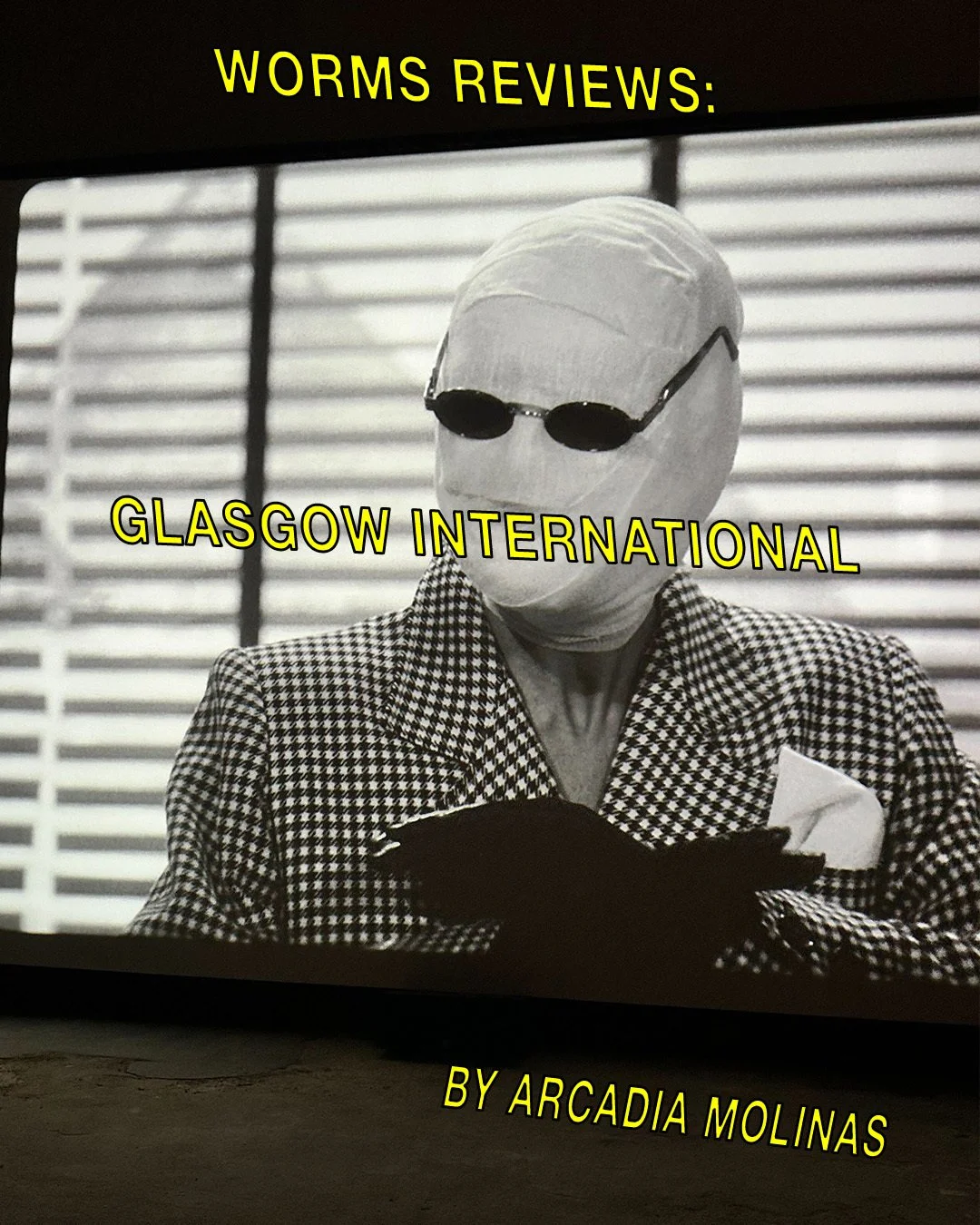
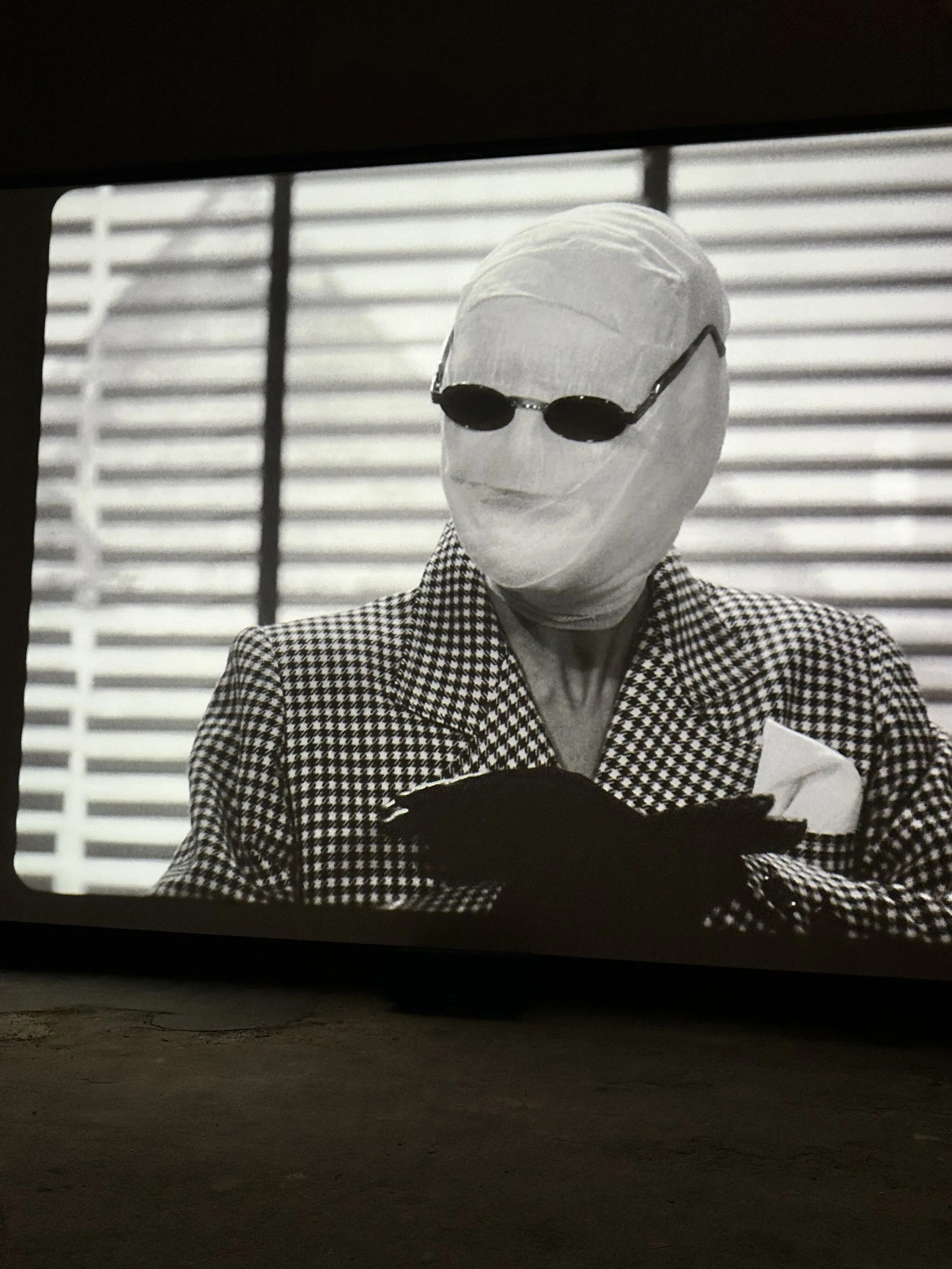
Michelle Wiliams Gamaker’s brilliant body-horror film-noir ‘Strange Evidence’ explores the psychosomatic symptoms of colonialism on the racialised body through a dramatic retelling of the cosmetic procedures movie star Merle Oberon underwent to keep her South-East Asian heritage secret. Think The Substance (2024) meets a Veronica Lake picture (whitewashing intended). Gamaker’s work grapples with the cost of visibility and how legibility is offered with caveats to the non-white. The film is screening in a cosy cinema room at Offline on Niddrie Road and boasts stunning cinematography, performances, and a delightfully bizarre end that could potentially leave some scratching heads for its meme-able quality.
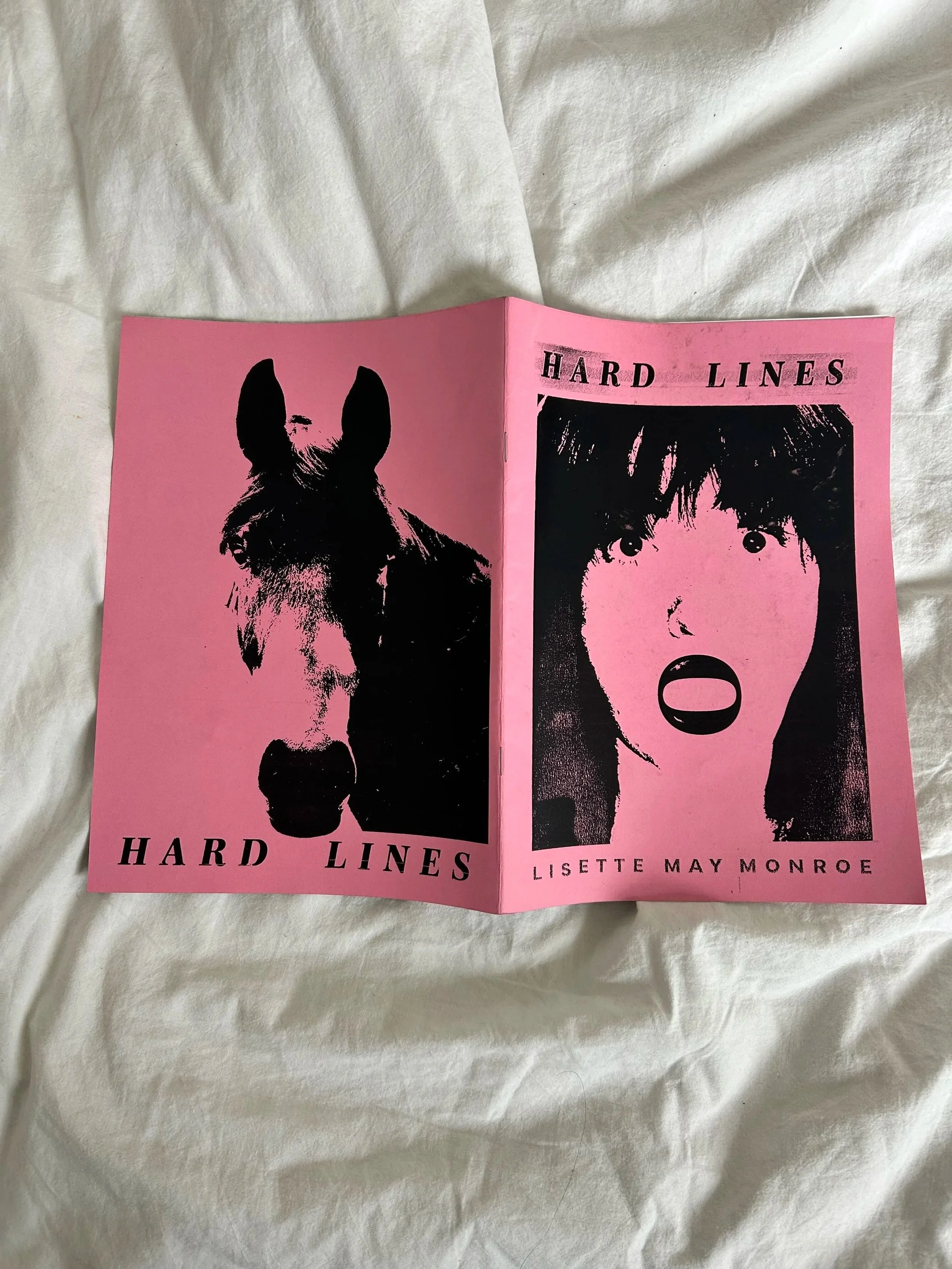
One of the boldest proposals is Lisette May Monroe’s ‘Hard Lines,’ an autobiographical exploration of a two-fold betrayal that befell the artist 18 months prior: the onset of premature menopause (betrayal of the body) and the discovery of her partner of ten year’s infidelity (betrayal of the lover). Paired with an eminently readable hot pink booklet featuring poems by Rachel Allen and an interview with Hannah Proctor, the exhibition works as an act of revenge (the tell-tale locket that revealed the infidelity is even plastered around the city as a billboard) and a memorial for a past way of being. The audience enters into the space through a billowing curtain on which the artist’s chest is printed, as if piercing her heart. Inside, a new selfhood takes shape in the wake of a defunct past.
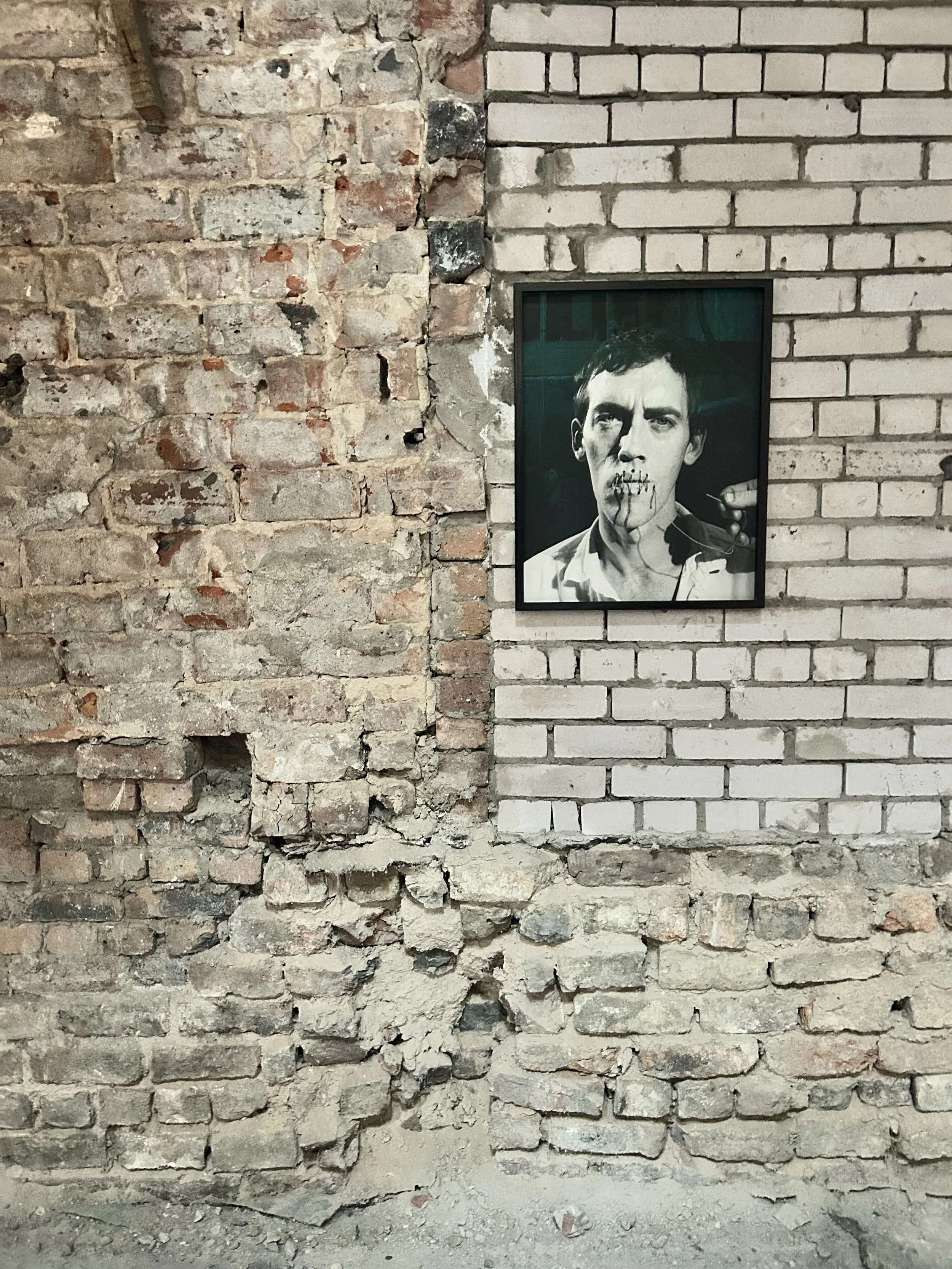
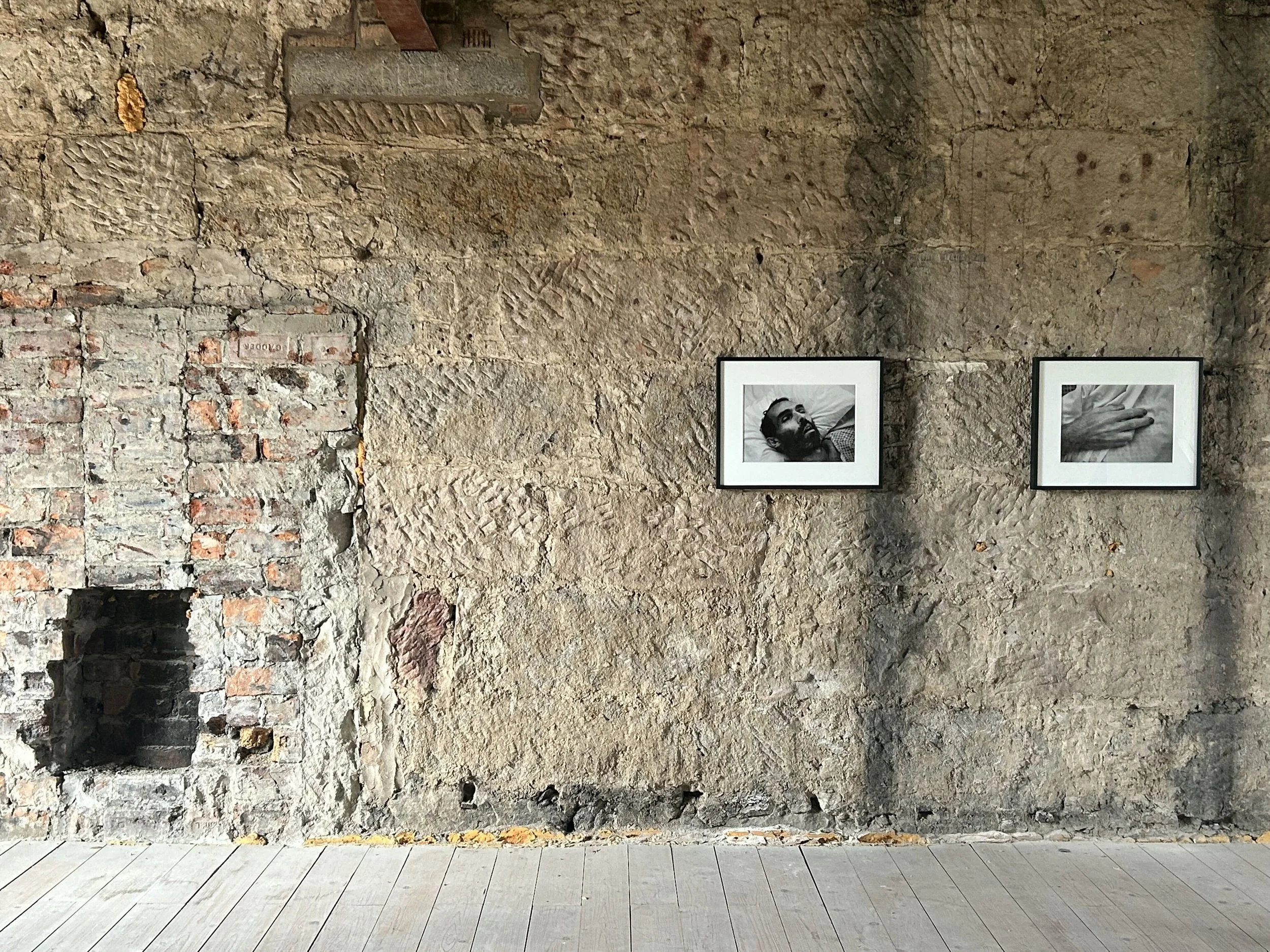
Another must-see is the David Wojnarowicz exhibition at The Modern Institute. The space, which is derelict and rubbly, goes a long way to breathe new life into Wojnarowicz’s now-canonical work, conjuring the piers where he and his contemporaries made art, hustled, turned tricks, sometimes made love and forged a community that, despite its unlikely composition, has remained relevant as a vision of resilient radicality. Realities blur situationally: one of the walls shows polaroid mug-shots of artists and friends who worked at Danceteria, the legendary 1980s club which was subjected to a police raid in October 1980. It is fitting to learn that the space itself used to operate as a club too. An unequivocal sensation of being at the piers, contained in the four walls which witnessed and housed New York’s explosive creative community of the 60s, a community eradicated and silenced by the government’s mismanagement of the AIDS crisis, assails you as you wander up and down and through the space.
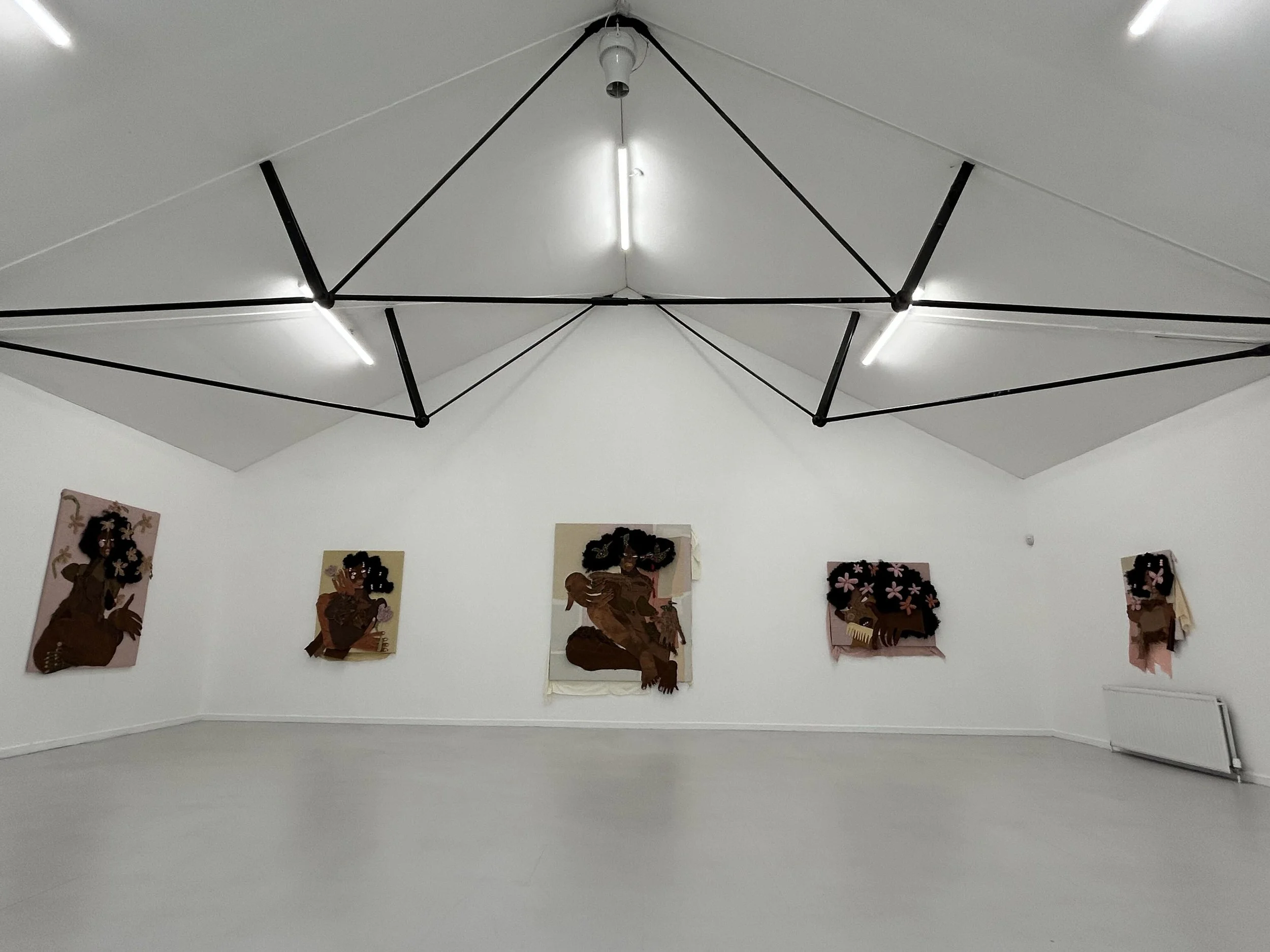
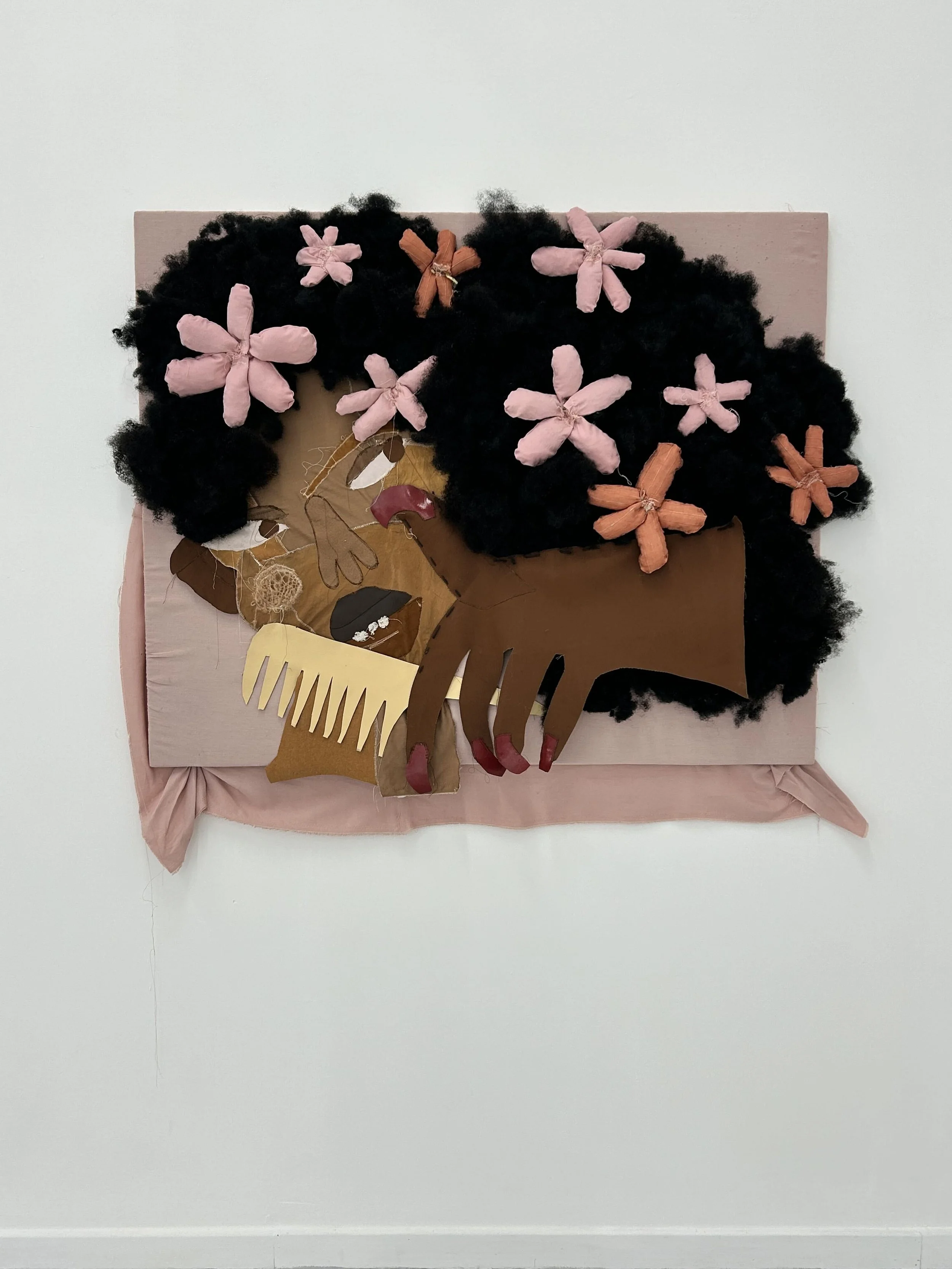
Otherwise, in smaller spaces, artists like Ayesha Jones with ‘The Backbone’ and Anya Paintsill with ‘The delight of walking alone’ bring a refreshing subjectivity to body normativity, representing feminine figures as “wonky” and “giantesses” respectively. Renèe Helèna Browne’s ‘Flat’ is a video installation unfolding throughout the “mica scandal” in Donegal, Ireland, where thousands of homes were discovered to have defective concrete blocks. Inside this context, Browne delivers a touching portrait of their uncle, who while rebuilding his home, reveals an aficionado's interest in astronomy; showing how knowledge circulates in traditional senses, outside of institutions.
Glasgow International spreads across the city in unusual, out-of-the-way sites. It is a rich, multi-disciplinary and politically engaged feat of curation, responding to the vital effort of staying visible in a climate hellbent on erasing dissent and difference. When negligence and silence destroy someone’s life, home or past, to resist is to rebuild, to continue creating, to proclaim: See me, I am still here.
Glasgow International runs from Friday 5 to Sunday 21 June. It is free and open to all.
Arcadia Molinas is the online editor of Worms.
Glasgow International is Scotland’s world-renowned biennial festival of contemporary art. Glasgow International showcases the best of local and international art for wide-ranging audiences. The festival continues to showcase Glasgow as a unique major centre for the production and display of contemporary visual art. Taking place in various venues and locations across the city, including Glasgow’s major art spaces and cultural institutions, the festival is comprised of an ambitious programme which includes exhibitions, events, talks, performances and projects by international and Glasgow-based artists. More information at www.glasgowinternational.org
